





What is NavIC and Why Does It Matter?
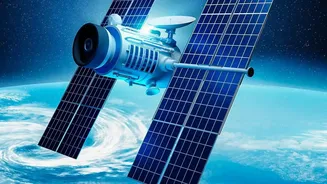
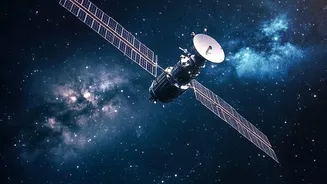
NavIC, short for Navigation with Indian Constellation, is India’s answer to the US-owned Global Positioning System (GPS). Developed by the Indian Space Research Organisation (ISRO), it was designed to provide the nation with strategic autonomy in satellite
navigation. This independence is crucial, as reliance on foreign systems like GPS comes with the risk that access could be denied or degraded during geopolitical conflicts—a lesson India learned during the 1999 Kargil War. NavIC provides two types of services: a Standard Positioning Service (SPS) for all users and an encrypted Restricted Service (RS) for strategic applications, including the military. It was designed as a constellation of seven satellites to provide coverage over India and a region extending 1,500 kilometres beyond its borders.
A Constellation in Crisis
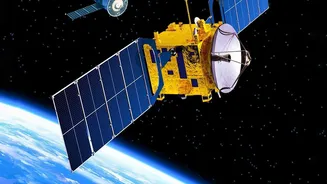
The NavIC system has been hobbled by a persistent technical issue: the failure of imported rubidium atomic clocks on board its first-generation satellites. These clocks are the heart of any navigation satellite, providing the ultra-precise timing signals needed to calculate a position. Without a stable clock, a satellite becomes useless for navigation. Over the years, multiple satellites in the original IRNSS series have suffered these clock failures, with some also reaching the end of their 10-year operational life. As a result, the government confirmed in July 2026 that only three satellites—IRNSS-1B, IRNSS-1I, and NVS-01—are currently providing full positioning, navigation, and timing (PNT) services. This is a significant problem because a navigation receiver needs signals from at least four satellites to accurately determine its three-dimensional position (latitude, longitude, and altitude) and correct for time errors. With only three operational satellites, NavIC can no longer provide a standalone positioning service.
Enter NVS-03: The Reinforcement
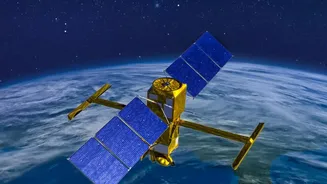
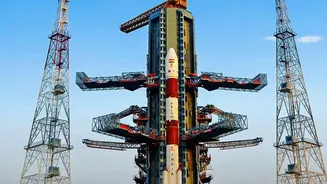
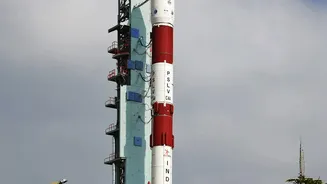
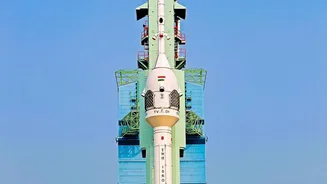
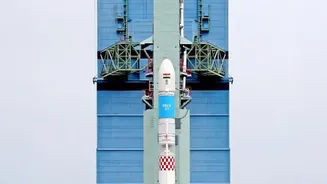
To address the shortfall, ISRO is preparing to launch NVS-03, a next-generation navigation satellite. The launch is targeted for a window between October 15 and 20, 2026, aboard a GSLV-Mk2 rocket from Sriharikota. NVS-03 is the second satellite in the new NVS series, which is designed to replace the aging first-generation constellation and enhance its capabilities. A successful launch of NVS-03 would restore the constellation to the minimum four-satellite threshold required for standalone positioning. The mission's importance is heightened by the fact that the previous satellite, NVS-02, failed to reach its intended orbit after its launch in January 2025 due to a propulsion system issue. NVS-03 will carry a new, indigenously developed rubidium atomic clock, which is expected to be more reliable than the imported ones that plagued the earlier satellites.
The L1 Band: A Game-Changer for Civilian Use
Beyond just replacing a faulty satellite, the NVS series introduces a crucial upgrade: the L1 frequency band. The original NavIC satellites operated on the L5 and S bands. While effective, the lack of the L1 band—the most common frequency for civilian GPS use worldwide—limited NavIC's adoption in mass-market consumer devices like smartphones and smartwatches. The NVS-01 satellite, launched in May 2023, was the first to incorporate the L1 signal, and NVS-03 will continue this. By broadcasting on the L1 frequency, which is interoperable with other global navigation systems, ISRO aims to make it much easier for manufacturers to integrate NavIC compatibility into everyday gadgets, significantly boosting its civilian and commercial applications.