





What Is Vehicle-to-Vehicle (V2V) Communication?
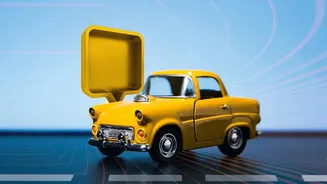
Think of it as social networking for cars. V2V communication allows vehicles to wirelessly broadcast and receive real-time information about their location, speed, direction, and braking status. Using a technology called Cellular Vehicle-to-Everything
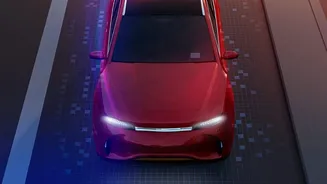
(C-V2X), cars can constantly 'talk' to other equipped vehicles within a range of about 300 meters. Unlike cameras or radar which have a limited field of view, V2V can 'see' around corners and through other traffic, creating a 360-degree awareness of potential dangers before a driver can spot them. The Ministry of Road Transport and Highways (MoRTH) has proposed making this technology mandatory in all new cars, trucks, and two-wheelers from October 2028.
How Would It Warn Me About Road Hazards?
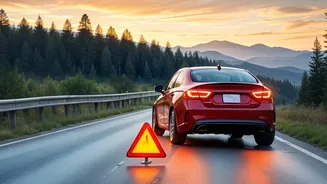
The system is designed to provide warnings for situations that cause many accidents on Indian roads. For example, if a car several vehicles ahead brakes suddenly, your car would receive an instant alert, giving you precious extra seconds to react. The technology specified under India's proposed AIS-230 standard can issue alerts for forward collision risks, unsafe lane changes, wrong-way driving, and the approach of emergency vehicles. It could warn you about a vehicle in your blind spot before you attempt to change lanes or alert you to a fast-approaching car at a blind intersection. The goal is to improve a driver's situational awareness and prevent accidents before they happen.
Is This Technology Ready for Indian Roads?
This is the most critical question. While the technology holds immense promise, its effectiveness depends on overcoming unique local challenges. Indian roads feature a complex mix of vehicles, from modern cars and heavy trucks to auto-rickshaws, two-wheelers, and even animal-drawn carts. This diversity, combined with often unpredictable driving patterns and poor lane discipline, can create a chaotic data environment, potentially leading to false alerts or warnings that drivers begin to ignore. Furthermore, the system's benefit relies on a high number of vehicles being equipped with the technology. In the initial years, new V2V-enabled cars will share the road with millions of older, non-connected vehicles, limiting the safety net's effectiveness. Widespread deployment will be a gradual process.
Who Pays for This, and What About My Data?
The proposed mandate means manufacturers will have to fit all new vehicles with V2V hardware from October 2028. This will likely increase the production cost, a cost that is often passed on to the consumer. For entry-level vehicles, which currently have limited electronic systems, the integration will be more challenging and potentially more expensive. Just as importantly, V2V technology involves the continuous transmission of your vehicle's data. This raises significant questions about cybersecurity and privacy. The system must be secure from hacking or spoofing, which could cause false alerts or, worse, accidents. MoRTH is also working on automotive cybersecurity rules to address these concerns, but a strong framework will be essential to build public trust.
What Are the Biggest Hurdles Ahead?
Besides cost and the challenge of mixed traffic, a few major hurdles remain. First is infrastructure. While V2V focuses on cars talking to each other, its full potential is realised in a Vehicle-to-Everything (V2X) ecosystem, where vehicles also communicate with smart traffic signals, road sensors, and pedestrians. Much of India's road infrastructure is not yet ready for this. Second is standardization. The government has taken key steps by proposing the AIS-230 standard and de-licensing the necessary 5.9 GHz spectrum for C-V2X technology. Ensuring all manufacturers adhere to this single standard is crucial for interoperability—a Maruti must be able to talk to a Mahindra seamlessly. Finally, there's the sheer scale of the rollout, which requires coordination between multiple government ministries, automakers, and technology suppliers to succeed.