


A Journey Like No Other
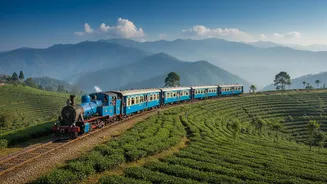
The trip on the Nilgiri Mountain Railway (NMR) is less about reaching the destination and more about the journey itself. As the train travels the 46-kilometre route from Mettupalayam on the plains to the hill station of Udhagamandalam, better known as
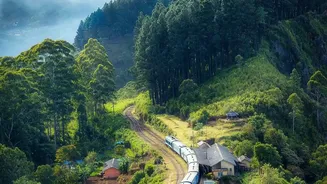
Ooty, the world outside the window transforms. The rhythmic chugging, the slow pace of around 10 km/h, and the passage through 16 tunnels and over 250 bridges create a nostalgic atmosphere that feels worlds away from modern life. Passengers are treated to breathtaking views of dense forests, cascading waterfalls, and meticulously manicured tea plantations that blanket the hillsides. It is a slow, deliberate climb from an elevation of 326 metres to over 2,200 metres, an experience that has earned it a coveted spot as a UNESCO World Heritage Site.
The Heart of the Machine
So, how does a train manage one of the steepest railway inclines in all of Asia? The answer lies in a special technology used on the stretch between Mettupalayam and Coonoor: the Abt rack-and-pinion system. This makes the NMR the only rack railway in India. Think of it like this: on a normal railway, the train's wheels rely on friction with the smooth rails to move forward. But on a very steep slope, the wheels would simply spin and slip. The rack-and-pinion system adds a third, toothed rail—the 'rack'—in the middle of the tracks. The locomotive is fitted with a special cogwheel—the 'pinion'—that meshes with this rack. This gear-like mechanism gives the train a firm grip, allowing it to haul itself up the mountain, click by click, conquering gradients as steep as 1 in 12.5—meaning the track rises one metre for every 12.5 metres it moves forward.
Conquering the Blue Mountains
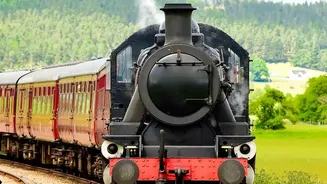
This ingenious system isn't just a novelty; it was an absolute necessity. When British engineers first planned the railway in the 19th century, they faced the immense challenge of the Nilgiris' sharp inclines. Conventional railway technology of the time was simply not up to the task. The rack-and-pinion system, devised by Swiss engineer Roman Abt, was the breakthrough that made the railway possible. Today, specially designed 'X' Class steam locomotives, many originally built in Switzerland, operate on this crucial section. These powerful engines are compound locomotives, meaning they have separate cylinders to power both the main wheels and the pinion wheels, ensuring the train remains pushed securely up the grade. Interestingly, when ascending, the engine is placed at the rear of the train, pushing the carriages uphill to prevent them from breaking away and rolling backwards.
A Legacy of Steam and Steel
The idea for a railway to the Nilgiris was first proposed in 1854, but the sheer difficulty of the project meant that construction didn't begin until 1891. The line to Coonoor was finally completed and opened in 1899, with the extension to Ooty finished in 1908. This feat of engineering, built through dense and unforgiving terrain, stood as a testament to the builders' perseverance. In 2005, UNESCO recognized its global significance by adding it to the list of World Heritage Sites as part of the Mountain Railways of India. This designation honours not only the unique rack technology but also the railway's role in connecting remote mountain communities and its preservation as a living, operational piece of history.