


What is an 'Evening Elongation'?
In simple terms, an elongation is the moment when a planet appears at its greatest separation from the Sun, as seen from Earth. This only happens with Venus and Mercury, the two planets with orbits closer to the Sun than ours. Because they are always
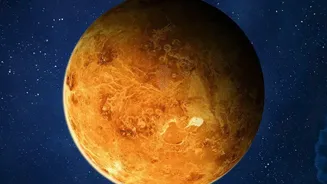
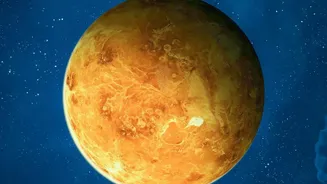
relatively close to the Sun in our sky, they are only visible for a few hours after sunset or before sunrise. When Venus reaches its greatest eastern elongation, it's visible after sunset as a brilliant 'Evening Star'. On August 15, 2026, Venus will be at its farthest point from the Sun for this cycle, making it hang higher and brighter in the twilight sky for longer. This event repeats roughly every 1.6 years, alternating between morning and evening apparitions.
Venus Takes Centre Stage
On August 15, Venus will shine at a brilliant magnitude of -4.4, making it the brightest object in the sky after the Moon and Sun. It will be so bright you can spot it in the western sky even before darkness fully falls. This peak moment occurs at 06:00 UTC, which corresponds to 11:30 AM IST. While the technical peak happens during India's daytime, the evenings surrounding this date, especially August 14 and 15, will provide stunning views. If you have a telescope, you'll be able to see Venus as a tiny, half-lit disc, similar in phase to a first-quarter moon. This period marks the best time to observe the planet during its 2026 evening appearance, and it will remain a prominent evening object through September and into October.
How to See It From India
Viewing this celestial spectacle from India is simple. All you need to do is look low in the western sky shortly after sunset on and around August 15. You won't need any special equipment like a telescope to see Venus itself; its brightness makes it impossible to miss. For the best experience, find a location with a clear, unobstructed view of the western horizon, away from tall buildings and bright city lights. Give your eyes about 20 to 30 minutes to adjust to the darkness, which will help you appreciate the planet's brilliance even more.
More August Sky Treasures: The Perseids
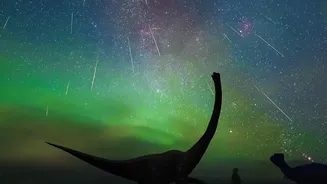
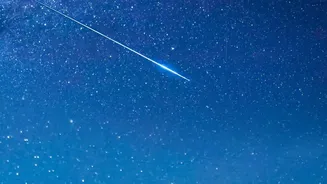
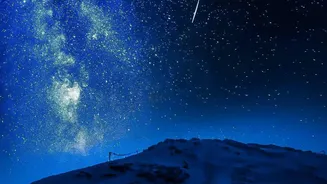
While Venus commands the evening, the pre-dawn hours host another major event: the Perseid meteor shower. This is one of the best meteor showers of the year, famous for producing bright, fast-moving meteors. The shower peaks on the night of August 12-13, with ideal viewing conditions as it coincides with a new moon, ensuring dark skies. Observers in dark locations could see up to 100 meteors per hour. The best time to watch in India is from late night on August 12 into the early morning hours of August 13, particularly between 2:00 AM and 4:30 AM IST. Look towards the northeast, though meteors can appear anywhere in the sky. The main challenge for viewing in many parts of India will be the monsoon clouds, with clearer skies more likely in high-altitude regions like Ladakh and Spiti.
A Parade of Planets Before Dawn
As a bonus, August 2026 also features a 'planet parade' in the pre-dawn sky. Around August 12, six planets—Mars, Saturn, Mercury, Jupiter, Uranus, and Neptune—will be scattered across the morning sky. Mars and Saturn will be relatively easy to spot with the naked eye. However, Mercury and Jupiter will be very low on the eastern horizon just before sunrise, making them challenging to see. To spot the faint ice giants, Uranus and Neptune, you will need at least a pair of binoculars or a telescope. Venus is not part of this morning lineup as it will be in the evening sky.