








The Promise of Climate-Smart Farming
Climate-Smart Agriculture (CSA) is an approach designed to future-proof farming. Its goals are threefold: to sustainably increase productivity, enhance resilience to climate shocks, and reduce agriculture's environmental footprint. In India, where the
agricultural sector employs a vast portion of the population, CSA is not just a concept but a necessity. For decades, modern agriculture has prioritised high-yield hybrid seeds, which often demand significant water and chemical inputs. While successful in boosting output during the Green Revolution, this approach has led to depleted groundwater, soil degradation, and a reliance on monocultures that are vulnerable to pests and unpredictable weather. The climate-smart approach seeks to reverse this by integrating traditional knowledge with modern science to create farming systems that are both productive and sustainable.
The Inherent Resilience of Native Seeds
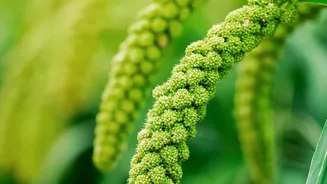
At the heart of this movement is the revival of indigenous or 'heirloom' seeds. These are traditional plant varieties that have been cultivated and passed down through generations of farmers. Unlike commercial hybrids, these seeds are naturally adapted to local environmental conditions. Many traditional varieties of millets, pulses, and rice are inherently drought-resistant, pest-tolerant, and can thrive in marginal soils with fewer chemical fertilisers and pesticides. Millets like bajra (pearl millet), jowar (sorghum), and ragi (finger millet) are prime examples. They require significantly less water than rice and wheat and can withstand higher temperatures, making them ideal for India's arid and semi-arid regions. By cultivating a diverse range of these crops, farmers create a natural buffer; if one crop fails due to a specific climate stress like flood or drought, others may survive, ensuring a more stable food supply.
Guardians of Genetic Diversity
Across India, a quiet revolution is being led by community organisations and women farmers who have traditionally been the custodians of seed knowledge. Groups like the Deccan Development Society (DDS) in Telangana have been working with women's collectives for decades to conserve and promote indigenous crop varieties. Through community-managed seed banks, women farmers save, store, and share dozens of traditional seeds, ensuring this vital genetic diversity is not lost. These initiatives are more than just repositories; they are living libraries of knowledge. Women seed keepers hold invaluable information on which seeds to plant, when to sow them, and how to cultivate them using sustainable practices. This movement empowers women, strengthens local food sovereignty, and provides a powerful, grassroots alternative to dependence on corporate-controlled seed markets.
The Challenges to a Wider Revival
Despite the clear benefits, the path to mainstreaming indigenous seeds is not without obstacles. Decades of policies promoting hybrid seeds have led to the erosion of traditional varieties and the knowledge associated with them. Many farmers, particularly younger ones, are disconnected from these ancient practices and find it difficult to access native seeds. The market is overwhelmingly dominated by commercial seeds, with supply chains and government subsidies often favouring high-yield monocultures. Furthermore, as heirloom seeds gain recognition, there is a risk of them being commercialised in ways that dispossess the very communities that have protected them for centuries. Overcoming these hurdles requires a concerted effort to create supportive policies, build robust local seed systems, and formally recognise the role of farmers as guardians of our agricultural heritage.