

A Landmark Scientific Partnership
For the first time, scientists have jointly analysed observations from India's Aditya-L1 mission and the European Space Agency's (ESA) Proba-3. Researchers at Bengaluru's Indian Institute of Astrophysics (IIA), along with international collaborators,
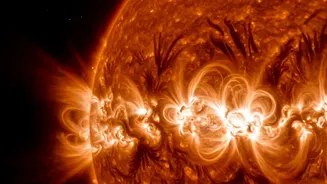
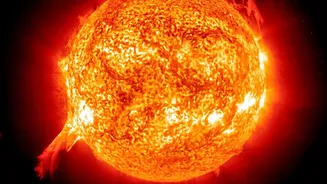
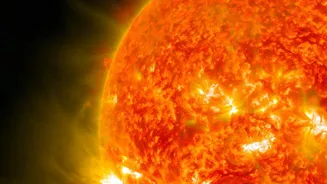
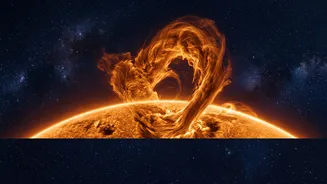
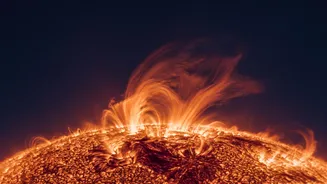
have published a study in the journal 'Astronomy & Astrophysics' that combines data from these two separate missions. The focus of this groundbreaking work is on coronal mass ejections (CMEs), which are massive and violent eruptions of plasma and magnetic fields from the Sun. This joint effort marks a significant milestone, showcasing India's growing prominence in space science and the immense value of international cooperation in tackling some of the biggest mysteries of our solar system.
Two Missions, One Shared Goal
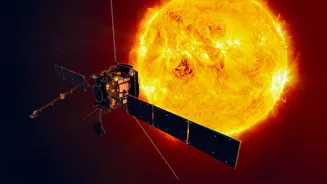
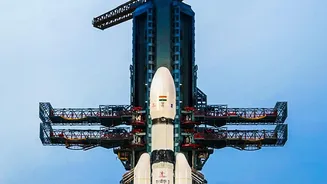
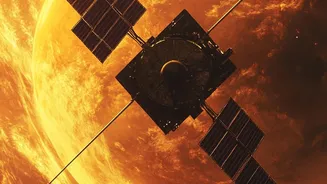
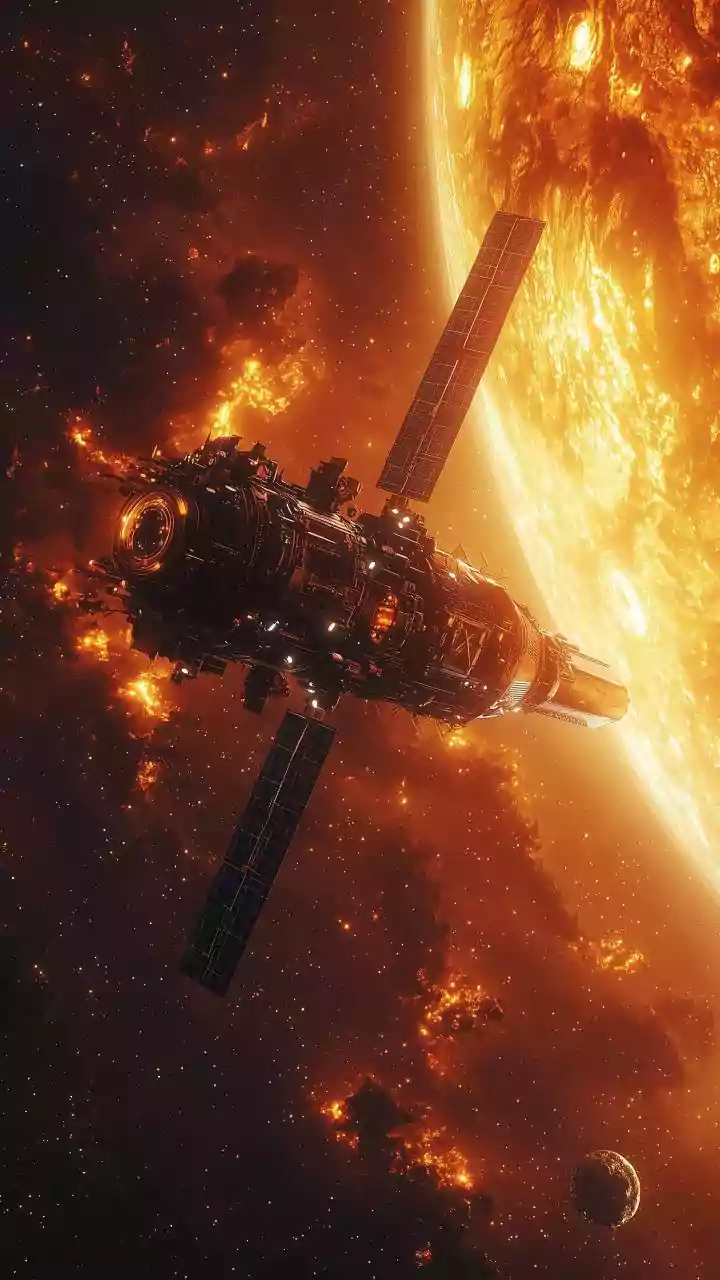
The success of this research lies in the complementary capabilities of the two missions. ISRO's Aditya-L1, India’s first dedicated solar observatory, was launched in September 2023 and is positioned at the Lagrange Point 1 (L1), about 1.5 million kilometres from Earth. This unique vantage point allows for continuous, uninterrupted observation of the Sun. Its key instrument for this study, the Visible Emission Line Coronagraph (VELC), performs spectroscopy, analysing light to understand the temperature and density of the coronal gas. Meanwhile, ESA's Proba-3, launched in December 2024 by an Indian PSLV rocket, is a marvel of engineering. It consists of two spacecraft flying in precise formation, about 150 metres apart, to create a perfect artificial solar eclipse. This allows its ASPIICS coronagraph to capture incredibly detailed images of the Sun's faint corona, which is normally blinded by the Sun's own glare.
Decoding Violent Solar Eruptions
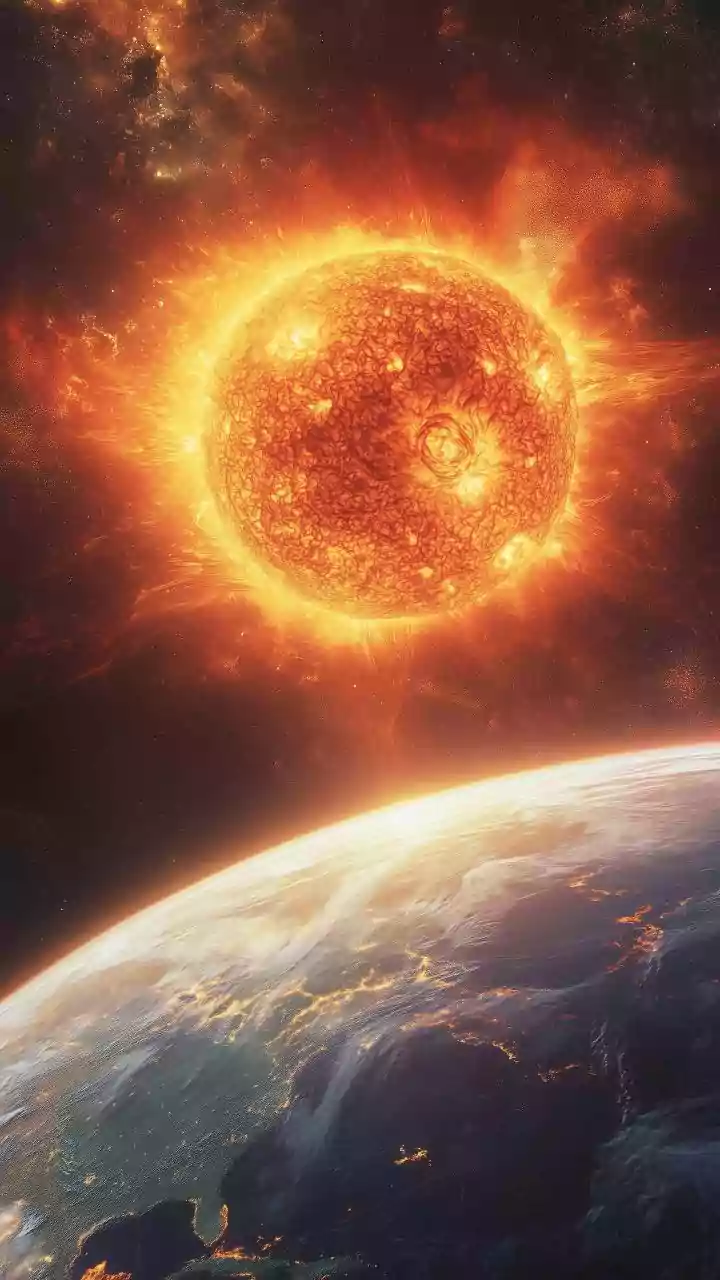
Observing CMEs right as they leave the Sun is notoriously difficult, yet it's crucial for understanding their evolution and predicting their potential impact on Earth. These solar storms can disrupt satellites, power grids, and communication systems. The joint study focused on two CMEs observed simultaneously by both missions in September 2025. Aditya-L1's VELC provided spectroscopic data on the gas temperature and density, while Proba-3's ASPIICS captured sharp images, allowing for accurate estimates of the CMEs' shape, speed, and mass. By combining these two different types of observation, scientists were able to cross-check their findings and build a more complete, three-dimensional picture of the eruptions as they began.
What the Study Discovered
The analysis revealed fascinating differences between the two events. One CME was fast, travelling at approximately 645 km/s, while the other was much slower at around 145 km/s. The slower eruption expanded more dramatically in its early stages. The study also measured how the energy was distributed within the CMEs. For the faster event, most of the energy was in its motion and magnetic field, with thermal energy (heat) accounting for only about 1%. In the slower event, the thermal energy became much more significant as it travelled. The fact that independent measurements from two different instruments produced results that agreed so well gives scientists high confidence in the data. These new constraints on the mass, density, and energy of CMEs near the Sun provide crucial observational data to test and refine theories about how these powerful events are triggered and evolve.
A New Era for Solar Physics
This successful collaboration between ISRO and ESA is more than just a single study; it's a template for the future of space science. It demonstrates that by combining the unique strengths of different missions, the global scientific community can achieve far more than any single agency could alone. The data from Aditya-L1 and Proba-3 are helping to fill a critical gap in our knowledge of the Sun's behaviour, particularly the processes that drive space weather. As both missions continue their work, this partnership promises to deliver a steady stream of new insights into our star, enhancing India's role as a key player in global space exploration and improving our ability to protect our technology-dependent world from the Sun's powerful outbursts.