




A Landmark Orbital Flight
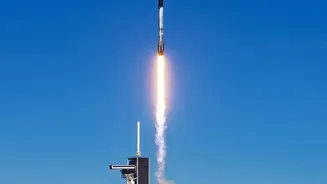
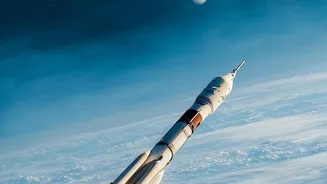
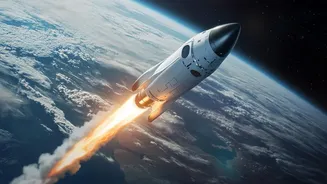
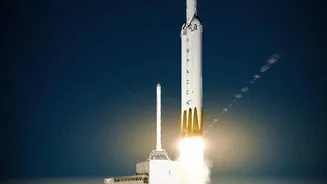
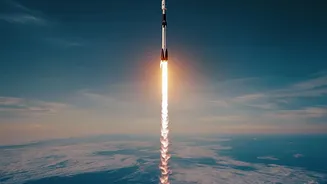
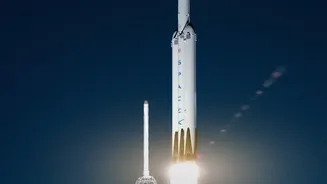
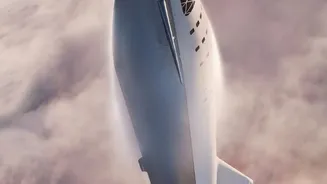
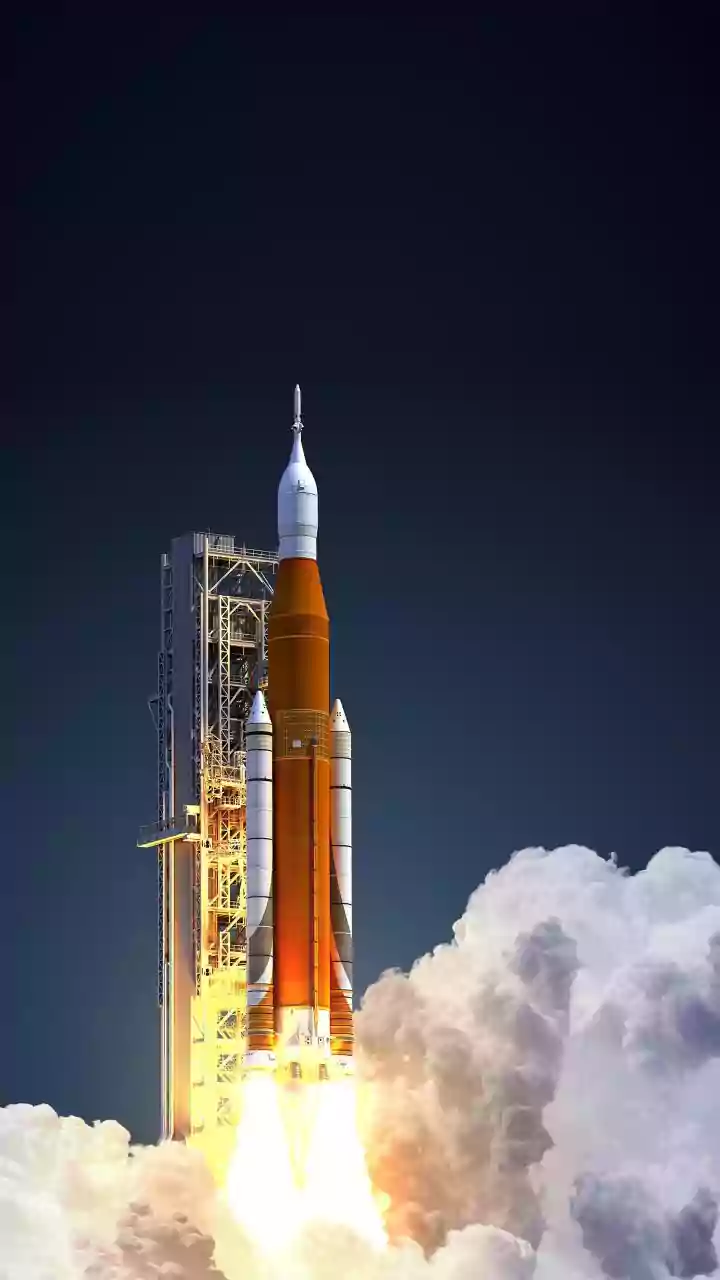
On its 14th test flight, the Starship vehicle finally achieved what all previous missions had worked towards: reaching a stable Earth orbit. Lifting off from Starbase, Texas, the colossal rocket powered through its ascent, overcoming the early shutdown
of one engine on the upper stage, and pushed into a 170-mile-high orbit. This marked a significant transition for the program, moving from deliberately suborbital tests to demonstrating its capability as an orbital launch vehicle. While an engine issue prompted SpaceX to shorten the planned 10-hour mission to about three hours, the primary goals were met. The Super Heavy booster successfully performed its separation and boostback burn before splashing down in the Gulf of Mexico, while the Starship upper stage completed its journey to orbit.
Starship's First Payload Delivery
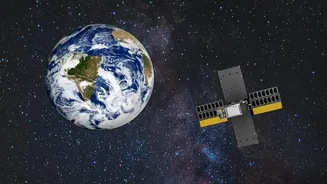
More than just reaching orbit, this mission saw Starship perform its first operational task: deploying a payload. The spacecraft successfully released 26 of the next-generation Starlink V3 satellites. This was a crucial proof-of-concept for Starship’s unique satellite deployment mechanism, nicknamed the "Pez dispenser". Unlike traditional rockets, Starship uses an internal slot to release satellites one by one, a system designed for the high-volume deployment needed to build out the massive Starlink constellation. These new V3 satellites are significantly larger and heavier than previous versions, so much so that they can only be launched by Starship, not the workhorse Falcon 9. Each V3 satellite is expected to add tremendous capacity to the Starlink network, making this deployment a critical step in expanding SpaceX's global internet service.
The Bigger Prize: Full Reusability
While deploying satellites was the mission's tangible outcome, the flight was fundamentally another step towards the much larger ambition of full reusability. SpaceX’s entire strategy hinges on creating a launch system where both the booster and the upper stage can be rapidly reused, much like a commercial airliner. This mission provided invaluable data on the performance of both stages during ascent, separation, and re-entry. The Super Heavy booster's controlled splashdown and the Starship's own targeted splashdown in the Pacific Ocean after deorbiting were key tests of the maneuvers needed for future recovery attempts. Previous flights have tested heat shield tiles and flap controls, all in service of one day catching the booster and ship with the launch tower's robotic arms, a system nicknamed "Mechazilla".
Why Reusability Changes Everything
Achieving full and rapid reusability would fundamentally change the economics of accessing space. By eliminating the need to build a new rocket for every launch, SpaceX aims to drastically lower the cost per kilogram to orbit. This isn't just about saving money; it's about enabling projects that are currently unfeasible. A high-cadence, low-cost Starship is the only way SpaceX can deploy the tens of thousands of V3 satellites planned for its next-generation Starlink constellation. It is also the designated vehicle for NASA's Artemis program to return humans to the Moon and the cornerstone of Elon Musk's long-term vision of establishing a self-sustaining city on Mars. This recent flight, by proving Starship as an operational orbital vehicle, brings that future one giant leap closer.