
The Martian Water Quest
For future astronauts on Mars, water is life. It’s not just for drinking; it's a planetary multitool. Water (H2O) can be broken down into oxygen for breathing and hydrogen for creating rocket propellant, potentially enabling a return trip to Earth. This
concept, known as in-situ resource utilization (ISRU), is fundamental to long-term human presence on other worlds. Instead of hauling everything from Earth at enormous cost, astronauts could live off the land. Orbiters have already created maps showing vast quantities of water ice are likely buried just beneath the Martian surface, especially in the mid-latitudes. The challenge, however, is knowing exactly where and how deep this ice is. You could have a massive ice sheet just a few feet down, or it could be dozens of feet below impenetrable rock. Knowing the difference is critical before sending a multi-billion-dollar human mission. You wouldn't want astronauts to show up with a shovel when they need a backhoe.
From Ingenuity to Skyfall
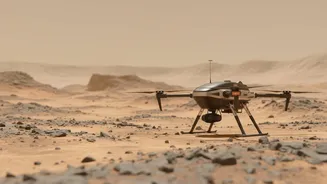
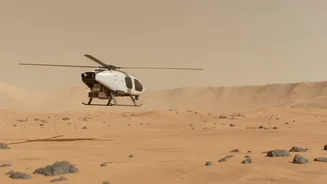
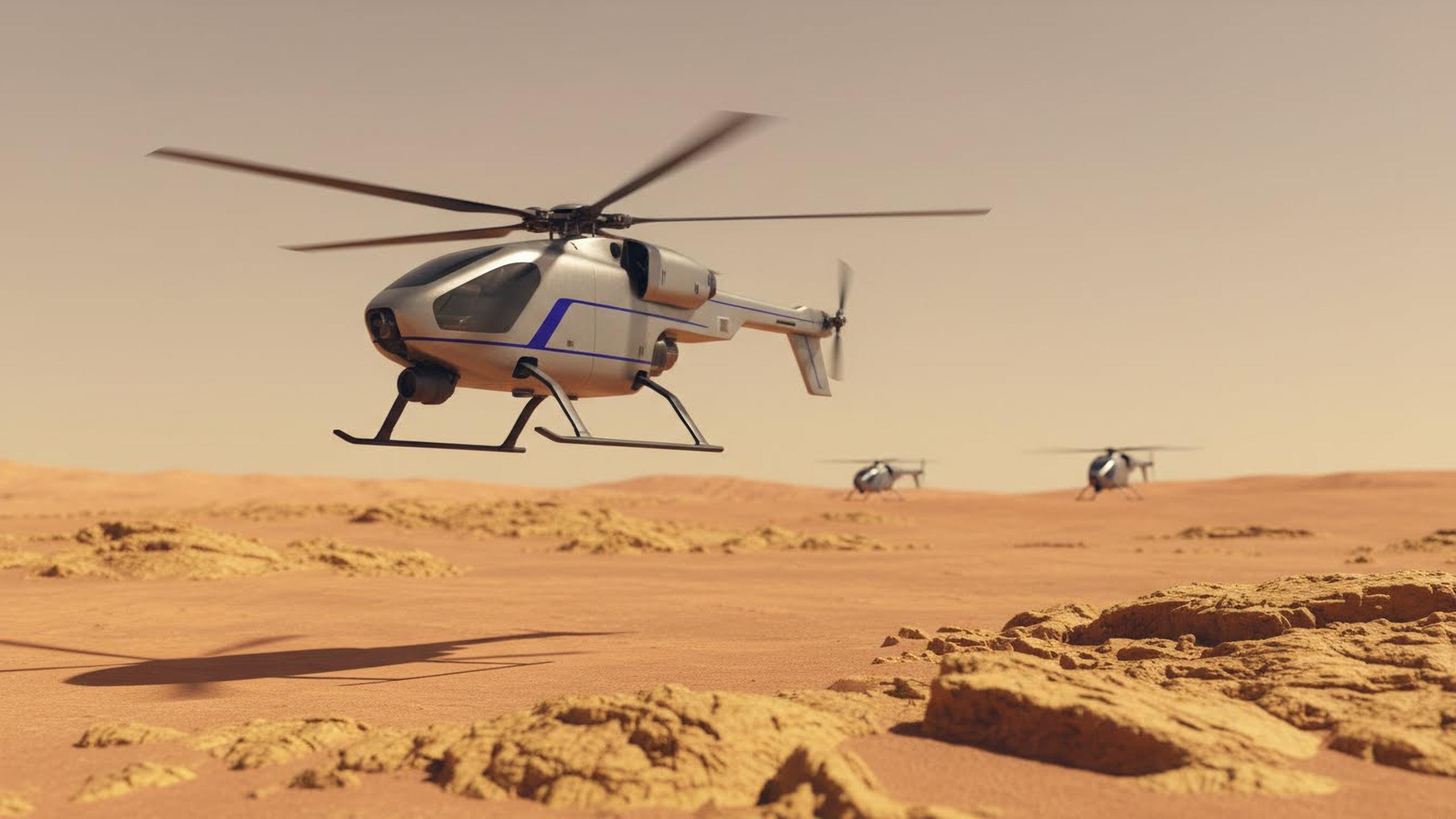
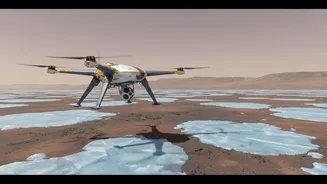
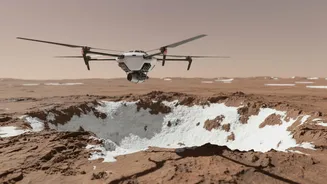
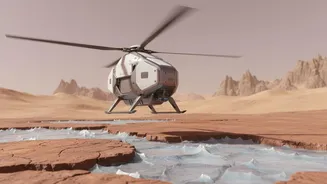
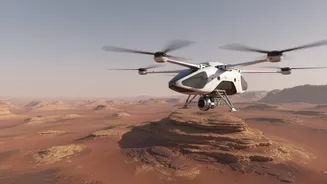
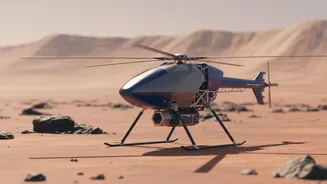
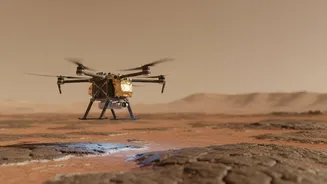
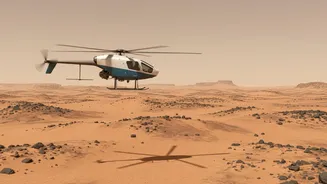
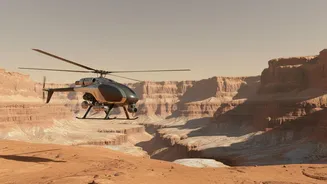
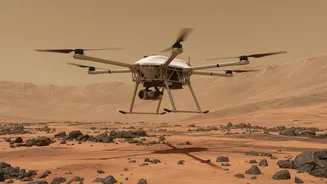
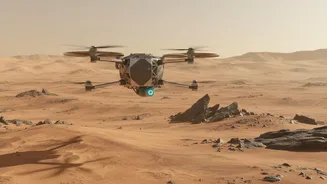
The stunning success of the Ingenuity helicopter, which completed 72 flights and proved powered flight was possible in Mars's thin atmosphere, opened a new frontier for exploration. It demonstrated that an aerial perspective could scout routes for rovers and gather valuable data. Now, NASA is taking that concept to the next level with Skyfall. Announced in March 2026, the Skyfall mission isn't just one helicopter, but a trio of advanced rotorcraft designed for a dedicated scientific purpose. Managed by NASA's Jet Propulsion Laboratory (JPL), these helicopters will be larger and more capable than their predecessor, built to operate independently without a rover for communications. Scheduled for a potential launch in late 2028, the mission plans a dramatic mid-air deployment, where the helicopters separate from their entry vehicle and fly themselves to the surface.
X-Ray Vision for the Red Planet
The key to Skyfall's ice-hunting ability is its ground-penetrating radar. While orbiters have used radar to detect subsurface ice for years, their distance from the planet limits their resolution. They can spot large deposits but can't see the fine details of the first few feet below the surface—precisely where the most accessible ice is expected to be. The Skyfall helicopters will fly low and slow, allowing their specialized radar to map the shallow subsurface with unprecedented clarity. This radar is carried on a unique flexible antenna that looks like a small cape trailing below the helicopter. This design allows the antenna to unfurl during flight for data collection and fold up during landing without breaking. By sending radar pulses into the ground and analyzing the reflections, scientists can create detailed 3D maps of buried ice, revealing its depth, thickness, and purity.
Mapping a Human Future on Mars
The primary goal of the Skyfall concept is to create a high-resolution treasure map for water on Mars. By identifying and characterizing accessible ice deposits, the mission will help mission planners select the safest and most resource-rich landing sites for the first human crews. Beyond water, the helicopters will be equipped with a suite of instruments, including high-resolution color cameras to create 3D terrain maps and sensors to analyze surface materials and weather patterns. This allows the helicopters to serve as advanced scouts, examining terrain that might be too difficult or dangerous for a rover to traverse. They can assess the stability of the ground, identify potential hazards, and provide critical data that will mitigate risks for human landing systems. In essence, Skyfall is designed to bridge the gap between orbital reconnaissance and ground-level exploration, providing the detailed local knowledge needed to make human missions a reality.