






Skipping: Forging Explosive Speed
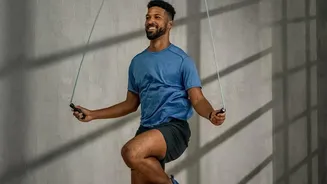
Often dismissed as a playground pastime, the jump rope is a formidable tool for developing athletic speed. At its core, skipping is a form of plyometric training, which involves exercises that require muscles to exert maximum force in short intervals.
This is the key to building power. Each time you jump, your muscles undergo a rapid cycle of stretching and contracting. This process trains the nervous system to react more quickly and improves what is known as the stretch-shortening cycle. The result is an increase in reactive strength, which is crucial for sprinting, quick directional changes, and overall agility. It strengthens the calves, improves footwork by teaching you to be light on the balls of your feet, and enhances coordination between your brain, hands, and feet.
The Science of High-Impact Rhythm
The benefits of skipping go beyond just muscle. The consistent, rhythmic impact helps improve bone density, a crucial but often overlooked aspect of physical conditioning. But the main draw for athletes is its effect on speed and power. The high-intensity nature of jumping rope provides a significant cardiovascular workout, boosting endurance and stamina. More importantly, it fine-tunes the neuromuscular system for efficiency. Think of it as upgrading your body's internal wiring. Consistent practice helps your body learn to produce force more rapidly and economically, which translates directly to faster acceleration and quicker feet on the field or court. It’s a full-body conditioning tool disguised as a simple rope.
Yoga: The Art of Internal Awareness
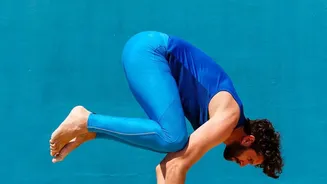
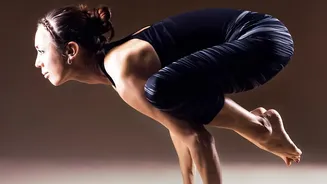
While skipping builds explosive power, yoga cultivates the control needed to wield it. Yoga’s primary contribution to body control lies in its ability to enhance proprioception—your body’s sense of its position in space. Holding balancing poses like Tree Pose or Warrior 3 forces you to make constant, minute adjustments, strengthening the stabilising muscles in your ankles, knees, and hips. This deepens the mind-muscle connection, allowing for more precise and accurate movements. Unlike the rapid-fire action of skipping, yoga focuses on sustained holds and slow transitions, which builds muscular endurance and control in a way that high-impact exercises cannot. It teaches your body to be stable and strong from the inside out, starting with the core.
Perfecting Poise and Preventing Injury
A well-developed sense of proprioception is essential for injury prevention. When your body has a clear understanding of its own alignment and movement, it is less likely to move into compromised or dangerous positions, especially under fatigue. Studies have shown that athletes who incorporate yoga into their routines often experience fewer overuse injuries. Yoga also improves flexibility and mobility, which allows for a greater range of motion and helps release muscle tightness that can accumulate from high-impact activities like skipping. The practice isn’t just physical; the focus on breath and mindfulness helps manage stress and improve mental focus, which are critical components of high-level performance.
Explosive Force Meets Mindful Form
So, which is better? The answer depends entirely on the goal. Skipping is an engine for building speed and cardiovascular endurance through high-impact, repetitive motion. It’s about generating maximum force quickly. Yoga, on the other hand, is the steering and suspension system. It provides stability, balance, and fine-tunes motor control through deliberate, low-impact movements. One creates the power; the other perfects its application. An athlete with great speed but poor body control is inefficient and injury-prone. Conversely, an athlete with perfect control but no explosive power will lack a competitive edge.
Better Together: A Holistic Approach
The most effective approach is not to choose one over the other, but to combine them. Skipping can form the high-intensity portion of a workout, building the raw materials of speed and stamina. Yoga can serve as both a crucial preparation tool and a recovery method. Using yoga to warm up can improve mobility before a skipping session, while practicing it afterwards can help lengthen muscles, reduce soreness, and calm the nervous system. This combination creates a balanced athlete who is not only fast and powerful but also coordinated, flexible, and resilient. By integrating both disciplines, you harness the explosive energy of skipping and refine it with the mindful control of yoga, leading to superior overall performance.