






What is the Rhenium Allegation?
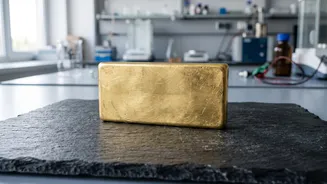
An investigation, reportedly conducted by news outlet Dainik Bhaskar in Jodhpur, Rajasthan, has brought a new gold adulteration scare to light. The core of the claim is that Rhenium, a dense and rare metal, can be mixed with gold to increase its weight
while remaining undetected by some conventional purity testing methods. During the reported experiment, investigators mixed approximately one gram of Rhenium powder with nearly eight grams of pure gold. This mixture was then used to create a piece of jewellery which, despite having a lower actual gold content of around 20 carats, allegedly passed multiple purity tests—including at a hallmarking centre—as 22-carat (91.6% pure) gold. These claims, though yet to be officially confirmed by government laboratories, have sparked serious concern about the integrity of the gold testing ecosystem.
Why Rhenium is a Clever Adulterant
The choice of Rhenium is what makes this alleged method particularly concerning. Previous adulterants like iridium and ruthenium have been known issues for the industry. Rhenium, however, presents a unique challenge due to its physical properties. It is a very dense metal, which means it can add significant weight without adding much volume, a key factor in fooling basic density checks. While gold's density is around 19.3 grams per cubic centimetre, Rhenium's is even higher at approximately 21 g/cm³. The investigation suggested that a Chinese agent claimed the powder could be mixed into gold at levels up to 25% and still evade standard detection. This makes it a potent tool for fraudsters looking to sell less gold for more money, potentially costing an unaware buyer thousands of rupees per tola.
The Technology Under the Microscope
At the heart of this issue is the reliability of X-Ray Fluorescence (XRF) machines. These devices are the industry standard for fast, non-destructive purity testing. An XRF analyser works by shooting an X-ray beam at the jewellery. The atoms in the metal then emit their own fluorescent X-rays at unique energy signatures, which the machine reads to determine the elemental composition and purity. However, XRF technology primarily analyses the surface layer of an item. The concern is that if Rhenium is well-mixed into the gold alloy, it may not be properly identified by all XRF machines, especially if the software is not calibrated to detect it. The investigation claimed that the adulterated ornament was successfully passed off as 22-carat gold at multiple showrooms and testing facilities.
Industry on Alert and What it Means for You
The jewellery industry and regulatory bodies are taking these claims seriously, as consumer trust is the bedrock of the trade. While official confirmation is awaited, the allegations highlight a potential vulnerability. For consumers, this serves as a critical reminder to remain vigilant. The best defence remains purchasing jewellery from highly reputable vendors and ensuring it has the mandatory Hallmark Unique Identification (HUID) code. This six-character alphanumeric code, verifiable through the BIS CARE app, provides a digital trail for the item, linking it to the jeweller and the specific Assaying and Hallmarking Centre (AHC) that certified it. While the current controversy questions the testing itself, the HUID system provides a crucial layer of accountability. Consumers who suspect their gold is adulterated can also get it tested at any BIS-recognised AHC.