







The Challenge of Unregulated Tourism
For years, the soaring popularity of India's alpine regions has been a double-edged sword. The influx of tourists, eager to witness the stark beauty and rare wildlife, brought economic benefits. However, this growth was often chaotic. Unregulated vehicle
movement, including illegal off-roading, disturbed sensitive wildlife habitats and led to soil erosion. A lack of formal guidelines often meant that tourism's impact was not properly managed, creating challenges like waste disposal and putting pressure on natural resources. Furthermore, the economic benefits didn't always trickle down to the local communities who coexist with this wildlife, creating a system that was neither ecologically nor socially sustainable in the long run.
Ladakh's Blueprint for a New Beginning
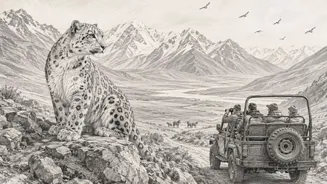
Signifying a major policy shift, Ladakh is launching India's first formal high-altitude wildlife safari. Approved in August 2026, this initiative moves away from the previous free-for-all model. Under a new society named SHAN (Snow Leopard and High-Altitude Nature Conservation Society), the plan is to introduce guided jeep safaris in specially designed vehicles operated by trained local drivers. These safaris will follow designated routes through areas like Hemis National Park and the Changthang Wildlife Sanctuary, known hotspots for snow leopards and diverse birdlife. The core idea is to curb ecological disturbances while enhancing the visitor experience, modelling the structured approach seen in established national parks like Kaziranga and Ranthambore.
Empowering Communities, Protecting Wildlife
A central pillar of this new phase is making local communities direct partners in conservation. The new model explicitly links conservation with livelihood generation. For instance, the plan involves training local youth as certified birdwatching guides, creating wildlife photography fellowships, and empowering women artisans to produce and sell wildlife-themed souvenirs. This approach builds on successful, smaller-scale precedents like the Himalayan Homestays program, which helped change local perceptions of predators like the snow leopard from pests to valuable assets. By ensuring that the economic benefits of tourism are shared, the new policy aims to create a powerful incentive for communities to become active stewards of their environment.
A Model for the Himalayas
While Ladakh's comprehensive plan is the most recent and detailed example, it is part of a broader trend across the Indian Himalayas to formalise eco-tourism. States like Himachal Pradesh have also introduced policies to develop dozens of eco-tourism sites with an emphasis on responsible activities and local participation. The goal is to create a sustainable framework that can be adopted across the fragile Himalayan ecosystem. This includes installing proper waste management systems in villages, establishing wildlife clubs in schools to foster conservation awareness from a young age, and creating interpretative signage to educate tourists. The vision is to establish Ladakh and other Himalayan regions as global examples of community-led, responsible mountain tourism.