

The Whole Grain Difference
What exactly makes a grain “whole”? A whole grain contains all three parts of the kernel: the bran, the germ, and the endosperm. The bran is the fibre-rich outer layer, packed with B vitamins and minerals. The germ is the nutrient-dense core with healthy
fats and more vitamins. The starchy endosperm is the largest part, providing carbohydrates for energy. In contrast, refined grains like white flour and white rice have had the bran and germ stripped away, removing most of the fibre, vitamins, and minerals. While some refined grains are enriched, meaning some nutrients are added back, the natural fibre and many health-promoting compounds are lost in the process.
Fibre: Your Secret Weapon for Fullness
The key to the “staying power” of whole grains is their high dietary fibre content. Fibre is a type of carbohydrate that the body can't easily digest. This has a powerful effect on how you feel after a meal. Soluble fibre dissolves in water to form a gel-like substance in your stomach, which slows down digestion. This helps you feel fuller for longer and prevents the rapid blood sugar spikes that often follow a meal high in refined carbohydrates. Insoluble fibre adds bulk to stool, promoting regular digestion. A diet rich in fibre not only helps with weight management by increasing satiety but is also linked to a lower risk of heart disease, type 2 diabetes, and certain cancers.
Upgrade Your Lunchbox: Easy Swaps
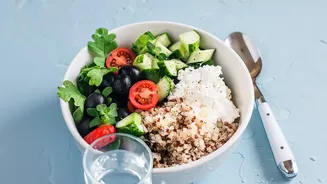
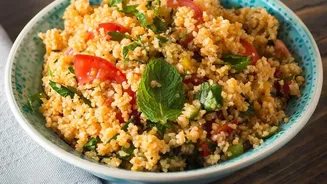
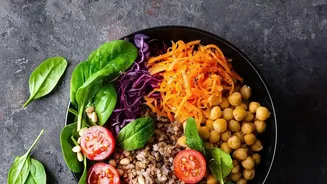
Moving toward whole grains doesn't require a complete dietary overhaul. Start with simple, delicious swaps in your packed lunch. Instead of a sandwich on white bread, use 100% whole-wheat bread, wraps, or pita pockets. If you enjoy pasta salads, opt for whole-wheat pasta. Grains like quinoa, farro, and barley make fantastic bases for hearty salads; they have a satisfyingly chewy texture and nutty flavour. You can toss cooked quinoa with chickpeas, chopped vegetables, and a light vinaigrette for a lunch that holds up well. Even snacks can get a whole-grain boost. Choose crackers made with whole-grain flour or enjoy a handful of popcorn, which is a natural whole grain.
More Than Just Salads and Sandwiches
Think beyond the usual lunch staples. A thermos of hearty soup made with barley or lentils can be incredibly satisfying on a cooler day. Leftover brown rice from dinner can be transformed into a quick stir-fry or a base for a burrito bowl with black beans, corn, and salsa. You can even meal-prep by cooking a large batch of a grain like sorghum or wheat berries at the beginning of the week. Use it as a side dish or the main component of your lunches, adding different proteins and vegetables each day to keep things interesting. For a quick option, layer Greek yogurt with berries and a whole-grain granola in a jar for a parfait.
How to Spot True Whole Grains
Navigating supermarket aisles can be tricky. Don't be fooled by colour; brown bread isn't always whole-wheat. Look for labels that explicitly state "100% whole grain" or "100% whole wheat". The most reliable method is to check the ingredients list. The first ingredient should be a whole grain, such as "whole-wheat flour," "brown rice," "whole oats," or "quinoa". Terms like "multi-grain," "stone-ground," or "100% wheat" do not guarantee the product is entirely whole grain. By becoming a savvy label reader, you can ensure you're getting the full fibre and nutritional benefits.