





The Grand Ambition: Gaganyaan's Goal
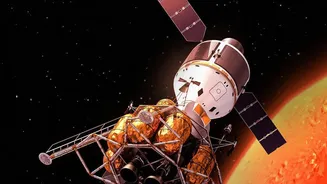
The Gaganyaan programme is India's prestigious initiative to demonstrate human spaceflight capability by launching a crew of three astronauts into an orbit of 400 kilometres for a three-day mission and bringing them back safely to Earth. Spearheaded by the Indian
Space Research Organisation (ISRO), the successful completion of this mission will make India the fourth country in the world—after the United States, Russia, and China—to have an independent human spaceflight programme. The project involves developing critical technologies, including a human-rated launch vehicle (HLVM3), life support systems to provide an Earth-like environment in space, and provisions for crew emergency escape. The entire programme is a monumental undertaking, coordinating efforts across ISRO centres, Indian industry, and academic institutions.
What's Next: The Uncrewed G1 Mission
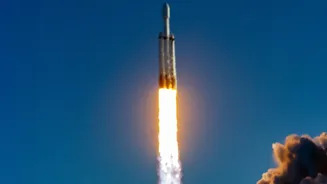
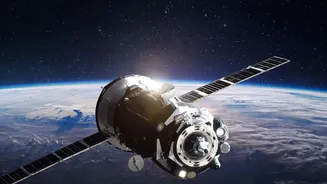
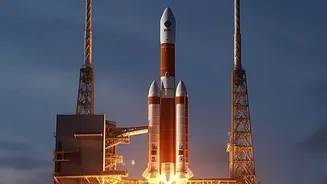
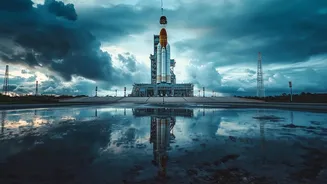
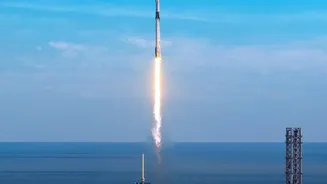
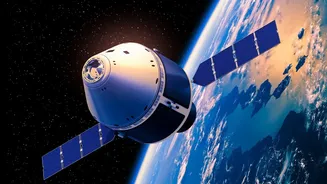
All eyes are on the next major step: the first uncrewed orbital test flight, designated Gaganyaan-1 (G1). ISRO Chairman V. Narayanan has reaffirmed that the agency is targeting the end of 2026 for this crucial launch. This mission is essentially a full dress rehearsal without the astronauts. It will test the performance of the human-rated LVM3 launch vehicle, the orbital module's systems, and the high-stakes re-entry and recovery operations. A key passenger on this flight will be Vyommitra, a sophisticated humanoid robot developed by ISRO. Vyommitra can mimic human functions, monitor module parameters, and interact with the ground control, providing invaluable data on how the flight would feel for a human crew. The success of the G1 mission is non-negotiable for the programme to proceed to its subsequent stages.
Building on a Foundation of Tests
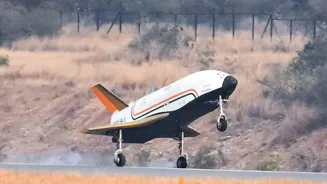
The path to the first uncrewed flight has been paved with a series of rigorous tests to validate every component. In recent months, ISRO has successfully completed critical qualification tests on the crew module, including parachute systems designed to ensure a safe splashdown. A successful airdrop test in July 2026 qualified the main parachute's structural integrity under maximum load conditions, providing crucial confidence for the G1 mission. These follow earlier successes, such as the high-altitude abort test in 2023, which proved the reliability of the Crew Escape System designed to pull the crew to safety in an emergency. The Indian Navy has also conducted recovery trials with a test version of the crew module, ensuring that recovery teams are prepared well in advance of the actual mission.
The Astronauts in Waiting
While the technology is being perfected, the human element of the mission is also in its final stages of preparation. The four chosen astronaut-designates—Group Captains Prasanth Balakrishnan Nair, Ajit Krishnan, Angad Pratap, and Wing Commander Shubhanshu Shukla—are all distinguished pilots from the Indian Air Force. After completing generic spaceflight training in Russia, they have been undergoing mission-specific training at ISRO's Astronaut Training Facility in Bengaluru. This includes intense simulator training, physical fitness, and mastering flight procedures. Their deep involvement in the final phases ensures they are intimately familiar with the spacecraft they will one day command.
The Road to a Crewed Launch
Following the G1 mission in late 2026, ISRO plans at least two more uncrewed test flights in 2027 to further validate the systems. If these preparatory missions proceed without a hitch, India's first crewed spaceflight, Gaganyaan-4, is tentatively scheduled for the second quarter of 2027. This timeline, while ambitious, reflects a systematic and safety-first approach. Prime Minister Narendra Modi's vision extends even beyond this, with plans for an Indian space station, the Bharatiya Antariksh Station (BAS), by 2035 and a crewed lunar landing by 2040. The Gaganyaan programme is the foundational first step toward these long-term aspirations in space exploration.