





A Message of Friendship from Orbit
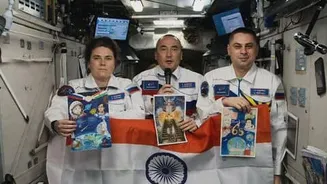
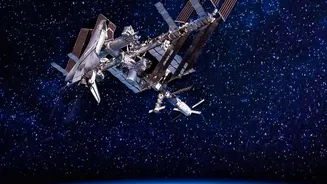
In a video message from the Russian segment of the ISS, cosmonauts Pyotr Dubrov, Anna Kikina, and Andrey Fedyaev were seen holding the Indian tricolour. They congratulated the people of India on eight decades of freedom from colonial rule and wished the nation
peace and prosperity. The message underlined space exploration as a key pillar of the relationship between the two countries. Cosmonaut Andrey Fedyaev concluded the greeting by exclaiming, "Long live India-Russia friendship!" while proudly holding the Indian flag aloft in zero gravity. The crew also noted that 2026 marks the 65th anniversary of the first human spaceflight by Soviet hero Yuri Gagarin, who himself became an early symbol of this special bond when he visited India in 1961.
A Tradition Rooted in History
This warm gesture is not an isolated event but the latest chapter in a long story of mutual respect and collaboration. The foundation of this partnership was laid during the Cold War. In 1975, the Soviet Union launched Aryabhata, India's very first satellite, from a Russian launch site. This pivotal moment gave India its start in space. Throughout the following years, the USSR continued to help launch several of India's early Bhaskara-series satellites. This early support was crucial for the Indian Space Research Organisation (ISRO), providing it with the foundational know-how and experience it needed to grow into the world-leading agency it is today. This relationship provided India with critical technology while offering Russia economic benefits and a reliable strategic partner.
Rakesh Sharma: A Shared Hero
Perhaps the most iconic moment in this shared history came on April 3, 1984. On that day, Indian Air Force pilot Rakesh Sharma launched aboard the Soviet Soyuz T-11 spacecraft, becoming the first and only Indian citizen to travel to space. As part of the Soviet Interkosmos program, Sharma spent nearly eight days aboard the Salyut 7 space station with two Soviet crewmates. During his time in orbit, he conducted various scientific experiments, including earth observation focused on India and even studying the effects of yoga in weightlessness. His mission made India the 14th nation to send a person into orbit and cemented a bond that went beyond technology, creating a shared hero for both nations. Sharma was awarded both India's highest peacetime gallantry award, the Ashok Chakra, and the title of Hero of the Soviet Union.
From Gagarin's Center to Gaganyaan's Future
The spirit of cooperation is not just a relic of the past; it is actively shaping the future of India's space ambitions. Russia has played a vital role in India's prestigious Gaganyaan mission, the country's first human spaceflight program. The four Indian Air Force pilots selected as astronaut-candidates—Group Captains Prasanth Balakrishnan Nair, Angad Pratap, Ajit Krishnan, and Wing Commander Shubhanshu Shukla—completed their rigorous generic spaceflight training in Russia. Their training took place at the Yuri Gagarin Cosmonaut Training Center near Moscow, the very same facility where Rakesh Sharma prepared for his historic flight decades earlier. This comprehensive training, completed in 2021, covered everything from survival skills to the intricacies of the Soyuz spacecraft, preparing them for the challenges of space. As cosmonaut Anna Kikina noted in the ISS message, this collaboration on Gaganyaan marks a fresh phase in the partnership.