





The Martian Climate Puzzle
For decades, understanding the Martian climate has been a key goal for planetary scientists. Mars has an atmosphere about 100 times thinner than Earth's, which means it cannot hold onto heat effectively. This leads to dramatic temperature swings, from
a relatively mild 27 degrees Celsius in some regions during summer down to a bone-chilling minus 123 degrees Celsius in winter. These extreme fluctuations are also influenced by the planet's elliptical orbit, which makes its southern summers particularly harsh. Predicting this weather, from daily temperature changes to planet-engulfing dust storms, is not just an academic exercise; it is crucial for the safety and success of future robotic and human missions to the Red Planet.
A New Eye on the Red Planet
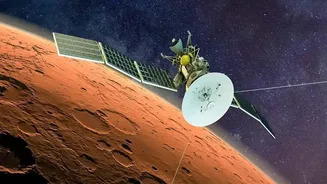
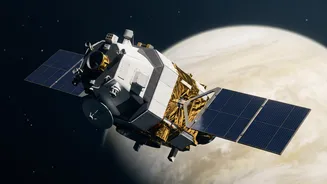
The game-changer in this field has been the Emirates Mars Mission, also known as the Hope probe. Launched by the United Arab Emirates, Hope entered Mars's orbit in February 2021 with a unique objective: to create the first complete, global picture of the Martian atmosphere across different times of day and seasons. Previous missions often observed the weather at the same local time each day. In contrast, Hope's wide orbit allows its instruments, like the Emirates Mars Infrared Spectrometer (EMIRS), to capture a full day's cycle. This provides an unprecedented, continuous dataset, offering a holistic view of atmospheric circulation rather than just intermittent snapshots.
India's Role in Deciphering the Data
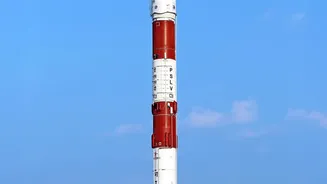
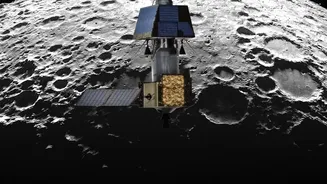
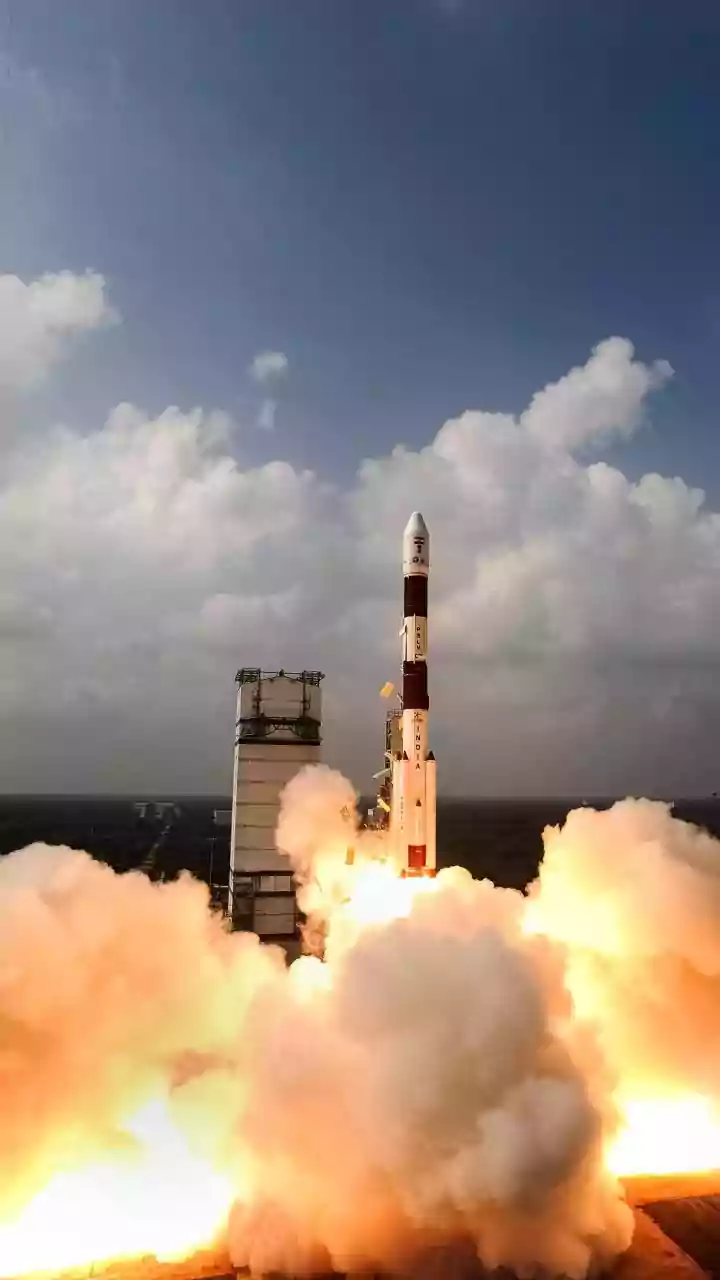
This firehose of new data required skilled analysis, and scientists from India's Physical Research Laboratory (PRL) in Ahmedabad stepped up to the challenge. Building on India's own legacy in Mars exploration, which began with the celebrated Mars Orbiter Mission (Mangalyaan), these researchers have become key players in interpreting complex planetary data. The PRL team used the observations from Hope's EMIRS instrument to map out temperature changes in fine detail, focusing on two massive impact basins, Hellas and Argyre, to understand how surface topography influences atmospheric patterns. Their work represents a powerful example of international scientific collaboration, combining UAE's mission data with Indian analytical expertise.
Unlocking the Secrets of Zonal Waves
The PRL scientists didn't just map temperatures; they uncovered the behaviour of large-scale patterns called zonal waves. Think of these like ripples on a pond, but instead of water, they are vast waves of temperature moving through the thin Martian air. On Earth, similar planetary waves, called Rossby waves, are linked to the jet stream and help move air masses around, creating stable or stormy weather. The Indian scientists found that on Mars, the shape and behaviour of these waves are heavily influenced by the landscape below. For example, the Argyre basin was dominated by a simple, large-scale wave pattern, while the deeper Hellas basin showed more complex and varied wave patterns that changed with the seasons.
A New Weather Map for a New Era
This detailed analysis of how zonal waves interact with Mars's giant basins changes our fundamental understanding of Martian weather. It shows that the planet's climate is not just a simple function of sunlight and season, but an intricate system where heat is moved around by these complex atmospheric waves, which are themselves shaped by the topography. This knowledge moves us beyond seeing Mars as a planet of just dust storms and toward understanding its daily and seasonal weather cycles. The findings, published in the journal Current Science, provide a much clearer picture of how energy circulates in the planet's lower atmosphere. This refined understanding is vital for improving our climate models, which will help predict conditions for the next generation of landers and rovers.