








A Fading Power Source
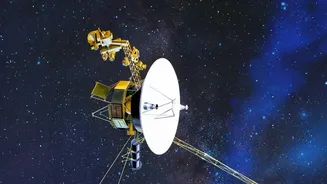
Launched in 1977, Voyager 2 and its twin, Voyager 1, were designed for a five-year mission to study Jupiter and Saturn. Miraculously, they kept going, with Voyager 2 becoming the only spacecraft to ever visit Uranus and Neptune. For almost half a century,
they have been powered by radioisotope thermoelectric generators (RTGs), which convert heat from decaying plutonium into electricity. But this power source is finite. Every year, the decaying plutonium provides about four fewer watts of power, forcing NASA's Jet Propulsion Laboratory (JPL) engineers into a delicate dance of energy conservation. With power margins becoming razor-thin, the team has been forced to gradually shut down non-essential systems and even some science instruments to keep the probes alive.
The 'Big Bang' Solution
Engineers knew that by the end of 2026, they would have to switch off another of Voyager 2's three remaining active science instruments. To prevent this, they devised a bold plan nicknamed the “Big Bang.” The procedure involved simultaneously turning off certain powered components and substituting them with lower-power alternatives. Specifically, the team switched off two dedicated heaters and a digital tape recorder that was no longer in use but generated helpful heat. In their place, they activated other components that consumed less electricity but still provided enough warmth to protect the spacecraft's systems from the extreme cold of interstellar space, which hovers around -270 degrees Celsius.
Calculated Risk, Scientific Reward
This wasn't the first time engineers had to get creative. In 2023, the team took a calculated risk by tapping into a power reserve originally set aside for a voltage regulator. This onboard safety mechanism was designed to protect the instruments from power surges. By deciding to operate without this safety net, the team gambled that the aged electrical systems would remain stable, freeing up just enough power to postpone instrument shutdowns. The new “Big Bang” maneuver builds on this philosophy of maximising the mission's lifespan. The power savings are expected to keep all three of its remaining instruments operating for at least an extra year, and potentially longer.
An Invaluable Year of Science
While Voyager 2's imaging cameras were turned off decades ago, its remaining instruments are providing priceless data. The Cosmic Ray Subsystem, Magnetometer, and Plasma Wave Subsystem are our only direct sources of measurement from interstellar space. They are studying the shape of the heliosphere—the protective bubble of particles our Sun creates—and the nature of the space between stars. Every extra day of data is a gift, offering new insights into the environment our solar system travels through. This latest power-saving fix ensures that humanity's longest-running conversation with the cosmos can continue. Following the success with Voyager 2, the mission team plans to implement the same power swap on the even more distant Voyager 1 in the coming months.