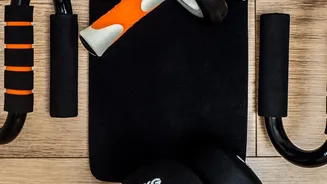








The Rise of the 'Workout Snack'
The idea that a workout only counts if it’s an hour long and leaves you exhausted is quickly becoming outdated. Enter the concept of “exercise snacks” or “micro-workouts”—short, focused bursts of activity lasting anywhere from 5 to 20 minutes. The beauty
of these sessions lies in their efficiency and accessibility. They remove the pressure and time commitment of a full gym session, making it easier to stay consistent. Research shows that these brief bouts of movement, when done regularly, offer significant health benefits, including improved cardiovascular health, better blood sugar regulation, and enhanced focus. Instead of seeing exercise as an all-or-nothing event, think of these short workouts as a way to supplement your primary fitness activities and break up long periods of sitting.
Complementing Your Daily Walk
Walking is a fantastic low-impact cardio exercise, but it primarily works your body in one plane of motion. A short home workout can fill in the gaps. By adding 10-15 minutes of bodyweight strength exercises, you can build muscle that walking alone doesn't target. Think compound movements that work multiple muscle groups at once for maximum efficiency. For example, a quick circuit of squats, lunges, push-ups, and planks before or after your walk can build lower body and core strength, improving your stability and power. This doesn't just make you stronger; it can also help prevent injuries by creating a more balanced and resilient body. Even a few minutes of dynamic stretching or activation drills like leg swings and torso twists before you head out can prepare your joints for movement and improve your walking form.
Enhancing Strength Training Sessions
For those who regularly lift weights, short workouts on non-training days are not about adding more heavy lifting. Instead, they are a strategic tool to improve performance and prevent plateaus. Use these brief sessions to focus on areas that are often neglected in a traditional strength program: mobility, stability, and core work. Just 10 minutes of targeted mobility exercises for the hips, shoulders, and ankles can dramatically improve your range of motion in key lifts like squats and deadlifts. This not only helps you lift with better form but also significantly reduces your risk of injury. On rest days, a short core circuit or some light resistance band work can maintain muscle activation without causing the fatigue that would interfere with your recovery from a heavy lifting session.
Accelerating Active Recovery
Recovery is when your muscles actually rebuild and get stronger, but that doesn't always mean lying on the couch. Active recovery—gentle movement performed on rest days—can be more effective than complete rest for reducing muscle soreness and stiffness. A short home workout is perfect for this. Light-intensity movement increases blood flow to tired muscles, which helps flush out metabolic waste products and deliver the nutrients needed for repair. This can help you feel ready for your next hard workout sooner. An ideal active recovery session might include 15 minutes of gentle yoga, dynamic stretching, or foam rolling. Activities like slow bodyweight squats, cat-cow stretches, and gentle twists lubricate the joints and maintain flexibility without adding stress to your system.
Putting It All Together
The key is to match the short workout to your goal for the day. If it’s a walking day, try a 10-minute bodyweight strength circuit. Before lifting, perform a 5-minute mobility routine focusing on your hips and shoulders. On a true rest day, a 15-minute session of foam rolling and gentle stretching can do wonders. A simple structure for a quick strength workout could be performing 5 exercises for 30 seconds of work followed by 30 seconds of rest, and repeating the circuit twice. For mobility, move through a series of dynamic stretches like Spiderman lunges with rotation and Cossack squats. The goal is consistency, not intensity. Listening to your body is crucial; these workouts should leave you feeling energized and mobile, not drained.