


A Deliberate Pause on the 'iM3'
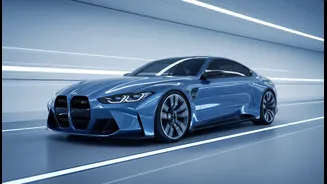
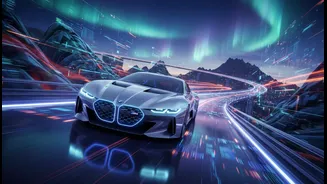
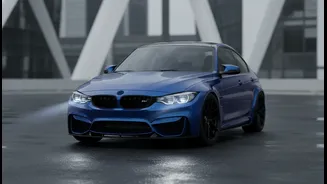
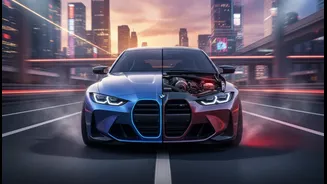
In a world rushing towards electrification, BMW’s M division is taking a deliberate breath. Contrary to expectations, the brand has confirmed there will not be an electric M3, or 'iM3', based on the current 3-Series platform. The official line mentions
simplifying the lineup for global buyers, but the real story is one of strategic patience and brand protection. M division head Frank van Meel has been clear: an M car must be the best in its segment, and a compromised EV built on a shared platform simply won't cut it. The decision avoids muddying the waters with a vehicle that might not live up to the legendary M3 name, which has graced everything from four-cylinder to V8 engines without ever needing a prefix to define it.
The 'Neue Klasse' Factor
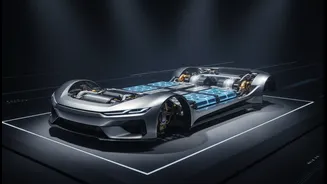
The key to understanding BMW's decision is a two-word phrase: Neue Klasse. This isn't just a new model; it's a completely new, dedicated EV architecture that will underpin the next generation of BMW's electric vehicles from 2027 onwards. Building an electric M3 on the current platform, which was designed to accommodate both internal combustion engines and electric powertrains, would have involved too many compromises in weight, packaging, and performance. Frank van Meel has repeatedly stated that rushing an M-badged EV to market on old tech would be a mistake. Instead, the first fully electric M3 will be a ground-up creation, built on the Neue Klasse platform to be an authentic M car from its very foundation, not an adaptation.
More Than Just Straight-Line Speed
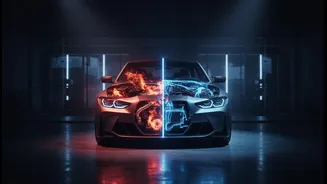
The performance EV market is crowded with cars boasting incredible 0-100 km/h times. But for BMW's M division, performance is about much more than raw acceleration. It's about handling, balance, driver feedback, and the emotional connection to the machine. This is the core challenge of creating an electric M3. Van Meel has emphasised that M is about the promise of motorsport-level emotion, not a specific drivetrain technology. The challenge is to translate the M feel—the precise steering, the predictable handling at the limit, the track-day endurance—into a much heavier electric format. The company is developing a sophisticated quad-motor setup with a central control unit, nicknamed the 'Heart of Joy', to precisely manage torque to each individual wheel, aiming to deliver a new level of driving dynamics that feels distinctly 'M'.
Protecting a Four-Decade Legacy
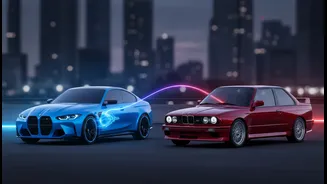
A poorly executed electric M3 could do more damage to the brand's reputation than waiting a few more years. The M3 badge carries nearly four decades of history and is one of the most respected nameplates in the automotive world. BMW's decision is one of brand guardianship. Rather than chasing rivals, the company is ensuring that when an electric M car arrives, it is a benchmark-setter, not just a box-ticking exercise. This also explains why it will simply be called 'M3', not 'iM3'. The name represents a performance philosophy, and BMW believes that philosophy will continue, regardless of what powers the wheels. By waiting for the Neue Klasse platform, BMW is betting that doing it right is more important than doing it first, protecting the legacy for decades to come.
The Future is Electric and Petrol, in Parallel
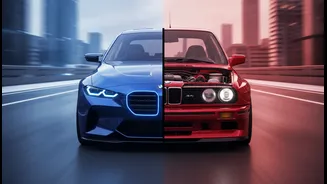
The delay of a fully electric M3 doesn't signal the end of the traditional M3. BMW has confirmed it will offer the next-generation M3 with both a pure electric powertrain (on the Neue Klasse platform) and an updated version of its iconic six-cylinder internal combustion engine. The two models will exist in parallel, catering to different customer needs and regulatory environments across the globe. This dual-pathway approach is a strategic hedge, allowing the market to decide the future. While the electric M3, expected in 2027, will showcase the pinnacle of BMW's new EV technology, the petrol version will continue to serve the brand's loyal enthusiast base for as long as regulations permit.