






A Second Look at a Distant World
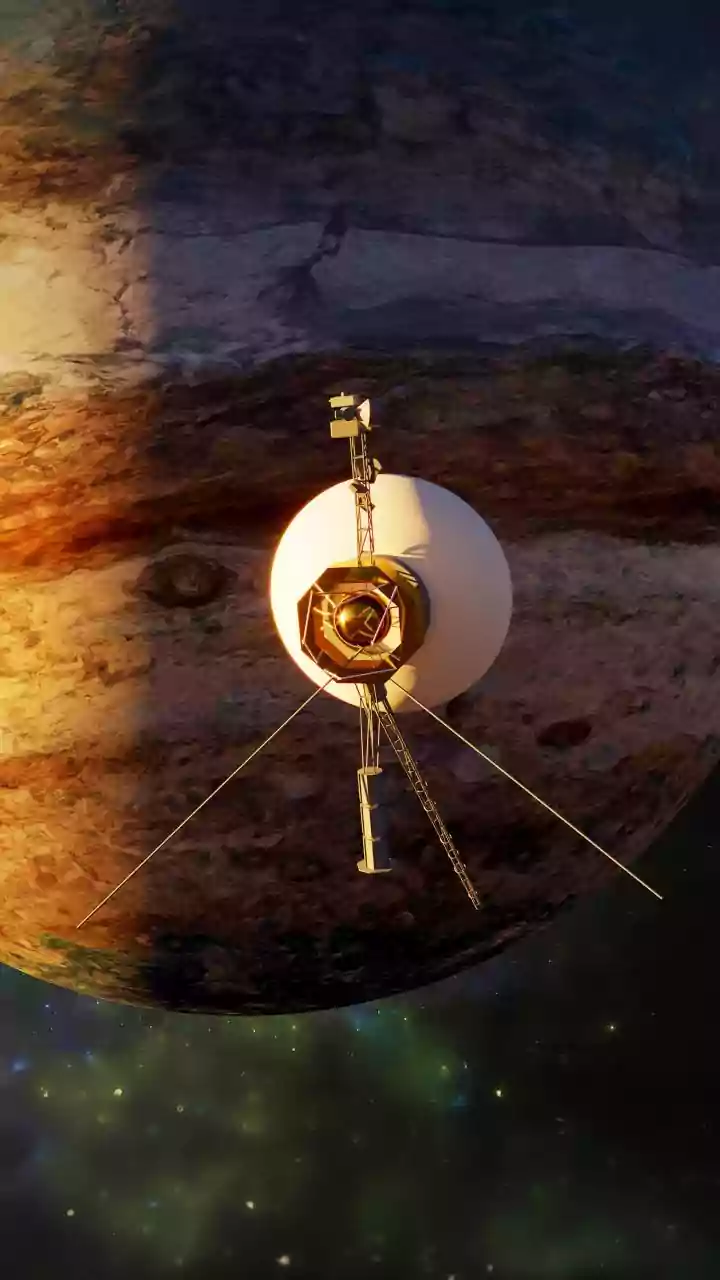
In July 2015, NASA’s New Horizons spacecraft sped past Pluto, capturing data that fundamentally changed our understanding of the outer solar system. For decades, it was just a faint point of light, presumed to be a static, frozen ball of ice. But the flyby
revealed a world of towering water-ice mountains, a thin blue atmosphere, and vast, smooth glaciers. Now, years later, scientists are still mining that treasure trove of data. A new study published in the Planetary Science Journal shows that the discovery phase is far from over, as a fresh analysis of high-resolution imagery has uncovered evidence of activity thought impossible on such a cold world.
What Is the 'Strange Movement'?
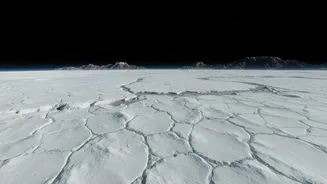
The finding centers on Sputnik Planitia, the famous heart-shaped glacier of frozen nitrogen that dominates Pluto’s surface. Researchers identified dark streaks and patches along the boundaries of city-sized convection cells, where the nitrogen ice slowly churns. The patterns strongly suggest the surface has been wetted by a liquid. Rain is physically impossible in Pluto's frigid, thin atmosphere, leading scientists to a remarkable conclusion: the liquid must be coming from below. The leading theory is that liquid nitrogen is periodically welling up from beneath the glacier and seeping through cracks, a process known as basal melting. This marks the first evidence of recently flowing liquid on Pluto's surface.
An Earthly Comparison
To understand these alien markings, researchers looked for a familiar analogue. The team, led by New Horizons principal investigator Alan Stern, compared the images of Pluto with satellite photos of the Greenland ice sheet. On Earth, similar dark patterns are created when meltwater wets the snow and ice. The visual similarity was striking, bolstering the case that a subsurface liquid was responsible for the features on Sputnik Planitia. On Pluto, water ice is as hard as rock, forming the planet's bedrock and mountains. Nitrogen, however, behaves more like water does on Earth, freezing into vast glaciers that can still hide liquid beneath them, even at temperatures of -230°C.
A World More Alive Than We Knew
This discovery does more than just add a new feature to Pluto's map; it reshapes our view of the dwarf planet itself. The presence of flowing liquid, even if it's nitrogen, confirms that Pluto is not a geologically dead world. Instead, it appears to be an active body with ongoing internal processes. Scientists believe the surface of Sputnik Planitia is geologically very young—perhaps less than a million years old—which means the flows must have happened in the recent past. As Alan Stern noted, "Pluto never stops surprising us." This finding suggests a new kind of time-variable feature on the dwarf planet, hinting that its surface may still be changing today.
The Enduring Legacy of New Horizons
The discovery is a powerful testament to the value of space exploration. The New Horizons mission provided only a brief, fleeting glimpse of Pluto as it flew by at high speed. Yet, over a decade later, the data it collected continues to fuel groundbreaking science. Each new analysis applies better models and fresh perspectives, teasing out secrets that were hidden in plain sight. This ongoing process transforms our picture of the cosmos, showing that even the most distant, seemingly inert worlds can harbor surprising complexity and activity. It proves that a mission’s scientific life extends far beyond its initial encounter, with discoveries waiting to be made by the next generation of curious minds.