





The Official Dividing Line
On Indian highways, the distinction between different types of structures is clearly defined by length. According to guidelines from the Indian Roads Congress (IRC), the authority that sets standards for roads and bridges, a structure with a total length up
to 6 metres is classified as a 'culvert'. These are typically small passages for water. Structures with a length between 6 metres and 60 metres are designated as 'minor bridges'. The critical threshold is crossed when a structure's total length exceeds 60 metres; it is then officially classified as a 'major bridge'. This classification system provides a foundational framework for highway planning, design, and management across the country, creating a clear hierarchy from the smallest drainage pipe to the largest river crossing.
A Rule with Real-World Costs
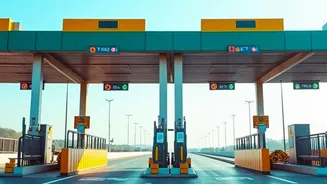
This 60-metre rule has a direct impact on the wallets of commuters. In July 2026, the Ministry of Road Transport and Highways amended the formula for calculating toll fees on stretches with bridges, tunnels, and flyovers. Previously, the higher cost of building and maintaining these complex structures was often recovered by calculating their tollable length at a much higher rate, sometimes up to ten times their actual length. The new rules, however, explicitly state that structures measuring 60 metres or less will not be treated separately for tolling purposes. This means that only 'major bridges'—those over 60 metres—are subject to the special calculations. This change is expected to lower toll charges on many routes, particularly those with numerous smaller bridges and flyovers that no longer inflate the chargeable distance.
More Than Just a Name
The distinction between a minor and major bridge goes far beyond toll collection. It dictates the entire lifecycle of the structure. A 'major bridge' classification triggers a completely different level of engineering scrutiny, funding allocation, and administrative oversight. The design standards set by the IRC are far more stringent for major bridges, which must be engineered to handle significant loads and withstand environmental stresses over decades. These projects require extensive geological surveys, complex foundation designs, and command significantly larger budgets. In contrast, minor bridges, while still crucial, are treated with a more standardised approach, making them quicker and cheaper to design and construct. This separation ensures that the most resources and engineering expertise are focused on the largest, most critical, and highest-risk components of the highway network.
The Logic of Safety and Management
Classifying bridges based on length is also a cornerstone of effective asset management and public safety. Every major bridge is given a unique identification number, turning it into a distinct entity within the National Highways Authority of India's (NHAI) inventory. This allows for a dedicated and rigorous schedule of inspections, maintenance, and structural health monitoring throughout its lifespan. Think of it as the difference between tracking a simple component and managing a standalone piece of critical infrastructure. Culverts and minor bridges are often managed as part of the road itself. By separating major bridges, authorities can better prioritise funds for repairs and ensure that these massive investments, which carry thousands of vehicles daily, remain safe and functional for generations.