








A Landmark Launch for Indian Space
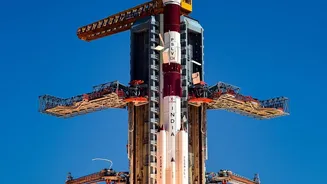
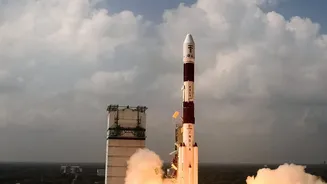
The Vikram-1 rocket, developed by Hyderabad-based startup Skyroot Aerospace, lifted off from the Satish Dhawan Space Centre in Sriharikota, marking a new chapter for India's space ambitions. The mission, named 'Aagaman' (Sanskrit for 'arrival'), successfully
placed its payloads into a low Earth orbit of approximately 450 kilometres. With this single launch, India joined the exclusive club of nations, after the United States and China, to possess private orbital launch capability. The achievement was celebrated as a pivotal moment, signaling that private Indian companies are ready to compete in the global small-satellite launch market, a rapidly growing sector. The Vikram-1 is designed as a small-lift vehicle, capable of carrying payloads up to 350 kilograms, offering a dedicated "cab service to space" for clients who need to deploy small satellites quickly and efficiently.
The 2018 Bet on a Distant Dream
The story of this success began eight years ago, in 2018, with a cold message on LinkedIn. Pawan Kumar Chandana and Naga Bharath Daka, two former scientists from the Indian Space Research Organisation (ISRO), had a bold idea. Inspired by a draft bill suggesting the opening of India's space sector, they quit their stable government jobs to found Skyroot Aerospace. Their vision was to build rockets privately, a concept that seemed like science fiction in India at the time. They faced skepticism from most investors, who were wary of the long timelines, high risks, and regulatory uncertainty. However, one person saw the potential: Mukesh Bansal, founder of Myntra and Cult.fit. In 2018, Bansal became Skyroot's first and only angel investor, putting in an initial sum of around ₹10-12 crore long before the government officially liberalized the space sector in 2020.
From a LinkedIn Message to a Unicorn
Bansal’s initial investment was crucial. It provided the seed capital that allowed Chandana and Daka to assemble their team and begin work. His support went beyond just the first cheque; when the COVID-19 pandemic squeezed finances, Bansal invested an additional ₹2 crore to ensure the team could stay together. This early backing was a vote of confidence in a sector most VCs considered too risky. After the space sector was officially opened to private players in 2020, institutional investors began to take notice. Skyroot achieved a significant milestone in November 2022 with the successful suborbital launch of Vikram-S, India's first privately built rocket. The momentum continued, and by May 2026, the company had raised around $60 million, becoming India's first space-tech unicorn with a valuation of $1.1 billion.
Why Patient Capital Matters
Mukesh Bansal's investment in Skyroot is a powerful case study in the value of patient capital, especially in "deep tech" sectors like aerospace. While many venture capitalists chase quick returns in consumer internet businesses, Bansal's bet was on a long-term vision with high technical and regulatory hurdles. His background was in e-commerce and fitness, not rocket science, making his conviction even more remarkable. The decision has paid off spectacularly. Bansal's initial investment of about ₹12 crore has seen monumental returns, with his remaining stake valued at over ₹600 crore following the Vikram-1 launch, representing a nearly 60-fold return. This success sends a strong signal to the Indian investment community that backing ambitious, hardware-intensive projects can yield not only significant financial rewards but also build strategic national capabilities.