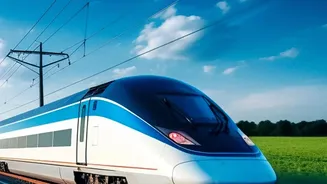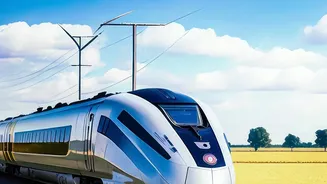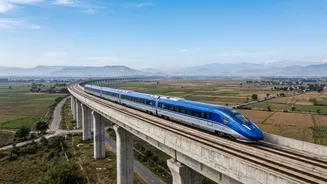






The Vision: A High-Speed Revolution
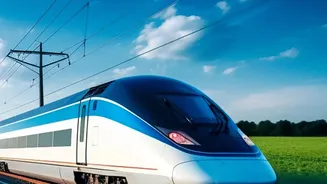
The project in focus is the Delhi-Varanasi High-Speed Rail Corridor, a key part of India's next generation of infrastructure. Spanning a proposed length of roughly 813 to 865 kilometres, this line aims to connect Delhi with Varanasi, passing through several
major cities in Uttar Pradesh. It is the second bullet train project after the Mumbai-Ahmedabad corridor. The trains are expected to operate at speeds up to 320 km/h, a significant upgrade from the current rail network. The project was recently approved by the Prime Minister and is slated to be built under the 'Make in India' initiative, using domestic engineering and labour.
Strategic Stops: Delhi, Kanpur, and Lucknow
The inclusion of Delhi, Kanpur, and Lucknow as primary stations is no coincidence. Delhi, as the national capital, is the corridor's anchor. Kanpur, a major industrial and commercial hub in Uttar Pradesh, and Lucknow, the state's administrative and political capital, are critical economic and demographic centres. Connecting these cities with high-speed rail is expected to create a powerful economic triangle. The proposed travel time from Delhi to Kanpur is just 1 hour and 45 minutes, while Delhi to Lucknow could take approximately 2 hours and 12 minutes. This drastic reduction in travel time aims to facilitate easier business travel, boost tourism, and better integrate the region's economy.
Current Status and Projected Timeline
As of late 2026, the Delhi-Varanasi corridor is in the advanced planning stages. The National High-Speed Rail Corporation Limited (NHSRCL) has submitted the Detailed Project Report (DPR) to the Ministry of Railways for approval. While ground surveys and alignment studies have made progress, major construction has not yet begun. No official completion date has been announced, and projects of this magnitude often face adjustments. However, the government has identified it as a high-priority project. The corridor is planned to be developed in phases, with the Delhi-Varanasi route being the first.
The Broader Network and Economic Impact
The plan for this corridor extends beyond Varanasi. The government has approved its extension to Guwahati, passing through Patna and Siliguri, creating a vast network connecting northern and northeastern India. The route will also include stops at other key locations like Agra, Prayagraj, and Ayodhya, with a special spur line connecting Lucknow to Ayodhya to boost religious tourism. Economically, the corridor is expected to be a game-changer. By improving access to markets, employment, and healthcare, it is projected to stimulate investment in logistics, real estate, and manufacturing along its path. Officials have suggested that fares will be competitive, potentially lower than airfares, to make high-speed travel accessible to a wider population, including students, small business owners, and middle-class families.