


More Than Just Altitude
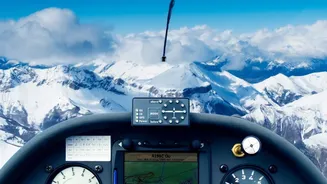
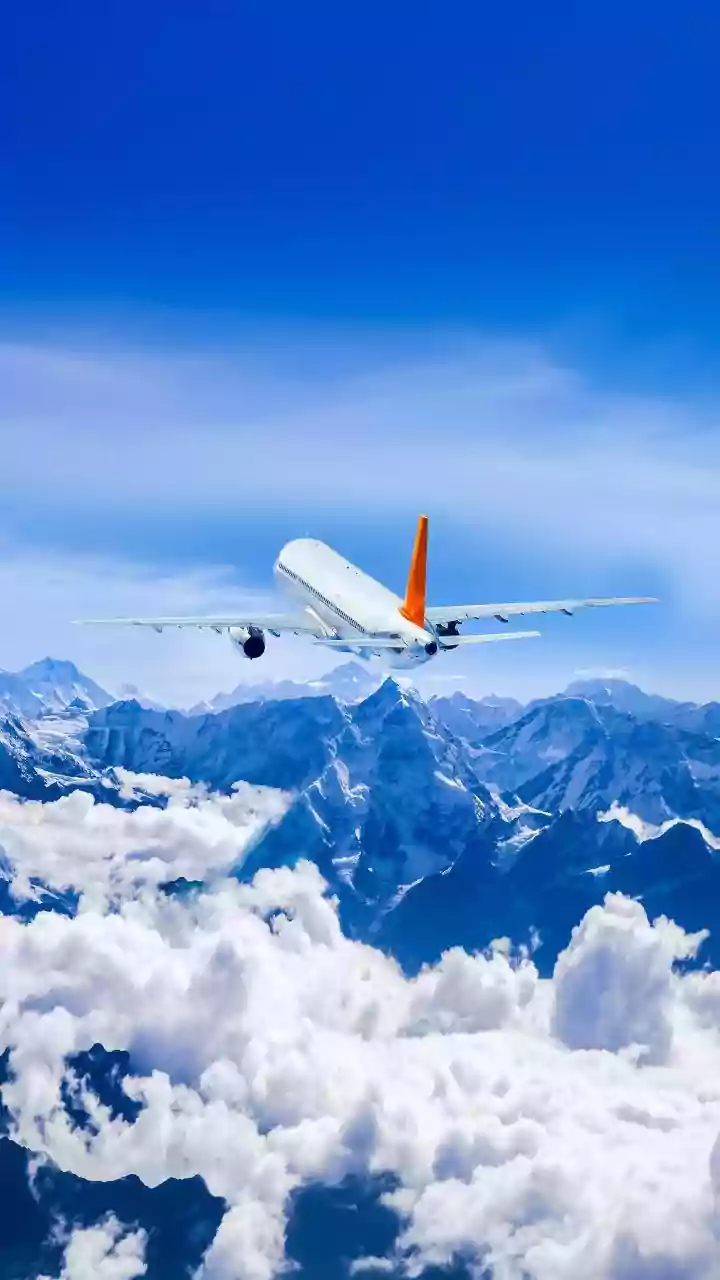
Flying in the mountains is fundamentally different from flying over flat terrain. The Alps create their own microclimates, where conditions can change in minutes. The air, which seems uniform elsewhere, becomes a complex tapestry of currents. Temperature,
pressure, and wind behave unpredictably, influenced by sun-facing slopes, deep valleys, and sharp ridges. This environment reduces margins for error and demands a deeper understanding of meteorology. Aircraft performance is also affected; the thinner air at high altitudes reduces engine power, propeller efficiency, and lift, making every maneuver more critical. This means a standard pre-flight check isn't enough; pilots need a specialised understanding of the region's unique atmospheric challenges.
The Notorious Foehn Wind
Among the most famous and feared Alpine phenomena is the Foehn (or Föhn) wind. This is a warm, dry wind that descends rapidly on the leeward (downwind) side of a mountain range. As moist air is forced up the windward side, it cools and releases precipitation. Once it crosses the peaks, the now-dry air sinks and warms dramatically, creating a strong, gusty wind that can feel like a hairdryer. For pilots, the Foehn is a triple threat. It brings severe turbulence, sudden and significant temperature changes, and powerful downdrafts that can easily exceed a light aircraft's ability to climb. Encountering a Foehn unprepared can be incredibly dangerous, making it a primary factor in go/no-go flight decisions.
Navigating The Valley Maze
Even on a seemingly calm day, the valleys of the Alps are alive with their own wind systems. During the day, the sun heats the mountain slopes, creating anabatic (upslope) winds that flow up from the valleys. Conversely, as the slopes cool at night, katabatic (downslope) winds drain cold, dense air back into the valley floor. These daily wind cycles behave much like water, flowing and swirling around bends and through narrow passages. This can create soarable lift on one side of a valley and dangerous turbulence or 'rotor' zones on the other. Pilots must learn to 'read' the terrain and anticipate these flows, often flying along one side of a valley to ensure they always have enough room to execute a 180-degree turn if they encounter sinking air or an impassable ridge.
The Invisible Threat of Turbulence
When wind flows over mountains, it's like water flowing over rocks in a stream. The smooth flow is disrupted, creating mechanical turbulence on the lee side. This can manifest as powerful updrafts, downdrafts, and dangerous rotating air currents known as rotors. These rotors, sometimes marked by distinctive lenticular or 'roll' clouds, contain turbulence severe enough to overstress an aircraft or cause a loss of control. A downdraft can push a plane toward the terrain faster than its engine can climb away, especially in the already thinner air of high altitudes. The Federal Aviation Administration (FAA) advises that mountain flying shouldn't even be attempted if winds at the mountaintop level are forecast to be above 25 knots due to the likelihood of dangerous turbulence.
Preparation is the Key to Survival
Successfully navigating the Alps from the air is not about bravery; it's about meticulous preparation. Experienced mountain pilots never fly into a valley without ensuring they have enough altitude to clear the pass at the other end. They study detailed weather forecasts specific to mountain regions, paying close attention to wind speed and direction at various altitudes. They plan their routes not as straight lines, but as a series of tactical decisions, always maintaining an escape route toward lower terrain. This includes crossing ridges at a 45-degree angle, allowing for a quick turn away if conditions on the other side are hazardous. Ultimately, the beauty of an Alpine flight is earned through discipline and an unwavering respect for the power of the mountains.