
The Galactic Rulebook
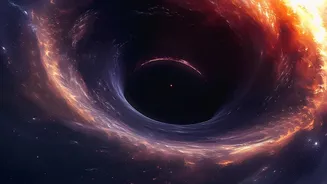
In the grand architecture of the cosmos, there are a few rules we thought were reliable. One of the biggest is that nearly every large galaxy, including our own Milky Way, has a supermassive black hole sitting right at its heart. These behemoths, millions
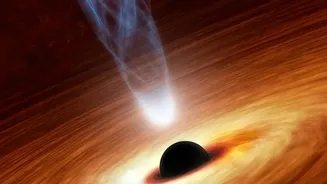
or even billions of times more massive than our sun, act as the central gravitational point around which everything else swirls. They are the engines and the anchors of their galactic homes. For decades, this model has guided our search for these invisible giants; astronomers knew exactly where to look. When they saw the tell-tale signs of immense gravity, like stars orbiting a seemingly empty point at a galaxy’s core, they knew they had found their target.
Finding the Exception
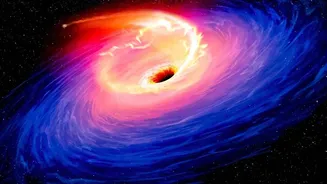
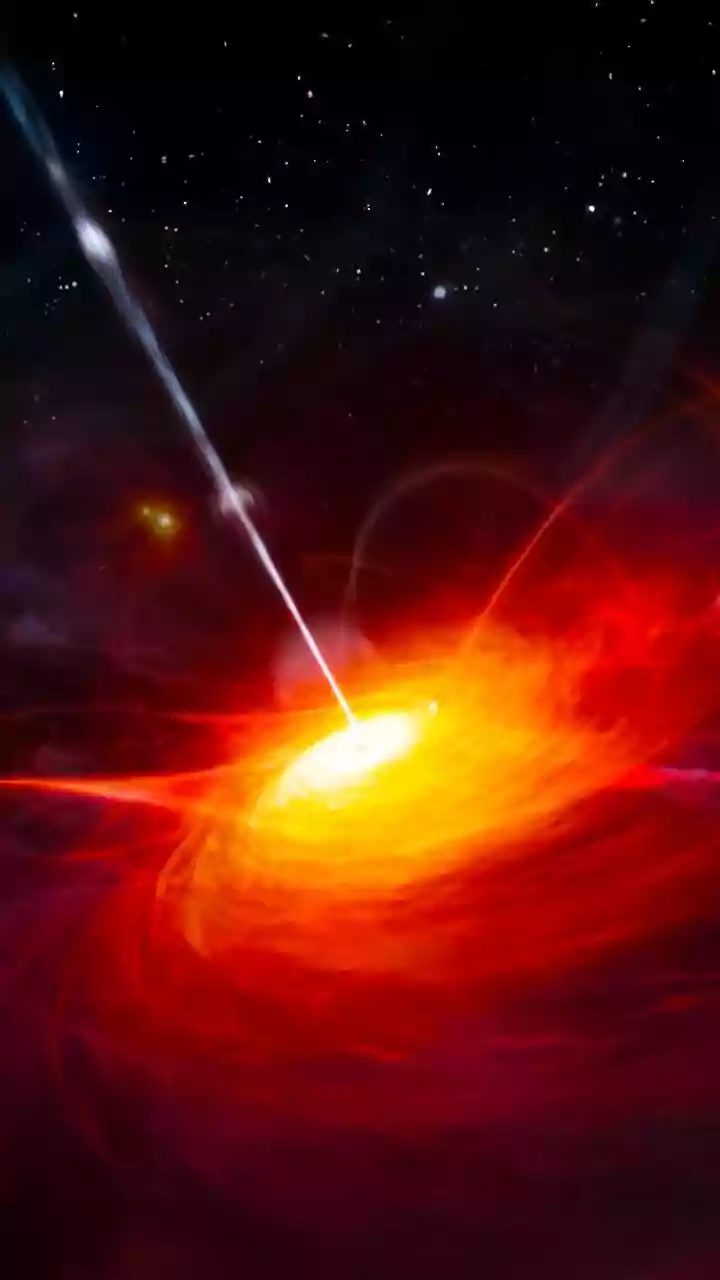
Recent observations have thrown a fascinating wrench in this tidy picture. Using data from facilities like the Zwicky Transient Facility and NASA's Neil Gehrels Swift Observatory, astronomers spotted something extraordinary: a supermassive black hole wandering in the galactic suburbs, far from the core. One such discovery involved a black hole about a million times the sun's mass, located over 30,000 light-years from the center of its galaxy. Since black holes are invisible, it revealed itself in the most dramatic way possible: by tearing apart an unlucky star that strayed too close. This process, called a tidal disruption event, created a flare so bright it briefly outshone its entire host galaxy. Without this violent outburst, the rogue black hole would have remained completely hidden.
The Cosmic Collision Theory
So how does a supermassive black hole end up so far from home? The leading theory points to a past of cosmic violence. When two galaxies collide and merge, their central supermassive black holes are drawn toward each other. They enter a chaotic orbital dance, eventually spiraling together and combining into one larger black hole. According to Einstein's theory of general relativity, this merger releases an immense amount of energy in the form of gravitational waves — ripples in spacetime itself. If these waves are not emitted perfectly symmetrically, they can give the newly formed black hole a powerful 'kick'. This phenomenon, known as gravitational wave recoil, can send the black hole flying out of the galactic center at speeds of thousands of kilometers per second, fast enough to escape its home galaxy entirely or be sent into a wide, lonely orbit.
A Universe of Wanderers
The discovery of even one of these off-center black holes is significant because it provides the first compelling observational evidence for these long-theorized events. It confirms that gravitational wave kicks are real and powerful enough to reshape galaxies. Scientists now believe that what we are seeing is just the tip of the iceberg. There could be a large population of these wandering or 'rogue' supermassive black holes drifting through the vast, dark spaces between galaxies. Some, like the one spotted near dwarf galaxy RCP 28, may even be trailing long wakes of newborn stars created from the gas they compress as they speed through space. Finding more of these wanderers will help astronomers build a more complete and dynamic history of how galaxies grow, collide, and evolve over billions of years.