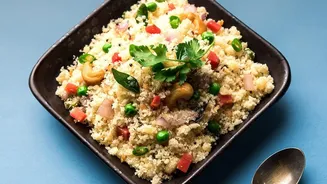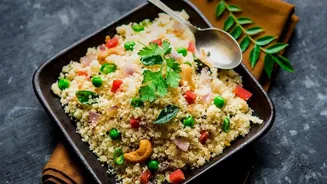

The Roasting Ritual
The single most important step to prevent sticky upma is to properly roast the rava (semolina or sooji). Unroasted rava becomes gummy when it hits hot water, leading to clumps. To avoid this, dry roast the rava in a pan over medium heat, stirring continuously.
You're not looking to brown it, but to toast it until the grains become fragrant, look separate, and feel crisp. This process ensures that the rava absorbs water evenly, which is the foundation of a fluffy texture. Many cooks roast a large batch in advance and store it in an airtight container to make weekday breakfasts even quicker.
Choose Your Rava Wisely
The type of rava you use plays a significant role in the final texture. For a classic, fluffy upma, the coarse variety of semolina, often sold as Bombay rava or upma rava, is generally recommended. This variety absorbs water well without turning gooey. While fine rava can also be used, it tends to create a softer, more paste-like consistency and may require adjustments to the water ratio to prevent stickiness. Some recipes even use the very fine 'chiroti' rava for an exceptionally soft, melt-in-the-mouth texture, though this is more commonly used for sweets.
Master the Water Ratio
The second most common reason for sticky or dry upma is an incorrect water-to-rava ratio. While a 1:2 ratio (one part rava to two parts water) is often cited, many experienced cooks find this can result in a drier upma. For a dependably soft and moist texture similar to what you'd find in restaurants, a ratio of 1:2.5 or even 1:3 is highly recommended. This means for every one cup of rava, you should use between two-and-a-half to three cups of water. The exact amount can vary slightly depending on the coarseness of your rava and whether you've added vegetables, which release their own moisture.
The Art of Combining
How you combine the rava and water is crucial for preventing lumps. First, ensure your water is at a rolling boil before you add the rava. Adding rava to water that isn't hot enough is a common cause of a pasty texture. Reduce the heat to low or a simmer, and then add the roasted rava to the boiling water gradually, in a slow stream, while stirring continuously with your other hand. Do not dump all the rava in at once, as this will cause it to absorb water unevenly and form lumps. Keep stirring until the rava has absorbed most of the water and starts to thicken.
Don't Skip the Final Steam
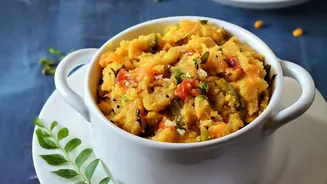
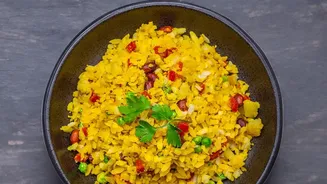
Once the upma has thickened and pulled away from the sides of the pan, the cooking isn't quite finished. This final step is what gives it that perfectly fluffy finish. Cover the pan with a tight-fitting lid and let the upma steam on very low heat for about two to three minutes. This allows the grains to swell fully and become tender. After steaming, turn off the heat and let it rest for another few minutes. Before serving, gently fluff the upma with a fork. A final drizzle of ghee at this stage can add extra flavour and richness, further ensuring a soft, non-sticky result.