





Why a Special Monsoon Timetable?
Every year, from mid-June to October, several zones of Indian Railways implement a special monsoon timetable, and the reasons are rooted in safety. The monsoon brings heavy rainfall, which can lead to landslides, waterlogging on tracks, and reduced visibility,
especially in challenging terrains like the Konkan coast. To mitigate these risks, the railways impose speed restrictions on trains running through these vulnerable sections. For instance, a train that normally travels at 110-120 km/h might be required to slow down to 75 km/h or even 40 km/h in certain areas. This necessary precaution to prevent accidents inevitably increases the total journey time, making the regular timetable obsolete.
Which Routes Are Most Affected?
The most significantly impacted route is the Konkan Railway line, a 739-kilometre stretch passing through Maharashtra, Goa, and Karnataka. This picturesque but geographically challenging corridor features numerous tunnels and deep cuttings, making it highly susceptible to monsoon-related disruptions. Consequently, railway zones that operate services through this line—including Central Railway, Southern Railway, Western Railway, and South Western Railway—all publish revised schedules. For 2026, the monsoon timetable is in effect from June 15th to October 20th. Trains travelling to and from major hubs like Mumbai, Madgaon, Mangaluru, and destinations in Kerala are the ones most likely to see changes.
The Danger of a General Check
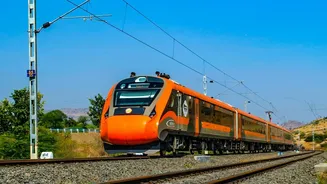
Herein lies the critical point: the "monsoon timetable" is not a single, uniform schedule. Instead, it is a complex web of specific adjustments. Assuming your train will simply be delayed by an hour or two is a risky gamble. Some trains, like the CSMT-Madgaon Vande Bharat Express, have their frequency reduced from six days a week to just three. Other services are rescheduled to depart hours earlier than their normal time to compensate for the slower journey. An incident was reported where a group of passengers missed their train because it departed earlier as per the new monsoon schedule, which they were unaware of. This highlights why checking the schedule for your specific train number on your exact date of travel is non-negotiable.
How to Check Your Train's Exact Status
Relying on the information printed on your ticket, especially if booked months in advance, is not enough during this period. The most reliable way to get up-to-the-minute information is through official channels. The National Train Enquiry System (NTES) is the primary source; you can access it via its website (enquiry.indianrail.gov.in) or the NTES mobile app. Simply enter your train number to see its live running status, any rescheduled departure or arrival times, and potential cancellation notices. Railway officials strongly advise all passengers travelling on affected routes to use these tools to verify their train's timing before leaving for the station.
Tips for Hassle-Free Monsoon Travel
Beyond checking the timetable, a little preparation can make your monsoon journey smoother. Always expect your journey to take longer than usual. The Vande Bharat Express, which usually takes around 7.5 hours, can take up to 10 hours during the monsoon. Pack essentials for potential delays, including extra food, water, a power bank for your phone, and a book. Keep your luggage protected from the rain with waterproof bags or covers. It's also wise to arrive at the station a little earlier than you normally would, giving you a buffer for any local transport delays caused by rain. If your train is delayed by more than three hours, you may be eligible for a full refund by filing a Ticket Deposit Receipt (TDR).