


The Myth of 'Air Pockets'
First, let's clear up a common misconception. The term 'air pocket' is misleading because there are no empty voids or holes in the atmosphere for a plane to fall into. The sky is not like Swiss cheese. What passengers perceive as a drop into a pocket is actually
the aircraft moving through air of a different temperature, pressure, or velocity. Think of it less like a pothole in a road and more like a boat hitting a choppy wave. The air is still there, providing lift; it's just moving in an irregular way, creating the sensation of falling, even though the actual altitude change is often minor.
Understanding Turbulence
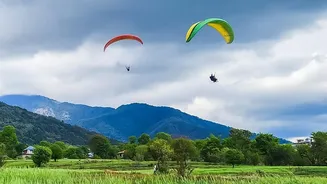
The correct term for these jolts and drops is turbulence. It is an irregular motion of the air caused by eddies and vertical currents. There are several types. Thermal turbulence is created by warm air rising and cool air descending, which is common when flying over varied terrain like fields and lakes on a warm day. Mechanical turbulence is caused by physical obstructions like mountains disrupting airflow. But the one most often experienced at cruising altitude is Clear-Air Turbulence (CAT). This occurs when bodies of air moving at very different speeds meet, often near jet streams, without any visual cues like clouds. While unsettling, turbulence is a normal part of flying, not necessarily a sign of danger.
How Planes Are Built to Handle It
It might feel violent, but a modern commercial aircraft is an incredibly robust machine engineered to withstand immense stress. During certification testing, manufacturers subject aircraft to forces far greater than they would ever encounter in flight. Wings are bent to extreme angles—sometimes up to 90 degrees—to prove their flexibility and strength. This flexibility is a design feature, allowing the wings to absorb the energy from turbulence, much like the suspension on a car absorbs bumps. The level of turbulence required to cause structural damage is something most pilots and frequent flyers will never experience in a lifetime. No modern commercial jetliner has ever crashed due to turbulence.
What the Pilots Are Doing Up Front
When turbulence hits, the pilots are calm and in control. Their primary goal is passenger comfort, not saving the plane from a non-existent threat. Often, they will keep the autopilot engaged, as it's designed to handle turbulence smoothly without overcorrecting. Pilots may also request a different altitude from air traffic control to find a smoother layer of air. They will also slow the aircraft to its 'maneuvering speed' or 'turbulence penetration speed'. This reduces stress on the airframe and makes the ride more comfortable, similar to how you would slow your car down for a bumpy road. They will turn on the seatbelt sign and make a reassuring announcement, not because the plane is in peril, but to prevent injuries from people being thrown around the cabin.
The Real Danger (And How to Avoid It)
While turbulence is not a threat to the aircraft's structural integrity, it can be dangerous for unbuckled passengers. In cases of severe, unexpected turbulence, people can be thrown from their seats and injured. This is why the single most important safety action a passenger can take is to keep their seatbelt fastened whenever they are seated, even if the sign is off. The injuries reported from turbulence incidents almost exclusively happen to people who are not strapped in. The plane will be fine, but an unsecured human body is far more fragile. So, the next time you feel that drop, take a deep breath, check your seatbelt, and remember that you are on a highly engineered machine being flown by trained professionals through a normal, albeit bumpy, patch of sky.