







The Classic: Spring Mattresses
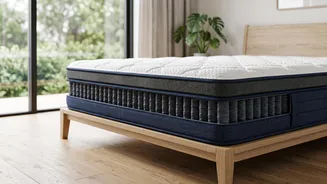
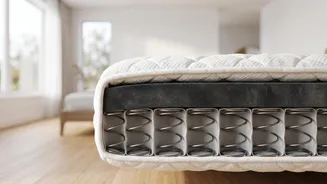
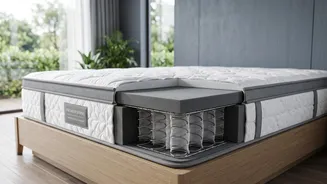
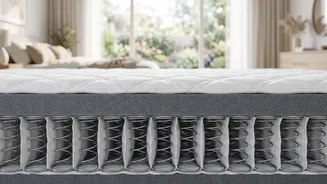
The innerspring mattress is the one most people are familiar with. Built around a core of steel coils, this is the traditional mattress known for its bouncy and responsive feel. You tend to sleep 'on' an innerspring bed rather than 'in' it. The primary
benefit of this construction is airflow; the open space between coils allows air to circulate, making it a great option for those who sleep hot, a common concern in warmer climates. They are also often the most affordable option. However, there are downsides. The interconnected nature of traditional coil systems means motion transfers easily, so a restless partner might disturb your sleep. They also may offer less pressure relief for side sleepers, as the coils push back uniformly rather than contouring to the body's curves.
The Modern Hug: Memory Foam
Memory foam, developed from a material created by NASA, offers a dramatically different experience. It's known for its slow, contouring 'hug' that adapts to your body's shape, providing excellent pressure relief, especially for shoulders and hips. This makes it a popular choice for side sleepers and those with chronic pain. Another major advantage is motion isolation; the dense foam absorbs movement, making it ideal for couples. The main drawback, particularly with older formulations, is heat retention. The dense material can trap body heat, which can be uncomfortable. Modern memory foams often incorporate cooling gels or an open-cell structure to mitigate this. Some people also dislike the feeling of being 'stuck' in the mattress, as the slow response time can make changing positions more difficult.
The Best of Both: Hybrid Mattresses
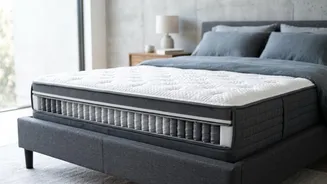
As the name suggests, a hybrid mattress aims to combine the best features of innerspring and foam mattresses. It features a support core of individually wrapped coils, known as pocket springs, topped with substantial layers of memory foam, latex, or both. The result is a balanced feel that offers both the responsive support and airflow of coils and the contouring pressure relief of foam. The pocketed coils move independently, which significantly improves motion isolation compared to a traditional spring mattress. Hybrids are a versatile choice that suits many sleeping positions and are great for couples who have different preferences. The primary downsides are that they tend to be heavier and more expensive than other mattress types.
The Natural Choice: Latex Mattresses
Latex mattresses are made from the sap of rubber trees, offering a buoyant, responsive feel that's different from the slow sink of memory foam. It provides contouring for pressure relief but with more of a 'lifting' sensation, making it easy to move around on. Natural latex is also very durable, often outlasting other mattress types by several years. It's naturally hypoallergenic, resistant to mould and dust mites, and its open-cell structure makes it very breathable, so it sleeps cool. For these reasons, a latex or latex-hybrid mattress can be an excellent choice for hot and humid climates. The main trade-offs are weight and cost; latex mattresses are among the heaviest and most expensive on the market.
How to Choose the Right Mattress for You
Ultimately, the 'best' mattress is a personal choice. Consider these key factors: if you sleep hot, a spring, hybrid, or latex mattress will likely serve you better than a traditional memory foam bed. If you share a bed and are easily disturbed, the motion isolation of memory foam or a quality hybrid is a huge plus. For back pain, a medium-firm mattress that supports spinal alignment is often recommended, with many finding relief from hybrid and latex models that balance support and cushioning. If budget is the main driver, innerspring mattresses offer the most accessible price point, while hybrids and latex represent a larger investment. Your sleeping position also matters; side sleepers often need the extra pressure relief from foam or latex, while stomach sleepers may prefer the firmer support of a spring or hybrid mattress.