


The Allure of Tactile Creation
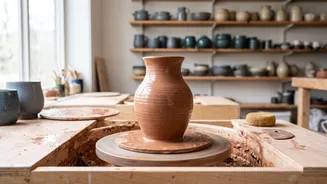
The moment you first sit at a potter's wheel or feel a block of cool, damp clay in your hands, something shifts. The appeal is primal; it’s a direct connection to a raw, earthy material. Unlike many modern pursuits, pottery is an entirely hands-on experience
that engages the senses, particularly touch. This tactile engagement is deeply grounding, pulling your awareness into the present moment. The physical act of kneading, centering, and shaping the clay demands your complete attention, making it an ideal activity for anyone looking to quiet the constant hum of daily distractions and reconnect with a more fundamental form of making.
Finding Your Flow Through Repetition
The spinning of the wheel and the rhythmic motions of shaping clay are not just steps in a process; they are a pathway to a state of 'flow'. This psychological concept, popularised by Mihaly Csikszentmihalyi, describes a state of complete absorption in an activity. The repetitive, focused nature of pottery helps induce this state, where time seems to fade and self-consciousness disappears. Neurologically, this type of rhythmic handwork can have a calming effect on the brain, engaging the prefrontal cortex in a way that helps down-regulate the amygdala, the region responsible for anxiety and fear. This meditative dance between hands and clay lowers stress levels and fosters a profound sense of calm.
A Workout for Your Creative Mind
While the process is repetitive, the outcome is pure creativity. Pottery is a powerful outlet for self-expression, allowing you to transform a formless lump of clay into something that is uniquely yours. This creative process stimulates multiple areas of the brain, encouraging problem-solving, planning, and hand-eye coordination. From deciding on a form to applying the final glaze, every stage offers a chance for artistic choice. This freedom to create without a strict right or wrong answer helps build confidence and encourages an experimental mindset, reminding you that imperfection is often part of the beauty.
More Than Just a Pot
The benefits of pottery extend far beyond the finished piece. Engaging in this creative practice has been shown to have numerous mental health benefits, including reducing cortisol, the body's stress hormone. The sense of accomplishment that comes from creating a physical object from start to finish provides a significant boost to self-esteem. For many, it serves as a form of non-verbal therapy, providing a safe outlet to process emotions and channel energy constructively. The act of creation can be incredibly restorative, offering a tangible reward for your patience and focus.
A Community Forged in Clay
While pottery can be a solitary and meditative practice, joining a class introduces a powerful social element. Studios often foster a welcoming and supportive environment where individuals can connect with others who share a similar interest. In a world where social interaction is increasingly digital, these shared physical spaces help reduce feelings of isolation and build a sense of community. Sharing tips, admiring each other's work, and learning a new skill together creates a unique bond, turning a personal hobby into a shared, joyful experience.