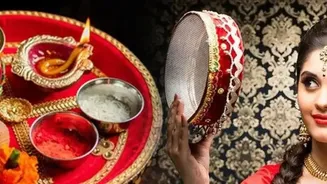




As married Hindu women prepare for Karwa Chauth, one word defines the day's devotion: 'Nirjala'. This term, meaning 'without water', signifies the festival's most rigorous and profound element, turning a simple fast into a powerful spiritual statement.
The Literal Meaning of 'Nirjala'
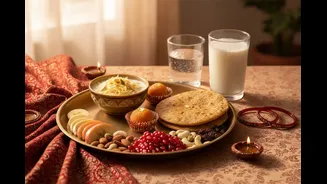
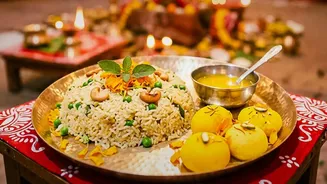
At its core, 'Nirjala' is a Sanskrit term that translates simply to 'without water'. In the context of Karwa Chauth, it refers to a strict fast where women abstain from consuming both food and even a single drop of water from sunrise until the moon is sighted in the evening. This practice, also called a 'vrat', is undertaken for the longevity and well-being of their husbands. The fast begins before sunrise, often with a pre-dawn meal known as 'Sargi', provided by the mother-in-law. This meal is meant to provide sustenance for the long day ahead, after which the Nirjala fast commences, lasting until the moonrise puja.
A Tradition Steeped in Devotion
The tradition of a Nirjala fast during Karwa Chauth is deeply rooted in Hindu mythology and cultural history. One of the most popular legends is that of Queen Savitri, who pleaded with Yama, the god of death, and successfully brought her husband Satyavan back to life through her unwavering determination and prayers. Another tale tells of Queen Veervati, who was tricked by her loving brothers into breaking her fast early, only to receive news of her husband's demise. Her penance and steadfast devotion eventually led to his revival. These stories highlight the belief that the physical austerity of the fast is a testament to a wife's pure love, devotion, and inner strength, powerful enough to overcome even the greatest of obstacles for her husband's safety.
More Than a Physical Challenge
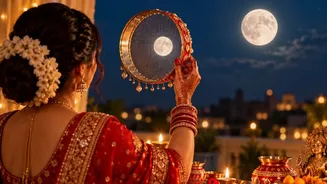
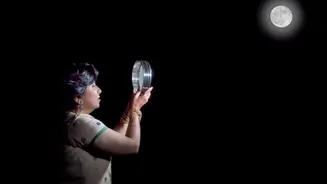
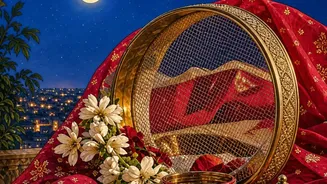
Observing a day-long fast without water is a significant physical and mental challenge. However, for the women who undertake it, the Nirjala vrat is not seen as a hardship but as a powerful act of spiritual discipline and purification. It is considered a test of willpower and a demonstration of complete surrender to a higher spiritual purpose. The act of forgoing a basic necessity like water is symbolic of the immense sacrifice and love a wife holds for her partner. This shared experience also fosters a strong sense of community, as women gather in the evening, dressed in festive attire, to perform the puja, listen to the 'vrat katha' (the story of the fast), and break their fast together upon seeing the moon.
Spiritual Significance and Inner Cleansing
Beyond the marital symbolism, the Nirjala fast is believed to have profound spiritual benefits. In Hindu traditions, fasting is a way to purify the body and mind, making them more receptive to divine energy. Abstaining from food and water is thought to give the digestive system a rest, redirecting the body's energy towards spiritual focus and inner cleansing. Some modern interpretations even link this practice to the scientific concept of autophagy, where the body cleanses itself of damaged cells. This process of detoxification, combined with prayer and meditation throughout the day, is believed to enhance one's spiritual resolve and bring about a sense of peace and inner strength.
Modern Perspectives and Health
In contemporary times, the way Karwa Chauth is observed is evolving. While many women continue to observe the strict Nirjala fast, there is also a growing conversation about personal choice and health. Many modern women see the festival as a way to honour culture and express love, regardless of the fast's stringency. It is widely advised that pregnant women, the elderly, or anyone with a medical condition should prioritise their health. Some may opt for a 'phalahar' fast, consuming fruits and liquids, without diminishing the spirit of their devotion. The core sentiment remains paramount: the intention and love behind the gesture are more significant than the physical act of fasting itself.