
A Familiar System with a New Secret
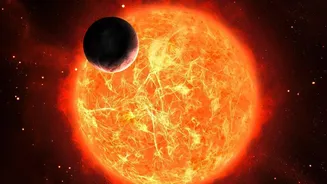
The discovery was made in a star system that astronomers know quite well: Beta Pictoris. Located about 63 light-years from Earth, this system is relatively young at just 23 million years old. It has long been a go-to laboratory for scientists studying
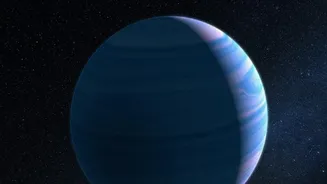
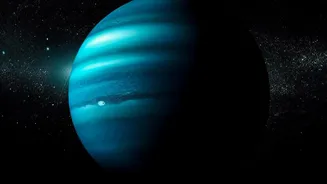
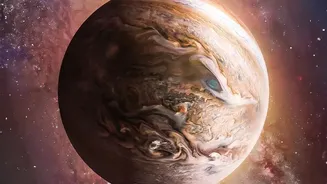
how planets form. Two giant planets, Beta Pictoris b and c, were already known to orbit the star. Now, they have a new sibling. Dubbed Beta Pictoris d, this newfound world is also a gas giant, estimated to be at least twice the mass of our own Jupiter. This exciting addition makes Beta Pictoris only the second planetary system where astronomers have been able to directly image three planets.
Hiding in Plain Sight
So, how did a planet this large go unnoticed for so long in one of the most studied systems in our galaxy? The answer lies in the innovative method used for its detection. Unlike its siblings, which were found as bright points of light through traditional imaging, Beta Pictoris d was essentially invisible. It was hidden within the bright, dusty debris disk that surrounds the young star. Instead of looking for the planet itself, astronomers using the Webb telescope’s Near-Infrared Spectrograph (NIRSpec) were analysing the system’s chemical composition. They found a distinct chemical fingerprint—a specific pattern of light absorbed by carbon monoxide—that could only belong to the atmosphere of a massive planet. It was a cosmic surprise, found not by sight, but by its chemical breath.
The Power of Webb’s Vision
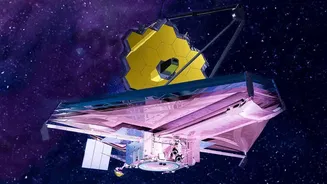
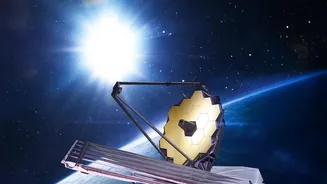
This discovery is a powerful testament to the capabilities of the James Webb Space Telescope (JWST). Its unparalleled sensitivity to infrared light allows it to parse the chemical makeup of distant objects in incredible detail. By separating light into its component wavelengths, a technique called spectroscopy, JWST can identify the molecules present in a planet's atmosphere. In this case, the detection of a carbon monoxide signature, combined with data on the object's movement, confirmed that it was a planet orbiting Beta Pictoris and not some other background object. This technique of finding planets by their atmospheric traces, rather than their visible light, opens up a revolutionary new way to hunt for worlds that are otherwise too difficult to see.
Putting the New World in Context
Beta Pictoris d is the smallest of the three gas giants found in its system, but it's still a behemoth. While it is at least twice the mass of Jupiter, its siblings are even larger. Scientists estimate its orbit is about 30 astronomical units from its star, which is a similar distance to Neptune's orbit around our sun. This places it in a fascinating position, orbiting within the system's vast disk of dust and debris. Studying the interactions between these three giant planets and the disk they were born from gives scientists a rare, real-time glimpse into the chaotic and complex dance of planetary system formation—a process that shaped our own solar system billions of years ago.