
The Ocean's Essential Nutrient
Iron is as vital to life in the sea as it is on land. In many vast regions of the open ocean, it is the key limiting nutrient for phytoplankton—the microscopic, plant-like organisms that form the foundation of nearly all marine food webs. These tiny powerhouses
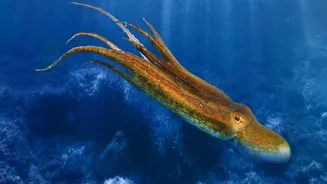
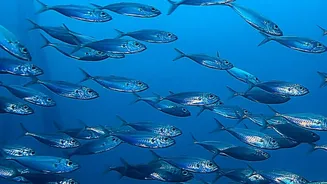
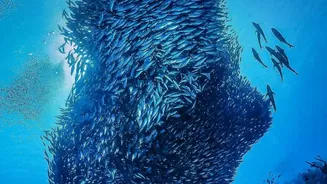
perform photosynthesis, consuming carbon dioxide and converting it into organic matter. Just as a garden needs the right soil, phytoplankton need iron to grow and multiply. When iron is scarce, their growth is stunted; when it’s abundant, they can bloom in massive numbers visible from space. This process is the starting pistol for a race up the food chain, as phytoplankton are eaten by small zooplankton, which are then consumed by krill, small fish, and eventually larger predators like tuna, seals, and whales.
New Insights on Iron's Impact
Recent research has deepened our understanding of iron's role in two significant ways. Firstly, studies have highlighted how climate change may be reducing the natural delivery of iron to key ocean regions, which could weaken the base of the food web. One study from early 2026 warned that changing ocean circulation patterns might hinder the transport of iron from sources like desert dust and glacial meltwater. Secondly, other research has focused on the opposite problem: anthropogenic, or human-caused, iron pollution. A 2025 study in the Proceedings of the National Academy of Sciences found that industrial iron emissions from East Asia are being carried thousands of miles over the North Pacific, artificially fertilizing the ocean.
A Boom-and-Bust Food Chain
The effects of this artificial iron supply are complex. Initially, the extra iron supercharges phytoplankton growth, leading to a massive spring bloom. While this sounds like a good thing, it creates a boom-and-bust cycle. The overfed phytoplankton rapidly consume all available nutrients in the water, particularly nitrate. This leads to a subsequent crash in the food supply later in the season. These shifts can have cascading effects, altering the types of plankton that thrive and potentially favouring larger diatoms over other species. The entire ecosystem is affected, as the timing and location of these blooms are crucial for migrating fish, whales, and seabirds that depend on them for food.
The Geoengineering Debate
These findings feed into a larger, more contentious debate about intentionally adding iron to the oceans as a climate change solution, a process known as ocean iron fertilization (OIF). The theory is that stimulating massive phytoplankton blooms could draw down significant amounts of CO2 from the atmosphere. While early, small-scale experiments confirmed that adding iron does cause blooms, the long-term effects and risks are still largely unknown. Scientists are now calling for a new generation of larger, more rigorous field trials to understand the consequences. Concerns remain that large-scale fertilization could create unintended negative impacts, such as depleting oxygen in deeper waters or disrupting food webs in downstream areas that are deprived of nutrients.