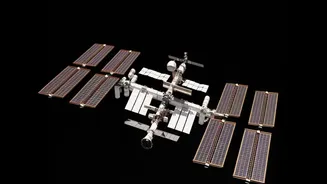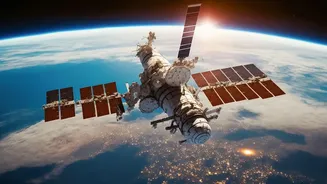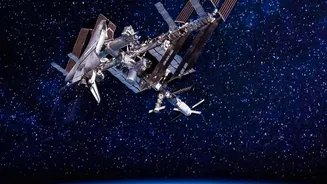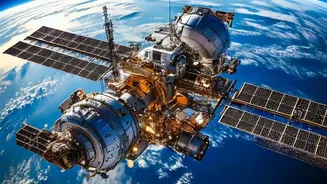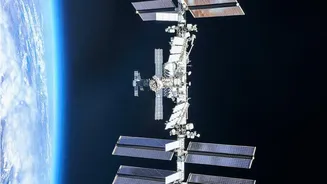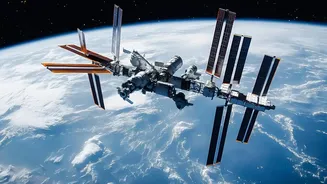






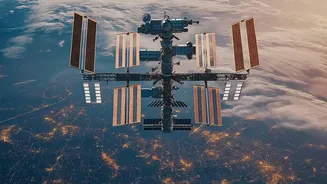
The International Space Station, a symbol of global cooperation orbiting Earth for over two decades, just received a vital upgrade. NASA has installed new solar arrays, boosting its power to ensure the station's final years are its most productive.
A Power Boost for an Aging Outpost
On
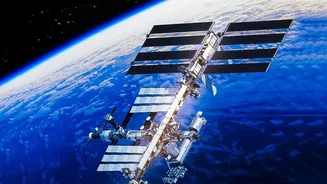
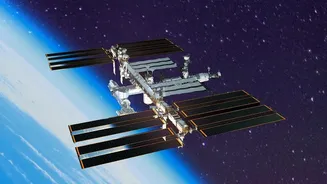
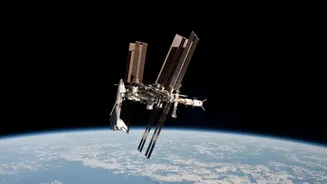
November 5, 2026, astronauts completed a multi-year effort to augment the International Space Station's power grid by installing the last of eight new solar arrays. This five-year project involved a series of complex spacewalks to mount these new panels, known as ISS Roll-Out Solar Arrays (iROSA), over the station's original, aging solar wings. The original arrays, some operational for over 20 years, have naturally degraded over time. Instead of a costly total replacement, NASA opted to install these smaller, more efficient roll-out arrays to work in tandem with the existing infrastructure. This upgrade boosts the station's total power generation capacity from about 160 kilowatts to 215 kilowatts, an increase of roughly 30 percent.
Innovative Technology in Orbit
The iROSA technology is a significant leap forward. Unlike the traditional rigid panels that were launched and unfolded two decades ago, the new arrays are flexible and roll out like a mat or a measuring tape. This design makes them more compact for launch and lighter, saving on cost and complexity. Developed by Redwire, the technology uses composite booms that store energy when rolled up, allowing them to unfurl without motors once in position. This innovative system was first tested on the station in 2017 and is now considered proven technology, not just for the ISS but for future missions, including the planned Lunar Gateway outpost.
Fueling the Next Wave of Discovery
The 30% power boost is not just about keeping the lights on; it's about powering the future of science in orbit. Modern scientific experiments and technology demonstrations are increasingly power-hungry. The extra electricity will support more complex and ambitious research in fields like materials science, biotechnology, fluid dynamics, and human physiology. It enables the use of advanced equipment like high-performance computers, freezers for biological samples, and furnaces for materials processing, allowing scientists to conduct research that is impossible to replicate on Earth. This ensures the ISS remains a world-class laboratory, capable of producing cutting-edge discoveries for the remainder of its operational life.
A Sunset of Scientific Glory
This power upgrade comes as the ISS enters its final chapter. NASA and its international partners have committed to operating the station through 2030. After that, the plan is to deorbit the station in a controlled manner, having it break up over a remote area of the Pacific Ocean in early 2031. This final power-up ensures the station doesn't just fade away but remains a vibrant hub of activity and research until the very end. It allows for a seamless transition to a new era of commercially operated space stations in low-Earth orbit, which NASA plans to use for its future research needs. By maximizing its scientific return, NASA is cementing the ISS's legacy as one of the most productive scientific endeavors in history.