






It’s a staple of countless meals, a comforting presence in kitchens worldwide. But the humble potato is hiding a secret: despite growing underground, it isn’t a root at all. It’s a highly specialized, energy-packed portion of the plant’s stem.
A Stem in Disguise
It’s a common
and logical assumption: if it grows in the dirt, it must be a root. Carrots, turnips, and parsnips follow this rule, so why not potatoes? The answer lies in botanical definitions. A root's primary jobs are to anchor the plant and absorb water and nutrients from the soil. A stem, on the other hand, is a structural part of the plant that transports nutrients and supports leaves, flowers, and buds. The potato, technically known as a tuber, is a swollen, modified part of an underground stem called a stolon. While it performs its function below the soil, its features are undeniably stem-like. This makes it a master of disguise, masquerading as a root vegetable in our grocery carts and gardens when its biological identity is something else entirely.
The Telltale Signs of a Stem
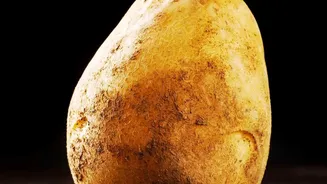
The biggest giveaway that a potato is a stem is its 'eyes'. Those familiar little dimples on a potato's skin are not blemishes but nodes—the same kind of nodes found on an above-ground branch where leaves and new shoots emerge. Each eye contains dormant buds that, under the right conditions of warmth and moisture, can sprout into a whole new potato plant. Roots simply don't have this capability. If you’ve ever forgotten a bag of potatoes in the back of a dark cupboard only to find them covered in pale, spindly sprouts, you’ve witnessed this firsthand. You were not seeing a strange form of decay, but rather the potato’s innate biological drive to reproduce, using its stem-like buds to create new life.
The Plant's Personal Pantry
So why does the potato plant go to the trouble of creating these swollen underground stems? The answer is energy storage. During its growing season, the green leaves of the potato plant are hard at work above ground, converting sunlight into sugars through photosynthesis. This sugary fuel is transported down through the plant to the tips of its underground stolons. There, the plant converts the liquid sugars into a more stable, solid form: starch. The potato tuber swells as it becomes densely packed with these starch granules, effectively becoming a nutrient-rich pantry. This stored energy is crucial for the plant's survival, providing the fuel it needs to endure harsh conditions.
A Clever Survival Strategy
The tuber is more than just a pantry; it's a brilliant survival and reproductive mechanism. After the growing season, the leafy part of the potato plant above ground dies off, especially during cold winters. The starchy tuber, however, remains safe and insulated underground. When warmer weather returns in the spring, the plant doesn't need to start from scratch. The buds in the potato's eyes tap into the vast reserves of stored starch, providing all the energy needed to send up new shoots and leaves to the surface. This allows the plant to get a head start on the new growing season without immediately needing to produce energy via photosynthesis. In essence, each potato is a self-contained survival kit, ready to spring back to life.
Stem Tubers vs. Root Vegetables
Understanding that potatoes are stem tubers helps clarify the difference between them and other underground vegetables. A sweet potato, despite its name and similar use in cooking, is a true root. It is a 'tuberous root'—a swollen, modified root designed for storage. Unlike a potato, a sweet potato does not have eyes or nodes arranged in a spiral. Carrots, beets, and radishes are other examples of true root vegetables, specifically taproots. They store nutrients directly in their main root structure. While all these vegetables grow underground and serve a storage function for their respective plants, the potato is unique in its identity as a modified stem, a botanical marvel hiding in plain sight in our kitchens.