


The Fabric of Freedom
Long before it was a fashion statement, handwoven cloth was a weapon. During India's struggle for independence, the simple act of choosing what to wear became a powerful form of political protest. The Swadeshi movement, which gained momentum after its
formal launch on August 7, 1905, called upon Indians to boycott British-made goods and embrace domestic products. At the heart of this movement was handloom, particularly Khadi—the hand-spun and handwoven fabric championed by Mahatma Gandhi. Gandhi saw the charkha (spinning wheel) not just as a tool for making cloth, but as a symbol of self-reliance and economic independence. By spinning their own yarn and wearing Khadi, Indians could break free from their economic dependence on the British, who would buy raw cotton from India at low prices only to sell finished textiles back at a steep markup. Wearing Khadi became an act of defiance, a visual pledge of allegiance to the dream of a self-sufficient India, or Swaraj.
From Protest to Preservation
After 1947, the hum of the charkha faded from the centre of political discourse. As India industrialized, machine-made textiles offered a cheaper and more accessible alternative, pushing handloom to the margins. The fabric that had united a nation in its fight for freedom was now at risk of becoming a relic, a craft practiced by an ageing generation of weavers in remote villages. However, the legacy of handloom never entirely disappeared. It was kept alive in the rich textile traditions of various regions—from the vibrant Banarasi silks and intricate Kanjivarams to the unique Ikats of Odisha and Pochampally. These fabrics remained integral to cultural and religious ceremonies, preserving centuries-old skills. The government also recognized the sector's importance, not just for its cultural value, but as India's second-largest source of rural employment after agriculture, supporting millions of artisans, a majority of whom are women.
A Modern Renaissance
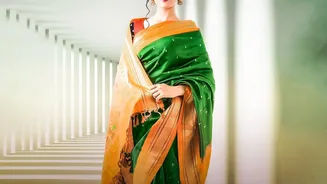
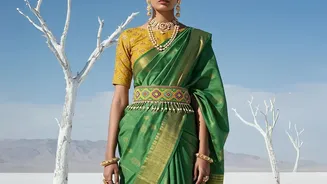
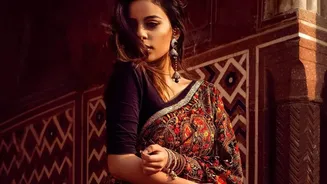
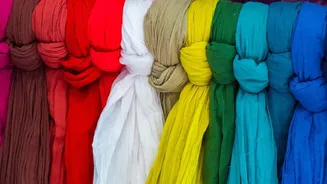
Today, Indian handloom is experiencing a remarkable renaissance, driven by a new generation of designers and conscious consumers. Designers like Sabyasachi Mukherjee, Raw Mango's Sanjay Garg, and Gaurang Shah have played a pivotal role in re-contextualizing handwoven textiles for the modern wardrobe. They collaborate with artisan clusters across the country, blending traditional techniques with contemporary silhouettes to create everything from stunning bridal wear to everyday separates. Brands like Ekaya Banaras are making weaves like Banarasi accessible beyond wedding days, while labels like 11.11/eleven eleven are innovating with hand-spun denim and natural indigo dyes. This revival is also powered by a global shift towards sustainable and ethical fashion. As consumers become more aware of the environmental and human cost of fast fashion, the slow, eco-friendly process of handloom weaving offers an appealing alternative.
More Than Just Clothing
To wear handloom today is to make a multi-layered statement. It is a nod to history and a vote for a more sustainable future. Each handwoven piece is unique, carrying the subtle imperfections and signatures of its maker, a human touch that no machine can replicate. Choosing handloom supports the livelihoods of millions of weavers and helps preserve endangered craft traditions that form the backbone of India's cultural identity. Initiatives like National Handloom Day, celebrated on August 7th to commemorate the start of the Swadeshi Movement, aim to raise awareness and encourage public support for this vital sector. In a world of mass production, handloom offers authenticity and a connection to a story. It is a tangible piece of India's past, present, and future, proving that the fabric of independence is as relevant and wearable today as it was a century ago.