






A Different Muscular Path
When you walk forward, your body follows a familiar heel-to-toe pattern, primarily engaging your hamstrings and glutes to propel you. Walking backwards flips this script entirely. The movement becomes a toe-to-heel motion, which places a greater emphasis
on your quadriceps, the large muscles at the front of your thighs. This simple change of direction means you are strengthening muscles that are often underutilised in your regular stride. Additionally, backward walking activates your gluteal muscles, calves, and even the muscles in your shins in a new way, helping to create better overall muscle balance and stability in your lower body. This shift doesn't just work your muscles differently; it changes the mechanical load on your entire body.
Benefits for Your Joints and Balance
One of the most significant benefits of retro-walking is its effect on the knees. Because you land on your toes first, the impact on your knee joints is significantly reduced. This makes it a fantastic low-impact option for people with knee pain or osteoarthritis. Research has shown that backward walking programmes can lead to a reduction in pain and improved quadriceps strength for individuals with knee issues. Beyond the knees, this unconventional movement is a powerful tool for improving balance and coordination. Since you can't see where you're going, your body's other sensory systems, like proprioception (your sense of where your body is in space), have to work much harder. This increased demand strengthens the small stabilising muscles in your ankles and core, improving your overall stability and potentially reducing the risk of falls.
A Workout for Your Brain
Walking forward is often an automatic process that requires little conscious thought. Walking backward is anything but. It is a novel task that forces your brain to be more attentive and engaged. This heightened focus can improve mental clarity, coordination, and body awareness. Studies have found that backward locomotion can increase activity in the prefrontal cortex, the part of the brain responsible for problem-solving and decision-making. Some research has even suggested a link between walking backward and improved short-term memory. By breaking a habitual movement pattern, you are creating new neural pathways and giving your brain a much-needed workout, which is a key part of staying mentally sharp.
How to Get Started Safely
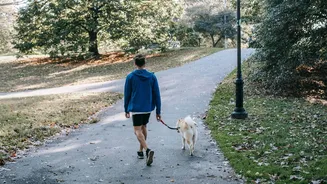
The biggest challenge with walking backward is, of course, safety. Not being able to see your path increases the risk of tripping or bumping into obstacles. To begin safely, find a clear, flat, and open area, like an empty hallway, a park with a clear path, or a running track. A treadmill is an excellent and safe option, as you can hold onto the handrails for support and control the speed. Start slowly, at a pace of around 1.5 km/h, focusing on a toe-to-heel foot strike. Keep your posture upright, engaging your core to maintain balance. It's important to resist the urge to twist your body to look behind you, as this can throw off your balance; instead, glance over your shoulder occasionally if you are outdoors.
Adding It to Your Routine
You don't need to replace your entire walking workout with retro-walking to reap the benefits. Start by incorporating it in small doses. Try walking backward for just five minutes as a warm-up before your regular walk or as a cool-down. You can also try intervals, such as walking forward for four minutes and backward for one minute, and repeating the cycle. Studies have shown that even 10-15 minutes of backward walking, a few times a week, can yield significant benefits. As you become more comfortable, you can gradually increase the duration or even try it on a slight incline for a greater challenge. The key is to listen to your body and progress at a pace that feels safe and comfortable for you.