




The Cosmic Detective Called SPHEREx
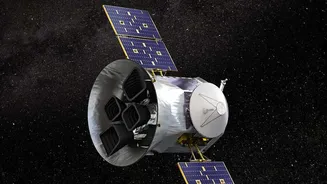
Launched in March 2025, NASA's SPHEREx is a cutting-edge space observatory on a two-year mission to map the entire sky. Its full name—Spectro-Photometer for the History of the Universe, Epoch of Reionization, and Ices Explorer—hints at its grand ambitions,
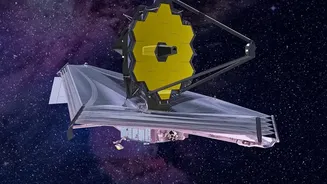
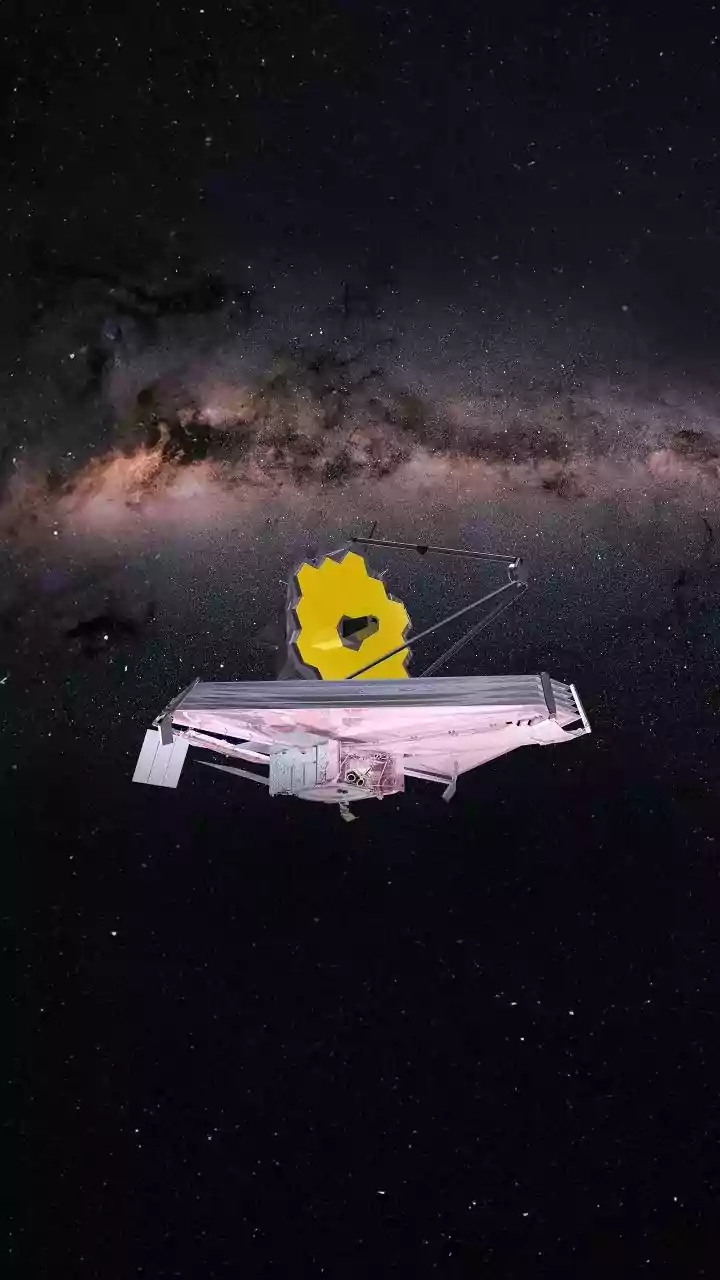
from studying the birth of the universe to searching for water ice in stellar nurseries. Unlike targeted telescopes like the James Webb Space Telescope (JWST), which focus on specific objects, SPHEREx is a surveyor. Every six months, it scans the entire sky, creating a comprehensive map in 102 different colours of near-infrared light. This powerful capability allows it to catalogue hundreds of millions of galaxies, but it also makes it uniquely suited for studying the legions of dim, elusive objects hiding in our cosmic backyard—including thousands of brown dwarfs.
What Exactly Are 'Failed Stars'?
Brown dwarfs are often called 'failed stars', and for good reason. They form just like stars do, from the gravitational collapse of massive clouds of gas and dust. However, they never accumulate enough mass—the threshold is about 80 times the mass of Jupiter—to ignite the sustained hydrogen fusion in their cores that makes stars like our sun shine brightly. Instead, they are stuck in a celestial middle ground: more massive than a gas giant like Jupiter, but not quite a star. After their initial formation, they may fuse a heavier form of hydrogen called deuterium for a few million years, but once that fuel is spent, they simply cool and fade over time, emitting only a faint glow in infrared light. This makes them incredibly difficult to spot, and since their discovery in 1995, much of our understanding has been based on theoretical models.
Exotic Weather of Molten Iron Clouds
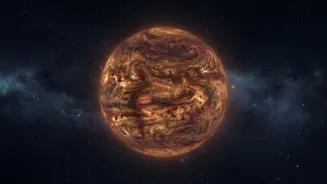
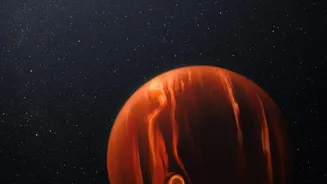
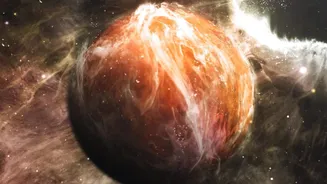
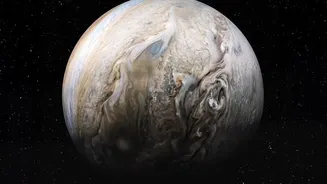
Despite being 'failed stars', brown dwarfs possess surprisingly complex and dynamic atmospheres, more like giant planets than tiny stars. These atmospheres host weather systems, complete with powerful winds and cloud cover. But these are not the fluffy water clouds we see on Earth. The clouds on warmer brown dwarfs are thought to be composed of exotic materials like molten iron and silicate minerals—essentially rock dust. Observations have suggested these clouds are patchy and travel in bands, similar to the zones seen on Jupiter, driven by giant atmospheric waves. As these massive cloud banks drift across the brown dwarf's surface, they block or reveal the heat radiating from below, causing the object's brightness to vary dramatically. Recent studies have even confirmed shifting water clouds on the coldest brown dwarfs, providing the first direct evidence of weather patterns on these isolated worlds.
How SPHEREx Pierces the Gloom
Studying the atmosphere of a distant object is a challenge, especially when it's as dim as a brown dwarf. SPHEREx overcomes this with spectroscopy. By capturing light in 102 distinct infrared colours, it can create a detailed spectrum for each object it sees. When light from a brown dwarf passes through its atmosphere, molecules like water, methane, and carbon monoxide absorb specific colours, leaving behind a unique chemical 'fingerprint' in the spectrum. This allows scientists to determine the composition of the atmosphere. Because it observes from space, SPHEREx can detect infrared light that is normally absorbed by water in Earth's atmosphere, opening a new window into these worlds. By analysing the spectra of thousands of brown dwarfs at different temperatures, astronomers can piece together how their atmospheres and cloudy weather evolve as they age and cool.
A Stepping Stone to Understanding Planets
The study of brown dwarfs isn't just about understanding these oddballs. They serve as a crucial laboratory for understanding the atmospheres of exoplanets—planets orbiting other stars. Most brown dwarfs drift through space alone, untethered to a bright star. This makes their atmospheres far easier to study without the overwhelming glare of a parent star that often blinds telescopes trying to observe a much smaller exoplanet. The complex chemistry and cloud physics that SPHEREx is revealing on brown dwarfs are already challenging existing atmospheric models, pushing scientists to refine their theories. These improved models will be essential for interpreting data from other telescopes like JWST and accurately characterising the atmospheres of potentially habitable worlds far beyond our solar system.