



A New Culinary Canvas
Imagine a dining experience that takes you on a journey from the mustard fields of Bengal to the coconut groves of Kerala, and the arid spice lands of Gujarat, all within a single meal. This isn't about a sprawling buffet with segregated sections for
regional cuisines. Instead, it’s a thoughtfully curated, three-course menu where the culinary philosophies of India's East, West, and South don't just coexist but converse. Chefs are moving beyond the general categorizations of 'North Indian' or 'South Indian' food, which were largely defined for an audience unfamiliar with the subcontinent's vast diversity. The new trend is about going deeper into the heart of regionality and then finding the threads that connect them. This movement isn't about fusion in the old sense—like adding curry powder to a Western dish—but about an intra-Indian dialogue, creating a pan-Indian identity that is sophisticated, authentic, and forward-looking.
Flavours from the East
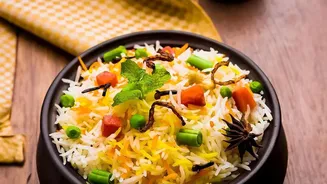
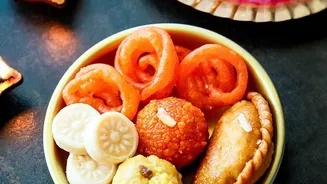
The first course of this conceptual menu draws inspiration from the subtle yet complex flavours of Eastern India. This region, encompassing Bengal, Odisha, Bihar, and the Northeast, is often characterized by its use of pungent mustard oil and the delicate five-spice blend known as 'panch phoron'. A dish might feature the delicate steaming technique popular in Bengal, perhaps a perfectly cooked freshwater fish, but served with a foam that captures the essence of fermented bamboo shoots, a staple in the Northeast. Imagine a modern take on Odisha's 'Dalma', where lentils and vegetables are slow-cooked, but presented with a clarified, spiced consommé that elevates its humble origins. The sweets are also key, moving beyond just 'mishti doi' to explore delicacies like 'Chhena Poda', a caramelized baked cheese dessert, offering a smoky, rich finale to a course.
Notes from the West
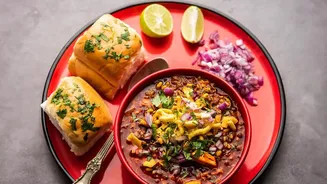
The main course travels westward, tapping into the diverse cuisines of Maharashtra, Gujarat, and Goa. This region offers a dynamic interplay of sweet, sour, and savoury notes. Goan cuisine, with its Portuguese influence, brings in the use of vinegar and coastal spices, while Gujarati food is famous for its subtle sweetness, often using jaggery or sugar to balance savoury dishes. A creative chef might take a traditionally Goan seafood curry, rich with coconut milk and kokum, and pair it with a light, airy dhokla from Gujarat instead of rice. Or they could deconstruct Mumbai's iconic street food, pav bhaji, presenting the mashed vegetable 'bhaji' as a rich, flavourful base for a perfectly grilled chicken or paneer, borrowing the tandoor techniques more common up North but applying a Western spice profile.
Soulful Echoes of the South
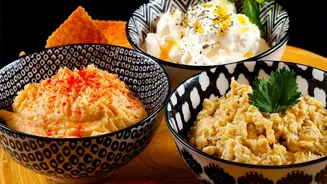
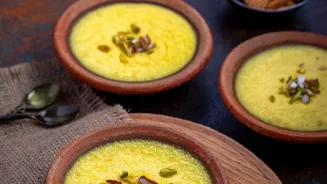
For the dessert or final savoury course, the menu lands in the South, a region defined by rice, lentils, coconut, and an astounding variety of spices. Southern cuisine is masterful in its use of fermentation, which lends a unique tangy character to dishes like idli and dosa. A modern interpretation might involve a deconstructed dosa, with the crispy pancake transformed into a delicate wafer, served alongside a trio of chutneys—each representing a different Southern state. Tamarind, curry leaves, and mustard seeds are foundational. One could envision a dessert that reinvents the classic 'payasam', a sweet milk-based pudding, by infusing it with the smoky aroma of a robust coffee from the hills of Karnataka, creating a bridge between tradition and contemporary taste.
A Unified Plate
Bringing these three distinct culinary worlds together requires a deep understanding of flavour architecture. The goal is not to create a confusing medley but a harmonious symphony. The thread connecting the courses might be a single ingredient, like coconut, used in a Bengali curry (East), a Goan stew (West), and a Tamil chutney (South). Or it could be a shared technique, like slow-cooking, applied to different regional proteins. This culinary philosophy is about celebrating India's diversity not by keeping it separate, but by showing how beautifully its elements can be woven together. It reflects a modern India—confident in its roots and bold enough to reimagine its identity.