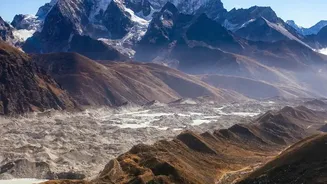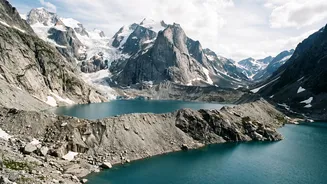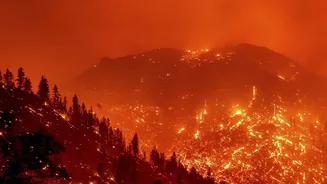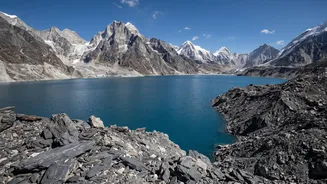






The Himalayas are not just majestic peaks; they are a rapidly changing, volatile environment. A growing body of research confirms that the threats of flash floods, avalanches, and landslides are deeply interconnected and worsening.
A Cascade of Catastrophe
Recent scientific analyses
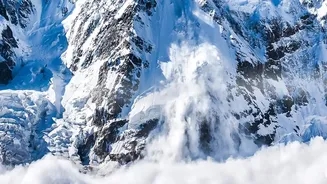
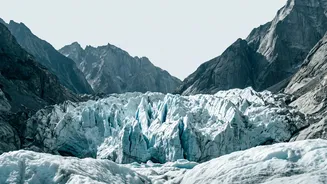
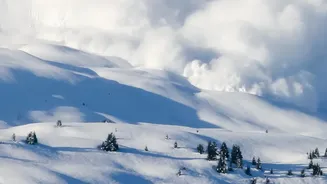
are painting a clearer, more urgent picture of the dangers lurking in the high Himalayas. The headline-grabbing disasters, from flash floods that wipe out villages to devastating avalanches, are not isolated incidents. Instead, they are often part of a complex chain reaction, where one event triggers another in a deadly domino effect. A study published in the journal Communications Earth & Environment earlier this year noted a major weakness in disaster preparedness: hazards like glacial lake outburst floods (GLOFs), landslides, and avalanches are often assessed separately, even though they can transform into one another within minutes. An ice-rock avalanche, for instance, doesn't just stop. As it thunders downhill, it can collect sediment, boulders, and water, morphing into a much larger and more destructive debris flow that can travel for kilometres, as seen in the tragic 2021 Chamoli disaster in Uttarakhand.
More Than Just Melting Glaciers
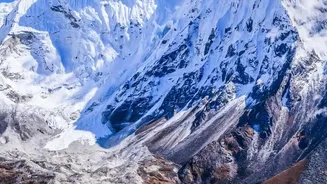
While melting glaciers are a primary driver of change, the problem is more complex. Permafrost, the frozen ground that acts like cement holding steep mountain slopes together, is thawing. This 'glue' is weakening, making rockfalls and entire slope collapses more likely. A Wadia Institute of Himalayan Geology report on a recent disaster in Dharali, Uttarakhand, pointed to a combination of factors: continuous heavy rainfall at high altitudes, melting snow, and the collapse of unstable slopes laden with debris. This created a lethal debris-laden flood, demonstrating that a major glacial lake burst is not always the direct culprit. Sometimes, the trigger is intense rainfall in areas that previously only saw snow, a clear signature of climate change. This saturates the ground, making slopes already destabilised by deforestation and construction even more prone to failure.
The Science of a Chain Reaction
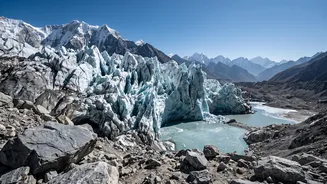
Scientists now describe these events as 'cascading hazards'. An event can start with a disturbance high in the mountains, like a chunk of a glacier breaking off. This can crash into a glacial lake, causing it to breach its natural dam of rock and sediment (a moraine), triggering a GLOF. Alternatively, an avalanche can block a river downstream, creating a temporary and highly unstable lake. When this dam inevitably fails, it releases a sudden, violent flood wave. Recent events in Nepal in August 2026, where a rock-ice avalanche created a temporary dam before releasing a destructive flood, highlight this very risk. Such events show that the hazard doesn't end where the landslide stops; it can evolve as it interacts with the river system.
The Human Cost and Growing Risk
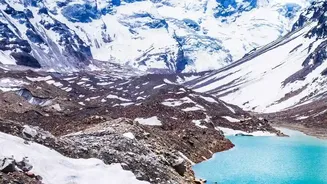
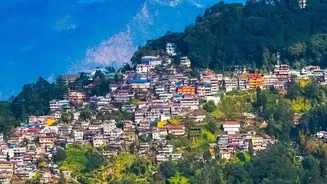
For the millions living in Himalayan states like Uttarakhand, Himachal Pradesh, Sikkim, and downstream, these scientific findings have lifeor death implications. The 2023 South Lhonak Lake GLOF in Sikkim, which caused the collapse of a major hydropower dam, and the 2021 Chamoli disaster, which killed over 200 people, are stark reminders of the regions vulnerability. Studies show that glacial lakes in the Indian Himalaya are expanding rapidly, with one in the Dulung glacier catchment growing by 400% between 1977 and 2020. This directly elevates the GLOF risk. Furthermore, a UNled study found that between 1835 and 2025, India recorded the highest number of deaths from GLOFs in the entire Hindu Kush Himalaya region, totalling over 6,100 fatalities.
The key takeaway from this body of research is the urgent need for a more holistic approach to disaster management. A flood warning system that only monitors rainfall is insufficient when a flood can begin with a silent high altitude avalanche miles away. Scientists are calling for integrated risk reduction strategies combining continuous monitoring of glaciers lakes and unstable slopes with robust early warning systems and climate resilient infrastructure planning. Understanding that these hazards are interconnected is the first step. The challenge now is to build warning systems and regional development plans that reflect this complex cascading reality before the next catastrophe strikes.