







Your Ankles: The Unsung Heroes of Movement
Think about your ankles. They are the first point of contact absorbing shock, supporting your entire body weight, and enabling you to walk, run, and balance. Strong, stable ankles are essential for preventing common injuries like sprains and falls. This
stability doesn't just come from muscle strength; it relies on proprioception—your body's ability to sense its position in space. When proprioception is sharp, your muscles react almost instantly to uneven ground or a sudden misstep, correcting your balance before you get hurt. Both dynamic and static exercises can enhance this crucial sense, but they train it for different scenarios.
Skipping Rope: Training for Reactive Strength
Skipping rope is a form of plyometric exercise, which involves rapid stretching and contracting of muscles. Each time you hop over the rope, you perform dozens of tiny, rapid adjustments to maintain balance. This continuous, rhythmic loading trains the muscles, tendons, and ligaments around your ankle to become more elastic and responsive. Essentially, you are teaching your neuromuscular system to fire faster and more efficiently. This is what builds sharp, reactive stability—the ability to instantly correct your footing and protect your ankle from a sudden twist. Studies have shown that consistent jump rope training can improve balance, motor control, and significantly reduce the risk of ankle sprains.
Yoga Asanas: Building a Foundational Base
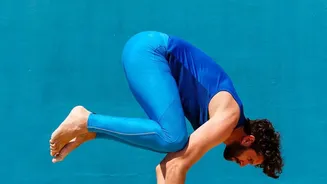
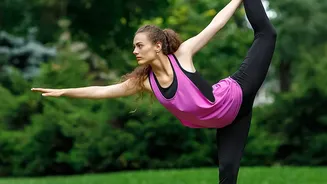
Grounded yoga poses, such as Tree Pose (Vrksasana) or the Warrior series (Virabhadrasana), take a different approach. These are primarily isometric exercises, where you hold a position without movement. By balancing on one foot or holding a deep lunge, you challenge the small stabilizing muscles in your feet and ankles to work continuously. This builds foundational strength and endurance in a controlled, low-impact environment. Yoga also excels at improving your mind-body connection, which directly enhances proprioception. The slow, intentional movements and focus on alignment help you become more aware of how your ankle feels and functions, building stability from the ground up.
The Verdict: Dynamic Reaction vs. Static Control
So, which is better? The comparison isn't about a winner and a loser, but about different tools for different jobs. Skipping rope prepares your ankles for the chaotic, unpredictable moments of life and sport. It trains for speed and reflex. If you play sports that involve quick direction changes or run on uneven trails, the reactive stability from skipping is invaluable. Grounded yoga asanas build the unwavering, foundational strength and control needed to maintain balance over longer periods and improve your joint's range of motion. It trains for endurance and precision. One builds a fast-acting emergency response system, while the other reinforces the entire structure. A 2024 study even found that while both jump training and balance training improved ankle stability, balance board work (similar in principle to yoga holds) was particularly effective and safer for those with chronic instability.
Stronger Together: A Complementary Approach
Rather than choosing one over the other, the most resilient ankles are built by combining both methods. Using yoga to build a strong, stable, and aware foundation gives you the base control. Adding skipping rope on top of that trains your body to use that stability in a fast, explosive, and reactive way. You could incorporate yoga as a warm-up or cool-down for your jump rope sessions or dedicate different days to each practice. This dual approach ensures your ankles are prepared for anything, whether it's holding a challenging yoga pose or avoiding a stumble on the pavement. By integrating both plyometrics and isometric holds, you address both muscle and tendon stiffness, creating a more robust and injury-proof joint.