








The Hidden Force of a Single Raindrop
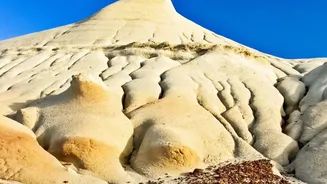
For decades, the battle against soil erosion has been a cornerstone of agricultural science and environmental protection in India. The image of gullies carving through farmland after a heavy monsoon is a familiar and costly one. The primary culprit at the very
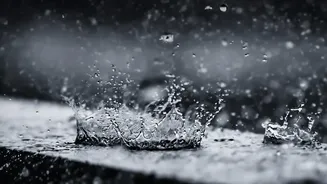
start of this process is known as 'splash erosion'. It occurs when a single raindrop, travelling at speeds up to 30 kilometres per hour, strikes bare earth. The impact acts like a tiny hammer, dislodging soil particles and splashing them away. When billions of drops fall during a storm, this micro-scale violence adds up to tonnes of lost topsoil, the most fertile layer essential for agriculture. This loss degrades soil quality, reduces crop yields, and contributes to downstream problems like sediment-clogged waterways.
The Problem with Lab-Based Rain
Understanding this process has traditionally been challenging. For a long time, scientists relied on empirical formulas, which were effective at predicting overall soil loss but didn't fully explain the physics behind it. To get a closer look, researchers moved into laboratories, creating artificial rain to study its effects in controlled settings. These experiments provided crucial insights. Using high-speed cameras, studies revealed how raindrops hitting sloped surfaces 'bulldoze' soil downhill, showing that the drop's momentum was a more powerful driver of erosion than gravity alone. However, lab environments are inherently limited. They often use uniform soil or sand and cannot fully replicate the complex variables of a real field, such as shifting winds, existing vegetation, and the uneven texture of natural ground.
Unlocking the Explosive Impact
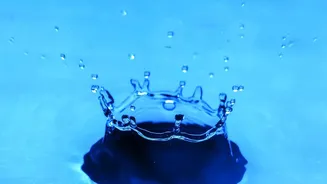
A groundbreaking study has finally provided an answer to a profound question: how can something as soft as a water droplet wear away hard rock and soil over time? Researchers at the University of Minnesota developed a novel technique called high-speed stress microscopy to look beneath the surface of the impact. Instead of just watching the splash, they could directly measure the force being transferred from the droplet to the ground. The results were astonishing. They found that a liquid droplet doesn't just 'push' the soil; it releases its impact energy explosively, creating a powerful shear stress that radiates outward from the point of impact. In essence, each raindrop behaves like a miniature bomb, providing the force necessary to dislodge particles and cause erosion over time. This discovery fundamentally changes our understanding of the forces at play, moving beyond visual observation to quantifiable mechanics.
From Theory to the Field
This new understanding of droplet power helps explain observations from real-world scenarios. For example, a very recent study investigated the effects of solar farms on soil erosion. Researchers conducted rainfall experiments on plots of land, with some covered by solar panels and others left bare. They found that the soil directly under the panels was largely protected from splash erosion. However, where water dripped off the edges of the panels, the concentrated flow of larger droplets created new, severe erosion hotspots. This demonstrates the principle perfectly: blocking the 'bomb-like' impact of direct rainfall prevents erosion, but concentrating that water creates an even greater erosive force. This finding is crucial as it shows how altering the natural pattern of rainfall, even with good intentions, can have unintended consequences on the land.
Why This Matters for India's Future
In a country defined by the monsoon, these findings are more than just academic. India loses vast amounts of fertile topsoil to water erosion every year, threatening agricultural productivity and the livelihoods of millions. Understanding that each raindrop delivers an explosive force underscores the critical importance of keeping soil covered. Practices like planting cover crops, mulching, and maintaining vegetation are not just about slowing water flow; they act as a shield, absorbing the impact energy of countless tiny 'bombs' before they can damage the soil structure. As climate change is predicted to bring more intense rainfall events, this deeper, drop-by-drop understanding of erosion is essential for developing smarter conservation strategies to protect India's most valuable natural resource: its soil.