






Why Sitting Is a Back's Worst Enemy
Our bodies are designed for movement, but many of us spend more than eight hours a day seated. This prolonged sitting puts immense pressure on the spine, particularly the lower back or lumbar region. It compresses the discs between your vertebrae, weakens
core support muscles, and encourages poor posture like slouching. Over time, this can lead to chronic stiffness, muscle weakness, reduced spinal mobility, and persistent pain. The good news is that integrating small, targeted movements throughout your day can make a significant difference.
Seated Cat-Cow for Spinal Flexibility
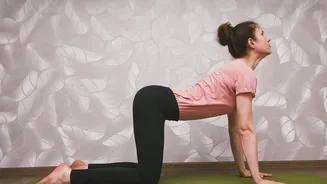
One of the most effective ways to warm up the spine is the cat-cow stretch (Marjaryasana-Bitilasana). To do it in your chair, sit tall with your feet flat on the floor and hands on your knees. As you inhale, arch your back, lift your chest, and look slightly upward, creating a gentle curve in your spine for the 'cow' pose. As you exhale, round your spine, tuck your chin to your chest, and draw your belly button in for the 'cat' pose. Alternate between these two positions for 10 repetitions to improve flexibility and relieve tension.
Seated Spinal Twist to Relieve Stiffness
A seated twist is perfect for improving spinal mobility and releasing lower back tension. Sit upright and tall in your chair, with your feet planted firmly on the ground. Gently twist your torso to the right, placing your left hand on your right thigh and your right hand on the back or arm of the chair for support. Keep your hips facing forward as you deepen the stretch with each exhale. Hold for 15-20 seconds, breathing deeply, before gently returning to the center and repeating on the left side. This movement helps counteract the static posture of sitting all day.
Chest Opener to Counteract Slouching
Hunching over a keyboard is a common cause of upper back and shoulder pain. A chest opener stretch directly counters this posture. Sit at the edge of your chair and clasp your hands behind your back. Straighten your arms as much as is comfortable, pull your shoulder blades together, and lift your chest toward the ceiling. This stretch opens up the pectoral muscles and the front of your shoulders, which often become tight from prolonged sitting. Hold for 15-30 seconds while taking deep breaths to release the tension that accumulates from typing and mousing.
Neck Tilts for Upper Spine Relief
Neck pain is another frequent complaint for desk workers, often stemming from craning toward a screen. To release this tension, sit tall and gently tilt your head toward your right shoulder, keeping the left shoulder relaxed and down. You should feel a gentle stretch along the left side of your neck. Hold for 15-30 seconds, and then slowly switch to the other side. This simple move can help prevent tension headaches and release the strain on the upper trapezius muscles.
Standing Desk Pigeon for Hip and Glute Release
Tight hips and glutes can contribute significantly to lower back pain. While standing, you can perform a modified pigeon pose at your desk. Place your hands on your desk for support and cross your right ankle over your left thigh, just above the knee, keeping the right foot flexed. Bend your standing left leg as if you're sitting back into a chair, feeling a stretch in your right glute and hip. Press your hips back to deepen the stretch. Hold for 5-10 deep breaths before switching to the other side.