



The Challenge of a Weightless Heart
For decades, scientists have worried about what happens to the human body during long-duration spaceflight. Without the constant pull of gravity, muscles can waste away and bones can lose density. The heart, being a muscle, is no exception. In a weightless
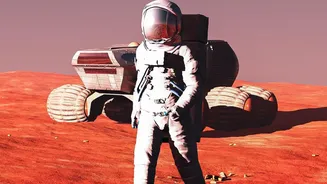
environment, the heart does not have to work as hard to pump blood throughout the body. This has led to concerns that it might shrink or weaken—a process known as cardiac atrophy. This raises a critical question for future missions to Mars, which could involve a six-month journey each way: would an astronaut’s heart be ready to handle the sudden reintroduction of gravity, even the one-third gravity of the Red Planet? Previous research showed the heart can become slightly smaller and more spherical in space, raising concerns about performance upon return.
Putting Astronaut Hearts to the Test
To find answers, a recent study led by researchers from Northwestern Medicine and co-led by a UT Southwestern Medical Center researcher did something new. They tracked the heart function of 13 astronauts who each spent about six months aboard the International Space Station. Using ultrasound, they measured changes in the astronauts' hearts throughout their missions. The study, published in the journal 'Circulation', found that while there were initial changes in heart function and size in the first couple of weeks, the astronauts' hearts began to adapt and stabilize over the course of the mission. Upon their return to Earth, researchers tested how the astronauts' hearts responded to a simulation of Martian gravity. This was done by tilting them at a specific angle to mimic the gravitational pull on Mars.
The Secret Weapon: Intense Exercise
The key to this successful adaptation appears to be a rigorous exercise routine. The astronauts followed a strict NASA programme, working out for up to two hours daily. This regimen included 30 to 45 minutes of endurance exercise like running on a special treadmill and 60 to 75 minutes of resistance training to maintain muscle and bone mass. The study's authors suggest this intense daily exercise is crucial for counteracting the effects of microgravity, effectively keeping the heart in good shape. According to the researchers, the findings suggest that the current exercise countermeasures used on the space station are effective at maintaining heart structure and function, preventing the kind of severe atrophy that was once feared.
Good News for a Trip to Mars
The results are overwhelmingly positive for the future of human space exploration. The study found that the astronauts' hearts handled the simulated Martian environment just as well as they handled standing upright on Earth before their flight. This suggests that after a six-month journey with a proper exercise plan, an astronaut would likely not suffer from issues like dizziness or fainting from a sudden drop in blood pressure upon landing on Mars. Dr. James Thomas, a senior author of the study, stated that the findings give reason to believe that astronauts could not only travel to Mars but also be capable of working on the surface upon arrival. This removes a significant medical hurdle and brings the prospect of a crewed mission to the Red Planet one step closer to reality.
The Journey Ahead
While this study provides a major confidence boost, it is still just one piece of the puzzle. The research involved a small group of 13 healthy, highly-fit astronauts, so the results may not apply to everyone. Furthermore, the study focused on the six-month timeframe, which covers the transit to Mars but not the extended stay on the surface or the return journey. Another concern for deep space travel is cosmic radiation, which other studies on animals have suggested could have long-term negative effects on the cardiovascular system. Future research will need to explore the combined effects of microgravity and radiation over even longer periods. However, for now, this research offers a welcome and reassuring answer: the human heart, it seems, is a resilient and adaptable explorer, ready for the next giant leap.