



The Promise of Autonomy
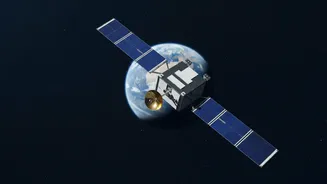
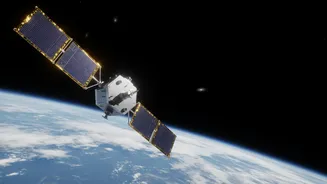
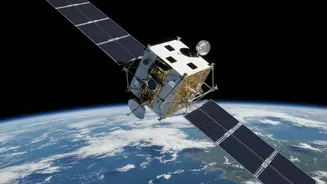
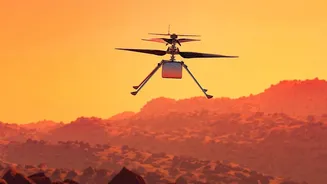
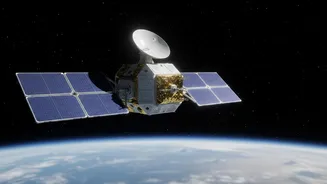
Space agencies and commercial companies are increasingly reliant on artificial intelligence to manage complex missions. The allure is clear: fully autonomous systems can react faster than any human controller, avoiding debris, optimizing flight paths,
and making critical adjustments in real-time. For deep space missions, where communication delays can stretch for minutes or hours, autonomy isn't just a convenience—it's a necessity. An AI-powered spacecraft can analyze vast amounts of scientific data on the fly, manage its own power systems, and conduct complex maneuvers like docking with a space station without a human touching the controls. This capability reduces long-term operational costs, minimizes the chance of human error, and enables more ambitious missions to distant planets and asteroids that would otherwise be impractical.
The Human-in-the-Loop Imperative
Despite the significant advantages, a complete handover to AI is a source of considerable debate, a key theme at the SMOPS-2026 conference in Bengaluru. The primary concern is the unpredictability of space. AI systems are trained on existing data, but the cosmos is full of novel situations. The harsh radiation environment can cause 'silent errors' in data or damage electronic components, potentially leading an AI to make a catastrophic decision without any outward sign of malfunction. Cybersecurity is another major risk; a compromised AI could be used to hijack a valuable satellite or disrupt a critical mission. For these reasons, many experts advocate for a "human-in-the-loop" approach. This model uses AI to enhance, not replace, human decision-making, ensuring that a person gives the final approval for critical actions. This maintains accountability and allows for nuanced, ethical judgments that an algorithm cannot make.
Striking a Delicate Balance
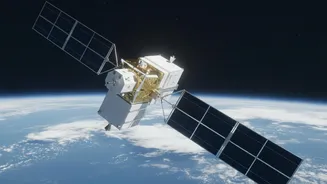
The central challenge discussed by experts from ISRO, NASA, and ESA is finding the right balance between automation and oversight. This isn't a simple 'on/off' switch. The solution likely involves tiered autonomy, where AI has full control over routine, low-risk tasks but requires human validation for major decisions. For instance, an AI might independently manage a satellite's temperature but need approval to alter its orbit. NASA is already exploring systems that encode human knowledge into the spacecraft's operational logic, allowing it to function autonomously based on preset rules and triggers defined by experts on the ground. This creates a system that is both transparent and trustworthy. The goal is to build AI that is a reliable partner, capable of independent action but always aligned with human intent and mission goals.
Beyond Technical Hurdles
The discussion extends beyond just technical and safety concerns. As missions become more complex, the philosophical questions grow louder. Who is responsible if an autonomous spacecraft makes a mistake that leads to mission failure or, in a future scenario, endangers human life? There's also a practical concern that over-reliance on AI could lead to a degradation of skills among human ground controllers and astronauts. If humans are only supervising, they may lose the hands-on expertise needed to intervene effectively during a crisis. As such, maintaining rigorous training and engagement for human operators, even in an increasingly automated environment, is seen as crucial for long-term safety and mission success. The debate at SMOPS-2026 makes it clear that the future of space exploration depends as much on defining these operational and ethical boundaries as it does on developing the next generation of AI.