







The Ultimate Logistical Hurdle
Every kilogram of supplies launched from Earth—be it water, food, equipment, or rocket fuel—comes with an astronomical price tag. This reliance on Earth for every necessity is the single biggest constraint on our ambition to build bases on the Moon or send
crewed missions to Mars. Long-duration missions are simply not feasible if every drop of water and breath of air has to be shipped from home. This is where the concept of In-Situ Resource Utilization (ISRU) comes in. ISRU is a technical term for a simple, revolutionary idea: living off the land. It involves harvesting and processing local resources on other celestial bodies to create what astronauts need to survive and operate.
Unlocking Oxygen from Moon Dust
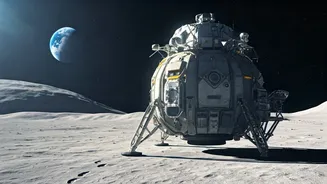
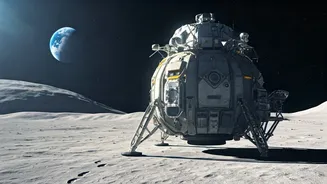
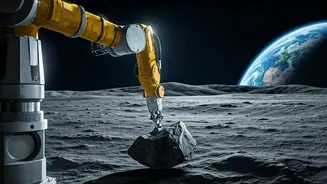
The SOLVE test focused on one of the most promising ISRU technologies: extracting oxygen from lunar regolith, the fine, grey soil that covers the Moon's surface. While the Moon has no atmosphere to speak of, its soil is surprisingly rich in oxygen, making up about 45% of its mass. This oxygen is chemically bonded with elements like silicon and iron to form oxides. The challenge has always been to break those strong chemical bonds efficiently. Recent successful tests, including demonstrations by NASA and its commercial partners, have validated a process called molten regolith electrolysis. This involves heating the lunar soil to extreme temperatures (around 1700°C) until it melts, then passing an electric current through it. The process splits the oxides, releasing pure, breathable oxygen gas.
A Breath of Fresh Air for Lunar Bases
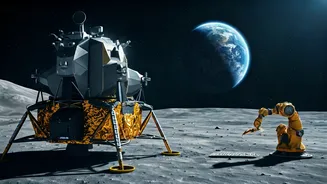
The primary and most obvious benefit of this technology is providing breathable air for astronauts. Establishing a permanent or long-term human presence on the Moon, as envisioned by programs like Artemis, depends on a reliable and sustainable life support system. Instead of transporting heavy, compressed oxygen tanks from Earth, future lunar habitats could be equipped with ISRU plants that continuously generate a breathable atmosphere from the very ground they are built on. The SOLVE test's validation confirms that producing oxygen on-site is not just a theoretical possibility but a practical engineering goal within our reach. This breakthrough dramatically reduces the logistical burden and cost, making the dream of a bustling moonbase much more attainable.
Fueling the Journey to Mars and Beyond
The implications of mastering lunar oxygen extraction extend far beyond life support. Oxygen is not just for breathing; it is also a critical component of rocket propellant, acting as the oxidizer that allows fuel to burn. A significant portion of a rocket's mass at launch is propellant. By producing liquid oxygen (LOX) on the Moon, we can effectively turn our celestial neighbour into a refuelling station for deep space missions. A spacecraft launching from Earth could carry just enough fuel to get to the Moon, refuel, and then embark on the long journey to Mars. This capability would revolutionize the architecture of interplanetary travel, enabling heavier payloads and more ambitious missions throughout the solar system.
A New Era for the Global Space Economy
The validation of ISRU parameters is not just a win for a single space agency; it is a catalyst for the entire global space economy, including India's burgeoning space sector. As nations like India advance their own lunar ambitions with missions like Chandrayaan, the development of foundational technologies like SOLVE creates new opportunities for international collaboration and commercial enterprise. Private companies are already being contracted to develop and test resource extraction hardware. The ability to source materials in space paves the way for commercial ventures from lunar mining to construction and manufacturing, fundamentally changing the economics of space exploration from a series of costly expeditions to a self-sustaining endeavour.