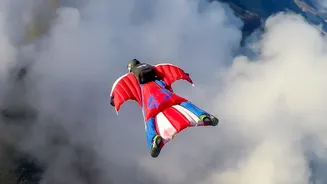






The Allure and the Altitude
The Swiss Alps are a global mecca for paragliding, attracting everyone from first-time tandem passengers to world-class cross-country pilots. The appeal is obvious: accessible high-altitude launches, stunning scenery, and reliable thermal conditions in summer.
However, the forces that make alpine flying so rewarding are also what make it inherently challenging. Unlike flying over flatlands, mountain environments create their own microclimates. Conditions can shift from perfectly calm to dangerously turbulent in minutes. Understanding the specific weather phenomena of the Alps isn't just a recommendation; it's a critical component of survival. Accidents often happen when pilots, even experienced ones, underestimate the power of mountain weather.
The Daily Rhythm: Understanding Valley Winds
One of the most fundamental concepts in alpine flying is the valley wind system. It's a daily, predictable cycle driven by temperature differences. As the sun heats the mountain slopes during the day, the air warms, rises, and pulls cooler air up from the plains, creating an 'up-valley' wind. This wind flows like a river, accelerating where valleys narrow and creating turbulence behind spurs and ridges. Pilots use this upward-flowing air to soar along ridges. As the sun sets, the process reverses. The high slopes cool, and the dense, cold air begins to flow downhill, creating a 'down-valley' wind. This daily rhythm is the engine of alpine flying, but its strength can be formidable, sometimes exceeding 40 km/h in certain areas, making landings in the valley floor a significant challenge in the afternoon.
The Foehn: The Notorious Alpine Wind to Avoid
If there is one weather phenomenon that all alpine pilots are taught to fear, it's the Foehn (or Föhn). This is a strong, warm, and exceptionally dry wind that blows down the leeward side of a mountain range. It occurs when a weather system pushes air over the Alps, causing it to lose its moisture on one side and then rapidly warm and accelerate as it descends on the other. The result is severe, chaotic turbulence—often called rotor—that can make a paraglider completely uncontrollable. The general rule among pilots is simple: if Foehn is in the forecast, you do not fly. Local forecasting services provide 'Foehn diagrams' that show the pressure difference between the north and south sides of the Alps, with a difference of more than a few hectopascals (hPa) indicating dangerous conditions.
Thermals, Turbulence, and Active Flying
On a sunny day, the mountain slopes act as giant thermal generators. Dark rock faces and fields absorb solar radiation, heating the air above them, which then detaches and rises as a thermal bubble or column. Pilots use these thermals to gain altitude and fly for hours. While fantastic for lift, this process also creates instability. The air is constantly in motion, with rising columns of warm air next to descending areas of cool air. This can make for 'punchy' or turbulent conditions, requiring the pilot to 'fly actively'—constantly making small adjustments to keep the wing stable and inflated. Being unprepared for this messy air is a common cause of incidents, especially for pilots accustomed to smoother conditions.
Your Pre-Flight Safety Ritual
In Switzerland, paragliding is a strictly regulated activity with mandatory pilot licensing and equipment inspections enforced by the Swiss Hang Gliding & Paragliding Association (SHV/FSVL). But regulations are only part of the safety equation. Personal diligence is paramount. Before every flight, a pilot must perform a series of checks. This includes consulting multiple weather forecasts, including specialised local and high-altitude reports, not just general apps. It's crucial to check for Foehn warnings and analyse the strength and direction of valley winds for the planned flight time. Talking to local pilots or flying schools provides invaluable on-the-ground knowledge. Finally, a thorough pre-flight inspection of all equipment—canopy, lines, harness, and reserve parachute—is non-negotiable.