




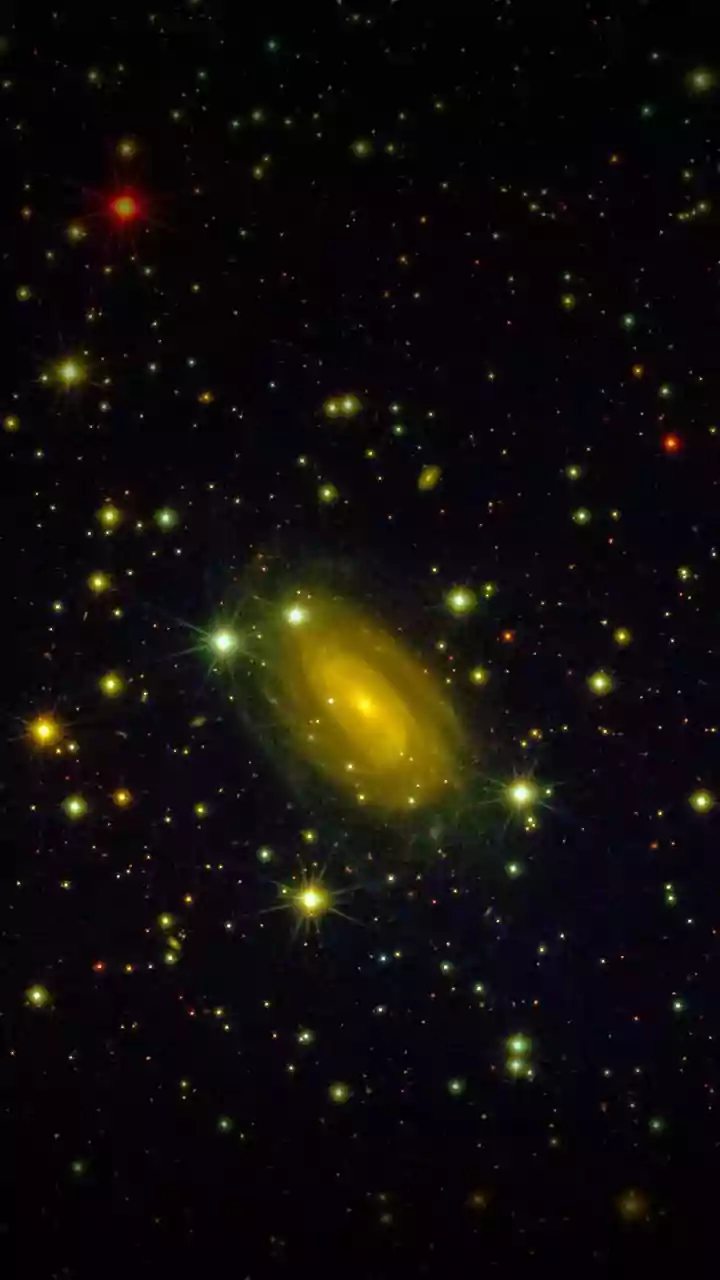



A Rocky World in the Habitable Zone
The planet at the center of this story is LHS 1140 b, a rocky world located about 48 light-years from Earth. It's what astronomers call a 'super-Earth'—larger and more massive than our own planet, but still fundamentally rocky rather than gaseous. What
makes it particularly special is its location: it orbits its parent star within the 'habitable zone'. This is the orbital region where temperatures are just right for liquid water to potentially exist on a planet's surface, a key ingredient for life as we know it. For years, LHS 1140 b has been a prime target for study, but directly proving it has an atmosphere has been an immense challenge.
The Theoretical Clue
Science doesn't just rely on looking; it also relies on thinking. Long before the latest observations, theoretical astrophysicists were building models of how planets evolve. Some models predicted that certain rocky planets, especially those evolving from larger, gas-enveloped worlds, should have atmospheres dominated by helium. These theories suggested that as a planet is bombarded by radiation from its star, lighter gases like hydrogen escape first, leaving behind a higher concentration of heavier elements like helium. Based on its size, mass, and the type of star it orbits, one research team specifically predicted that LHS 1140 b would be a perfect candidate for having just such a helium-rich atmosphere. It was a bold claim, waiting for a verdict from the real world.
The Eye in the Sky Confirms It
The verdict came from the ground, using powerful telescopes to stare at the distant star system. Astronomers use a technique called transit spectroscopy. When an exoplanet passes in front of its star from our point of view, a tiny fraction of the starlight filters through the planet's atmosphere. By analyzing the spectrum of that light, scientists can identify the chemical signatures of the gases present. In a stunning confirmation of the prediction, a team using the Magellan Clay telescope in Chile detected the unmistakable signature of helium escaping from the atmosphere of LHS 1140 b. The detection was described as statistically rock-solid, transforming a theoretical possibility into an observed reality.
A Story of Planetary Survival
Finding this helium atmosphere does more than just prove a theory right; it tells us a story about the planet’s resilience. Many rocky planets orbiting active red dwarf stars are thought to be stripped bare of their atmospheres by intense stellar radiation over billions of years. The fact that LHS 1140 b has held onto its atmosphere for what is estimated to be over three billion years is a landmark discovery. It suggests that not all rocky worlds in habitable zones are destined to become barren, airless rocks. This provides the strongest evidence to date that a rocky planet in a star's habitable zone can retain an atmosphere over geologic timescales, a crucial factor in the search for life.
What This Convergence Means
This perfect alignment of prediction and detection is a powerful moment for astronomy. It demonstrates that our theoretical models of how planets form and evolve are on the right track. When a mathematical model can successfully point a telescope to the right star and the right planet to find a specific chemical, it gives scientists immense confidence in their tools. This success allows astronomers to more effectively prioritize which of the thousands of known exoplanets to study with powerful and expensive instruments like the James Webb Space Telescope. By knowing what to look for, and where, the hunt for other worlds with atmospheres—and perhaps even signs of life—becomes much more efficient.