



The Indian Space Research Organisation (ISRO) is gearing up for a busy period, with a series of launches that highlight its dual-strategy approach to space access, featuring both its trusted workhorse and its nimble new entrant.
The Reliable Workhorse: PSLV
The Polar Satellite Launch
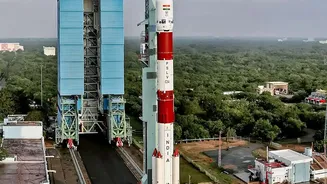
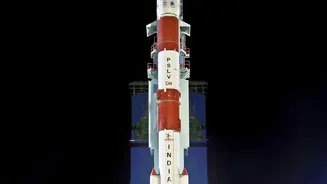
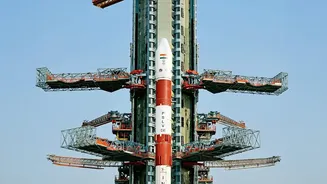
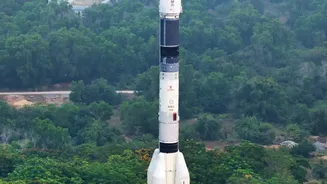
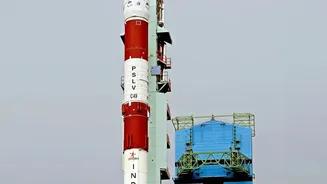
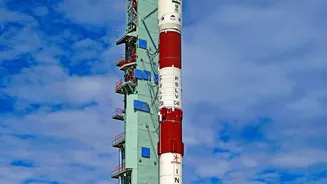
Vehicle (PSLV) is the backbone of India’s space programme, often called its 'workhorse' for its remarkable reliability and versatility over more than 60 missions. This third-generation launch vehicle, operational since the mid-1990s, was developed to give India autonomous capability to launch remote sensing satellites. Since then, its role has expanded dramatically, launching everything from India's first lunar probe, Chandrayaan-1, to its first Mars mission, Mangalyaan. Upcoming missions continue this legacy, with the PSLV-XL scheduled for a flight in late November 2026. This mission is slated to carry TDS-01, a Technology Demonstration Satellite, showcasing the PSLV's continued importance for key national and scientific payloads. The PSLV's ability to launch multiple satellites into various orbits makes it a highly sought-after vehicle for both domestic and international customers.
The Agile Newcomer: SSLV
While the PSLV handles the heavy lifting, ISRO's Small Satellite Launch Vehicle (SSLV) is designed for a different, yet equally crucial, purpose: to capture a slice of the booming global market for small satellite launches. The SSLV is a lighter, three-stage vehicle engineered for quick, on-demand launches, a significant departure from the longer preparation times required for larger rockets. It can carry payloads up to 500 kg into Low Earth Orbit, making it ideal for universities, startups, and international clients who need a fast, cost-effective ride to space. The next scheduled SSLV mission, slated for late 2026, is set to launch a ride-share mission including AayulSAT-1A from OrbitAID Aerospace. This 'launch-on-demand' capability is a game-changer, allowing ISRO to be more responsive to commercial market needs.
A Two_Pronged Strategy for Space
The simultaneous use of the PSLV and SSLV represents a mature and comprehensive strategy for ISRO. On one hand, the PSLV ensures that India maintains its capacity for launching large, complex, and strategically important missions, from Earth observation satellites like the planned EOS series to interplanetary ventures. It is the vehicle for missions of national importance and for launching heavier commercial satellites that require a proven track record of reliability. On the other hand, the SSLV provides a flexible, low_cost option that prevents smaller payloads from having to wait for a rideshare spot on a larger PSLV mission. This frees up the PSLV for its primary missions while allowing the SSLV to generate commercial revenue and build international partnerships, as seen with the planned 'Space MAITRI' mission with Australia. This two_vehicle approach allows ISRO to serve every segment of the launch market, from national security to commercial startups.
What's Next on the Launchpad
According to recent announcements from ISRO's leadership, the agency is targeting several launches before the end of the financial year, including at least two PSLV and two SSLV missions. The November 2026 PSLV mission is set to launch the TDS_01 technology demonstrator, which will test new systems like electric propulsion and quantum communication. Following that, an SSLV is scheduled to carry AayulSAT_1A, a satellite focused on demonstrating in_orbit refueling technology. These back_to_back missions, utilising different launch vehicles for different strategic goals, demonstrate India's growing confidence and capability as a leading spacefaring nation. The launch manifest reflects a clear vision: using established, reliable technology to push national priorities forward while simultaneously deploying newer, agile systems to compete on the global commercial stage.