





Beyond The Metro Bubble
For decades, India's coffee story was simple: traditional filter coffee reigned in the south, while the rest of the country largely favoured instant coffee or tea. The arrival of the 'third wave'—a movement focused on high-quality, artisanal coffee—was
almost exclusively a metropolitan phenomenon, concentrated in cities like Mumbai, Delhi, and Bengaluru. However, the landscape is now undergoing a significant transformation. Brands that built their reputations in these urban centres are looking for new horizons, and they're finding them in the country's Tier-2 and Tier-3 cities. This expansion is driven by a realization that the market is far from saturated once you look beyond the obvious hubs.
The New Wave Of Ambitious Entrepreneurs
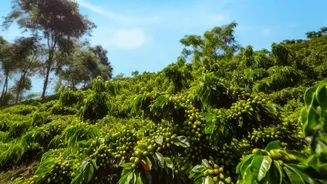
Leading this charge are ambitious homegrown brands. Blue Tokai Coffee Roasters, a pioneer in India's specialty scene, is aggressively expanding its footprint with plans to enter emerging markets like Ahmedabad and Lucknow. Similarly, Third Wave Coffee Roasters, after establishing a strong presence in major cities, has made strategic moves into Kolkata, with plans for Guwahati, Patna, and Bhubaneswar. These companies are not just opening new stores; they are building an entire ecosystem. Their strategy involves a farm-to-cup narrative, working directly with Indian coffee estates to ensure quality and transparency. This focus on sourcing and storytelling resonates with a new generation of consumers who value authenticity. Other players, like Roastery Coffee House in Jaipur and Lucknow, and Corridor Seven Coffee Roasters in Nagpur, are proving that thriving specialty coffee businesses can be built from the ground up in these regional markets.
A Shift in Consumer Palates
This expansion wouldn't be possible without a parallel shift in consumer awareness. The Indian coffee market is projected to grow significantly, with some estimates suggesting its value could reach $1.15 billion by 2034. This growth is fueled by rising disposable incomes, but more importantly, by a change in perception. For a growing number of people, particularly millennials and Gen Z, coffee is no longer just a functional beverage but an experience. Exposure through social media, reverse migration from metros during the pandemic, and a general desire for premium, experiential products have created a fertile ground for specialty coffee. Consumers in cities like Jaipur, Chandigarh, and Indore are now curious about brewing methods, bean origins, and roasting profiles—topics once confined to coffee connoisseurs in the big cities.
Brewing Challenges and Opportunities
The road into regional India is not without its obstacles. Brands face the challenge of educating a new customer base, many of whom are accustomed to instant coffee. Logistics, supply chain management, and competing with the deeply ingrained tea culture are all significant hurdles. Success often requires a different approach than what works in the metros. Some brands are focusing on large, hospitality-focused cafes, while others are opting for smaller, quick-service formats. However, the opportunity is immense. Lower rents and less competition create space for experimentation and community-building. For the brands that can successfully translate the specialty coffee experience for a regional audience, the reward is access to a vast, loyal, and largely untapped market, fundamentally reshaping India's coffee culture in the process.