









A Major Delay for a Marquee Product
NVIDIA's next-generation rack-scale system, codenamed Kyber, has been officially pushed back to 2028. The system was originally slated for a 2027 launch to house the company's next flagship AI chip, the Rubin Ultra. This isn't a minor slip; a delay of over
a year for a product showcased by CEO Jensen Huang just months ago at the company's GTC conference is a rare and notable setback. The delay is specific to the full rack-scale system, which represents the bleeding edge of data centre design for training massive AI models.
The Culprit: A Manufacturing Bottleneck
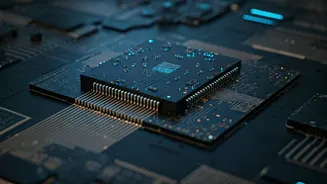
The core of the problem lies in a highly complex component: the midplane printed circuit board (PCB). According to industry analysts, this crucial board, which connects the compute and switch trays within the rack, has proven incredibly difficult to manufacture at scale. Think of it as the central nervous system of the entire AI supercomputer rack. The design is so advanced, featuring dozens of layers and ultra-fine internal wiring, that producing it reliably has become a major obstacle. This highlights a growing challenge in the industry: as chip designs become more ambitious, the surrounding hardware required to support them is being pushed to its physical limits.
Cancellations and Scaled-Back Ambitions
The fallout from the Kyber delay extends beyond a single product. NVIDIA has also reportedly cancelled a related design, the NVL72x2, which was intended as an interim solution to link existing racks together. This design was met with skepticism from large cloud providers due to its complexity and high operational costs, leading to its cancellation. Furthermore, the Rubin Ultra chip itself, meant for the Kyber system, has reportedly been scaled back. An ambitious four-chip version was scrapped in favour of a two-chip design due to 'manufacturing execution concerns,' effectively halving its originally planned performance in a single unit. These adjustments suggest NVIDIA is being forced to temper its aggressive roadmap with a dose of manufacturing reality.
Ripple Effects for the AI Industry
A delay at NVIDIA is not just an internal problem; it affects the entire AI ecosystem. Hyperscalers like Amazon, Google, and Microsoft plan their data centre expansions and AI service rollouts years in advance, based heavily on NVIDIA's promised timelines. This delay creates uncertainty for their capacity planning and could push back the deployment of next-generation AI models that require the immense power these new systems promise. For businesses in India and across the world waiting for the next leap in accessible AI power, this means the wait just got longer. It also underscores a broader supply chain strain, where the voracious demand for AI components is siphoning resources, like advanced memory chips, away from other sectors like consumer electronics.
An Opening for Competitors?
While NVIDIA remains overwhelmingly dominant, this stumble creates a potential window of opportunity for its rivals. Companies like AMD and Google, who are developing their own AI accelerators (the MI500X and TPU v8i, respectively), may have a chance to gain ground. With NVIDIA's most advanced scaling solution pushed to 2028, large customers might be more willing to evaluate alternatives for their large-scale training clusters in the interim. While catching up to NVIDIA's mature software ecosystem is a monumental task, a hardware delay of this magnitude is the kind of opening competitors have been hoping for, giving them more time to refine their own offerings.